Eric C. Hansen Professional Wildlife Biologist Exhibit GWD-11, p. - - PowerPoint PPT Presentation

eric c hansen
SMART_READER_LITE
LIVE PREVIEW

Eric C. Hansen Professional Wildlife Biologist Exhibit GWD-11, p. - - PowerPoint PPT Presentation

Eric C. Hansen Professional Wildlife Biologist Exhibit GWD-11, p. 001 Giant Garter Snake Historic Decline and Plan for Recovery Grasslands Ecological Area Mendota Wildlife Area Exhibit GWD-11, p. 002 2017 USFWS Recovery Plan calls for at


slide-1
SLIDE 1

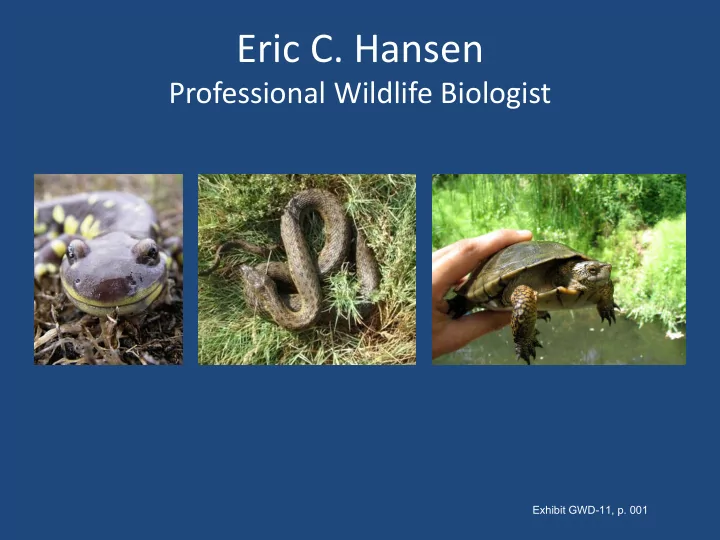
Eric C. Hansen

Professional Wildlife Biologist

Exhibit GWD-11, p. 001
slide-2
SLIDE 2

Giant Garter Snake

Historic Decline and Plan for Recovery

Grasslands Ecological Area Mendota Wildlife Area

Exhibit GWD-11, p. 002

slide-3
SLIDE 3
  • 2017 USFWS Recovery Plan calls

for at least 12 preserves in San Joaquin Valley wetlands that receive CVP water from the Delta.

  • Water availability and reliability is

critical to species recovery: USFWS will work with USBR and SWRCB to secure it.

  • Long-term success requires

monitoring that includes a 3-year drought period to “ensure that giant garter snakes are no longer threatened by an insufficient water supply.”

Exhibit GWD-11, p. 003

slide-4
SLIDE 4
  • Recovery Plan takes an

ecosystem approach that will also assist

  • ther species
  • San Joaquin and Tulare

Basin Recovery Units include all CVPIA refuges south of the Delta

  • Southernmost known

breeding population is in the Grasslands Ecological Area

Exhibit GWD-11, p. 004

slide-5
SLIDE 5

CVP Water Uses and Wildlife Benefits on Refuges

  • Aquatic habitat required

for breeding and genetic diversity

  • Wetland vegetation

provides cover from predators and foraging habitat

  • Production of small fish,

tadpoles, and frogs for food supply

Exhibit GWD-11, p. 005

slide-6
SLIDE 6

Potential Impacts of WaterFix Project

  • Loss of aquatic habitat in spring and summer,

and reduced food supply  decreased mating and survival, unstable reptile and amphibian populations, likely extirpation of giant garter snake in San Joaquin Valley

  • Reduced wetland plant production 

increased predation, lower survival rates

  • Failure to achieve Recovery Plan goals  loss
  • f genetic diversity, decline of species

Exhibit GWD-11, p. 006