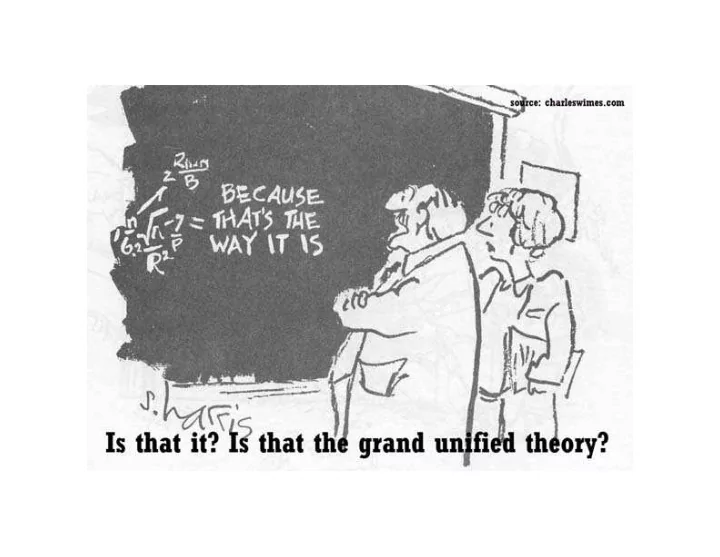
SLIDE 1
SLIDE 2 Doing ¡Computer ¡Science ¡as ¡ Science ¡
Some ¡material ¡borrowed ¡from ¡David ¡Jensen, ¡ University ¡of ¡Massachuse>s ¡
SLIDE 3
What ¡is ¡this? ¡
SLIDE 4
"It's ¡a ¡gun." ¡
SLIDE 5
Nominal ¡
¡ Of, ¡rela@ng ¡to, ¡or ¡consis@ng ¡of ¡a ¡name. ¡
SLIDE 6
SLIDE 7
"It's ¡a ¡metal ¡object ¡with ¡ ¡ glass ¡and ¡wire ¡parts." ¡
SLIDE 8
Descrip/ve ¡
¡ An ¡account ¡in ¡words ¡of ¡something, ¡ ¡ including ¡all ¡the ¡relevant ¡ ¡ characteris@cs ¡and ¡quali@es. ¡
SLIDE 9
"It's ¡a ¡steampunk ¡thing." ¡
SLIDE 10
Contextual ¡
¡ Consis@ng ¡of ¡the ¡circumstances ¡ ¡ that ¡form ¡the ¡seDng ¡for ¡an ¡en@ty, ¡ ¡ in ¡terms ¡of ¡which ¡it ¡can ¡be ¡ ¡ fully ¡understood ¡and ¡assessed. ¡
SLIDE 11 Steampunk ¡
- "A ¡subgenre ¡of ¡science ¡fic@on ¡and ¡some@mes ¡
fantasy ¡that ¡incorporates ¡technology ¡and ¡ aesthe@c ¡designs ¡inspired ¡by ¡19th-‑century ¡ industrial ¡steam-‑powered ¡machinery." ¡
- "…oLen ¡set ¡in ¡an ¡alterna@ve ¡history ¡of ¡the ¡19th ¡
century's ¡Bri@sh ¡Victorian ¡era ¡or ¡American ¡"Wild ¡ West", ¡in ¡a ¡post-‑apocalyp@c ¡future ¡during ¡which ¡ steam ¡power ¡has ¡maintained ¡mainstream ¡usage, ¡
- r ¡in ¡a ¡fantasy ¡world ¡that ¡similarly ¡employs ¡steam ¡
power." ¡
SLIDE 12
SLIDE 13
Explanatory, ¡causal, ¡or ¡genera/ve ¡
¡ Providing ¡control, ¡influence, ¡or ¡the ¡ability ¡ to ¡create ¡specific ¡behavior ¡or ¡state. ¡
SLIDE 14 "Science ¡is ¡not ¡science ¡fic@on. ¡ ¡It ¡ accepts ¡the ¡tests ¡of ¡observa@on ¡and ¡ experiment, ¡acknowledges ¡the ¡ supremacy ¡of ¡fact ¡over ¡wish ¡or ¡
- hope. ¡ ¡The ¡smallest ¡experiment ¡can ¡
crash ¡to ¡earth ¡the ¡most ¡a>rac@ve ¡ theory." ¡ ¡
- ‑-‑-‑ ¡Herbert ¡Simon ¡
SLIDE 15 Why ¡prac@ce ¡CS ¡as ¡science? ¡
- Scien@fic ¡prac@ce ¡provides ¡a ¡limited ¡type ¡of ¡external ¡
valida@on ¡that ¡grounds ¡our ¡work ¡in ¡something ¡other ¡ than ¡mere ¡consensual ¡hallucina@on. ¡
- Scien@fic ¡prac@ce ¡enables ¡more ¡rapid ¡progress ¡
towards ¡things ¡we ¡wish ¡to ¡produce. ¡
– Explana@ons: ¡How ¡does ¡that ¡ar@ficial ¡intelligence ¡system ¡ work? ¡ ¡Why ¡does ¡the ¡internet ¡behave ¡in ¡that ¡way? ¡ – Guidance: ¡What ¡should ¡we ¡do ¡if ¡we ¡want ¡our ¡streaming ¡ video ¡system ¡to ¡not ¡crash ¡when ¡too ¡many ¡people ¡are ¡ watching ¡at ¡once? ¡ – Technologies: ¡How ¡can ¡we ¡build ¡a ¡be>er ¡integrated ¡ development ¡environment? ¡ ¡What ¡networking ¡protocol ¡
- ffers ¡the ¡highest ¡performance ¡for ¡peer-‑to-‑peer ¡networks? ¡
SLIDE 16
A ¡brief ¡research ¡communica@on ¡
SLIDE 17
A ¡brief ¡research ¡communica@on ¡
SLIDE 18
SLIDE 19 Who ¡would ¡you ¡expect ¡to ¡succeed? ¡
Renowned ¡ ¡ astrophysicist ¡ ¡ & ¡astronomer. ¡
Head ¡of ¡the ¡ ¡
$50,000 ¡from ¡the ¡US ¡ War ¡Department. ¡
An ¡unmanned ¡steam-‑ powered ¡model ¡flew ¡¾ ¡
- f ¡a ¡mile ¡in ¡1896. ¡
- Background ¡
Neither ¡ ¡ finished ¡ ¡ high ¡school. ¡
Jointly ¡ran ¡ ¡ the ¡Wright ¡ ¡ Cycle ¡Company. ¡
Self-‑financed. ¡
None ¡before ¡1899. ¡
SLIDE 20
What ¡did ¡the ¡Wrights ¡ ¡ do ¡right? ¡
SLIDE 21 Reviewed ¡what ¡was ¡already ¡known ¡
¡
"I ¡wish ¡to ¡obtain ¡such ¡papers ¡as ¡the ¡Smithsonian ¡ Ins=tu=on ¡has ¡published ¡on ¡this ¡subject, ¡and ¡if ¡ possible ¡a ¡list ¡of ¡other ¡works ¡in ¡print ¡in ¡the ¡English ¡
- language. ¡I ¡am ¡an ¡enthusiast, ¡but ¡not ¡a ¡crank ¡in ¡
the ¡sense ¡that ¡I ¡have ¡some ¡pet ¡theories ¡as ¡to ¡the ¡ proper ¡construc=on ¡of ¡a ¡flying ¡machine. ¡I ¡wish ¡to ¡ avail ¡myself ¡of ¡all ¡that ¡is ¡already ¡known ¡and ¡then ¡ if ¡possible ¡add ¡my ¡mite ¡to ¡help ¡on ¡the ¡future ¡ worker ¡who ¡will ¡aDain ¡final ¡success." ¡
SLIDE 22 Reviewed ¡what ¡was ¡already ¡known ¡
- Assistant ¡Secretary ¡Richard ¡Rathbun ¡replied ¡
with: ¡
– two ¡books ¡ – three ¡issues ¡of ¡the ¡only ¡ ¡ exis@ng ¡journal ¡on ¡the ¡subject ¡ – four ¡pamphlets ¡
- This ¡was ¡"a ¡compendium ¡ ¡
- f ¡virtually ¡everything ¡that ¡ ¡
had ¡been ¡done ¡with ¡ ¡ heavier-‑than-‑air ¡flying ¡ ¡ machines" ¡up ¡to ¡1896. ¡
SLIDE 23
Corresponded ¡with ¡other ¡researchers ¡
SLIDE 24
Constructed ¡and ¡tested ¡prototypes ¡
SLIDE 25
Constructed ¡experimental ¡apparatus ¡
SLIDE 26
Conducted ¡experiments ¡
SLIDE 27
Gathered ¡and ¡analyzed ¡experimental ¡data ¡
SLIDE 28
Falsified/confirmed ¡prior ¡results ¡
L = kSV 2CL
SLIDE 29
Published ¡intermediate ¡results ¡
Wilbur ¡Wright ¡(1901). ¡“Some ¡Aeronau@cal ¡Experiments.” ¡ Journal ¡of ¡the ¡Western ¡Society ¡of ¡Engineers ¡6:489-‑508 ¡ ¡ ¡
SLIDE 30 Overall ¡approach ¡
- Iden@fy ¡key ¡technical ¡challenges ¡that ¡were ¡on ¡the ¡
cri@cal ¡path ¡to ¡construc@ng ¡the ¡desired ¡ technology ¡(e.g., ¡control). ¡
- Systema@cally ¡inves@gate ¡the ¡underlying ¡
principles ¡necessary ¡to ¡address ¡those ¡challenges. ¡
- Apply ¡those ¡principles ¡to ¡construct ¡prototypes. ¡
- Systema@cally ¡evaluate ¡those ¡prototypes. ¡
- Iterate. ¡
SLIDE 31 What ¡didn't ¡the ¡Wrights ¡do? ¡
- "Just ¡build ¡it" ¡-‑-‑-‑ ¡
Construct ¡or ¡modify ¡ systems ¡without ¡the ¡ aim ¡of ¡understanding ¡ the ¡basic ¡principles ¡of ¡
- flight. ¡
- Construct ¡systems ¡in ¡
rough ¡analogy ¡to ¡ "what's ¡already ¡known ¡ to ¡work." ¡
SLIDE 32 “I ¡cannot ¡think ¡of ¡any ¡part ¡bird ¡flight ¡had ¡in ¡the ¡ development ¡of ¡human ¡flight ¡excep@ng ¡as ¡an ¡ inspira@on... ¡ALer ¡we ¡had ¡thought ¡out ¡certain ¡ principles, ¡we ¡then ¡watched ¡the ¡bird ¡to ¡see ¡ whether ¡it ¡used ¡the ¡same ¡principles. ¡ ¡ Learning ¡the ¡secret ¡of ¡flight ¡from ¡a ¡bird ¡was ¡a ¡ good ¡deal ¡like ¡learning ¡the ¡secret ¡of ¡magic ¡ from ¡a ¡magician. ¡ALer ¡you ¡once ¡know ¡the ¡trick ¡ and ¡know ¡what ¡to ¡look ¡for ¡you ¡see ¡things ¡that ¡ you ¡did ¡not ¡no@ce ¡when ¡you ¡did ¡not ¡know ¡ exactly ¡what ¡to ¡look ¡for.” ¡ ¡ ¡
- ‑-‑-‑ ¡Orville ¡Wright ¡(1941) ¡
SLIDE 33 Synopsis ¡
- Science ¡is ¡not ¡science ¡fic@on. ¡ ¡We ¡evaluate ¡our ¡work ¡by ¡
correspondence ¡to ¡physical ¡reality. ¡ ¡Experiments ¡ formally ¡evaluate ¡that ¡correspondence. ¡
- Naming, ¡describing, ¡or ¡giving ¡ ¡
context ¡are ¡less ¡useful ¡than ¡ ¡ providing ¡causal ¡explana@ons ¡ ¡
- f ¡underlying ¡func@on. ¡
- More ¡rapid ¡technical ¡progress ¡ ¡
can ¡be ¡achieved ¡by ¡seeking ¡an ¡ ¡ understanding ¡of ¡fundamental ¡ ¡ principles ¡rather ¡than ¡by ¡using ¡a ¡ ¡"just ¡build ¡it" ¡approach. ¡