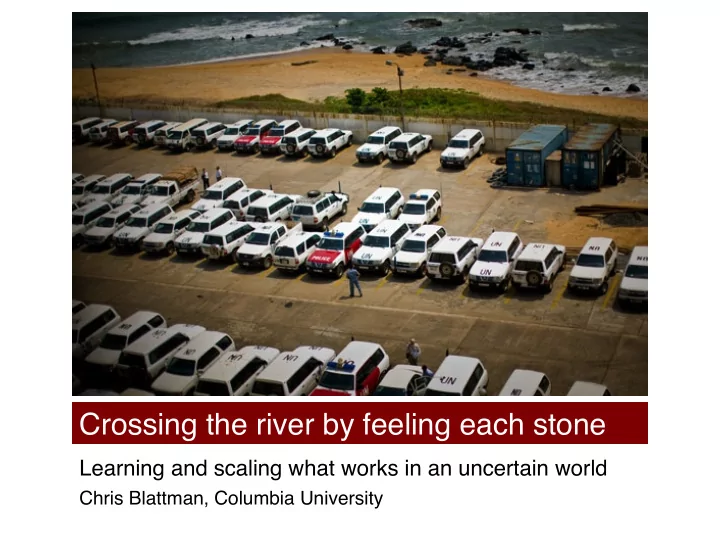
SLIDE 1
Crossing the river by feeling each stone
Learning and scaling what works in an uncertain world
Chris Blattman, Columbia University
SLIDE 2
“The piecemeal engineer knows, like Socrates, how little he knows. He knows that we can learn only from our mistakes. Accordingly, he will make his way, step by step, carefully comparing the results expected with the results achieved, and always on the look-out for the unavoidable unwanted consequences of reform”
SLIDE 3
An accidental example of piecemeal engineering
What happened after the UN Peacebuilding Fund (PBF) gave Liberia $15 million?
SLIDE 4
Why do men fight, riot, commit crimes, and rebel?
What’s a process for answering this question and designing appropriate programs
SLIDE 5
How to prevent and respond to violence
Early warning systems, dispute resolution, ethnic conflict reconciliation, mob justice
SLIDE 6 The path to 12 pilot projects
- Joint donor/government steering committee
- Cursory diagnostic
- Open call within a few broad strategic priorities
- Made learning and evaluation a criterion
- Received dozens of proposals
- Selected 12 on merit and fit with aims
- Attracted significant monitoring and evaluation funds
SLIDE 7
One example: Reintegrating high risk young men
Ex-combatants and other men in “hotspots”, engaged in illicit gold mining, rubber extraction, etc.
SLIDE 8
4-month program of agricultural training and capital
With some variation in whether people received capital
SLIDE 9 We learned a good deal by just piloting and monitoring
- Learned how hotspots operated
– What the highest risk men wanted – How to engage them peacefully – What incentives coaxed squatters off land
- High risk men were almost all interested in agriculture
– Even relatively senior commanders – This was the opposite of the received wisdom
- Developed and fine-tuned a curriculum for uneducated
men
- “Socialization” seemed as important as skills training
SLIDE 10
We also learned from a randomized evaluation
Agricultural earnings and activity by about 20% People shifted out of illicit activities, but did not exit them
SLIDE 11
Reduced mercenary recruitment in Cote d’Ivoire 20%
Expectations of future transfers were better at deterring mercenary recruitment than past completed programs
SLIDE 12
Moved quickly to a new pilot with high risk urban men
Tested cash transfers and a more focused, intensive approach to “socialization”
SLIDE 13
8-week program of group cognitive behavior therapy
A year later: Dramatic reductions in crime, violence, and drug use
SLIDE 14
Other PBF pilots: Dispute resolution programs
Successful models for property rights resolution, paralegal assistance, and land titling All evaluated
SLIDE 15 Leveraged the evaluation data to pilot early warning
Simple prediction algorithms based on 2008-10 data predicted 88% of major violence/crime outbreaks in 2012
! ( ! ( ! ( ! ( ! ( ! ( ! ( ! ( ! ( ! ( ! ( ! ( ! ( ! ( ! ( ! ( ! ( ! ( ! ( ! ( ! ( ! ( ! ( ! ( ! ( ! ( ! ( ! ( ! ( ! ( ! ( ! ( ! ( ! ( ! ( ! ( ! ( ! ( ! ( ! ( ! ( ! ( ! ( ! ( ! ( ! ( ! ( ! ( ! ( ! ( ! ( ! ( ! ( ! ( ! ( ! ( ! ( ! ( ! ( ! ( ! ( ! ( ! ( ! ( ! ( ! ( ! ( ! ( ! ( ! ( ! ( ! ( ! ( ! ( ! ( ! ( ! ( ! ( ! ( ! ( ! ( ! ( ! ( ! ( ! ( ! ( ! ( ! ( ! ( ! ( ! ( ! ( ! ( ! ( ! ( ! ( ! ( ! ( ! ( ! ( ! ( ! ( ! ( ! ( ! ( ! ( ! (! ( ! ( ! ( ! ( ! ( ! ( ! ( ! ( ! ( ! ( ! ( ! ( ! ( ! ( ! ( ! ( ! ( ! ( ! ( ! ( ! ( ! ( ! ( ! ( ! ( ! (! ( ! ( ! ( ! ( ! ( ! ( ! ( ! ( ! ( ! ( ! ( ! ( ! ( ! ( ! ( ! ( ! ( ! ( ! ( ! ( ! ( ! ( ! ( ! ( ! ( ! ( ! ( ! ( ! ( ! ( ! ( ! ( ! ( ! ( ! ( ! ( ! ( ! ( ! ( ! ( ! ( ! ( ! ( ! ( ! ( ! ( ! ( ! ( ! ( ! ( ! ( ! ( ! ( ! ( ! ( ! ( ! ( ! ( ! ( ! ( ! ( ! ( ! ( ! ( ! ( ! ( ! ( ! ( ! ( ! ( ! ( ! ( ! ( ! ( ! ( ! ( ! ( ! ( ! ( ! ( ! ( ! ( ! ( ! ( ! ( ! ( ! ( ! ( ! ( ! ( ! ( ! ( ! ( ! ( ! ( ! ( ! ( ! ( ! ( ! ( ! ( ! ( ! ( ! ( ! ( ! ( ! ( ! ( ! (
Lofa Nimba Sinoe Bong Gbarpolu Grand Gedeh Grand Bassa River Gee River Cess Grand Kru Bomi Margibi Grand Cape Mount Maryland Montserrado
50 100 25 Kilometers
±
Persons per sq km (2008 Census)
Less than 10 10-25 25-50 50-100 100-500 More than 1000
! (
Study Community County Boundary
SLIDE 16 The common denominator: experimentation
- Not in the narrow sense of randomized control trials
- In the broader sense of trying many things, learning by
doing, and subsidizing new ideas
- Powerful when married with selective impact evaluation
- In principle, this is a process for learning and scaling
what works
SLIDE 17 Scale up: Less successful
Moderate successes
- New campuses open for ex-
combatant reintegration program
- Behavioral curriculum now
being adopted and evaluated at larger scale by World Bank/ government
Failures
“reinventing the wheel” on job/ reintegration programs
- Little traction on scaling
successful dispute resolution interventions
- Low take-up by other NGOs,
government
- Next tranche of peacebuilding
funds were not used for scaling up successes
SLIDE 18 Why too little scaling and traction?
- Not a lack of funding
- Lack of continuity in senior leadership in government and
donors
– Ministers and senior UN personnel typically in place <2 years
- Program manuals still tend to be written afresh in New
York and Washington
- Untenured academics do not have a lot of time,
incentives, or expertise at politicking and advertising
- Future funds hijacked by large-scale development
programmes with no pilot or experimentation
SLIDE 19
“The piecemeal engineer… will avoid undertaking reforms of a complexity and scope which make it impossible for him to disentangle causes and effects, and to know what he is really doing. “Such 'piecemeal tinkering' does not agree with the political temperament of many 'activists’.”
SLIDE 20
What did end up going to scale (before Ebola)
A copy of a Uganda program: $400/person grants to groups of youth Most start and sustain vocational enterprises. Earnings increased 40%. Work hours increased 17%.
SLIDE 21
Why did the Uganda pilot, not the Liberia pilots, get traction in Liberia?
Answer: One guy
SLIDE 22 Missing link: More than people and connections
- Who had incentives and ability scale locally-proven
programs?
- NGOs: Not clear they were interested in a program for
100,000 rather than 1,000
- Ministries: Not clear they had the capacity or credibility
- World Bank: Strong incentive to scale, but preferred pet
programs rather than indigenous successes
– Though, in this instance, they at least had evidence from elsewhere