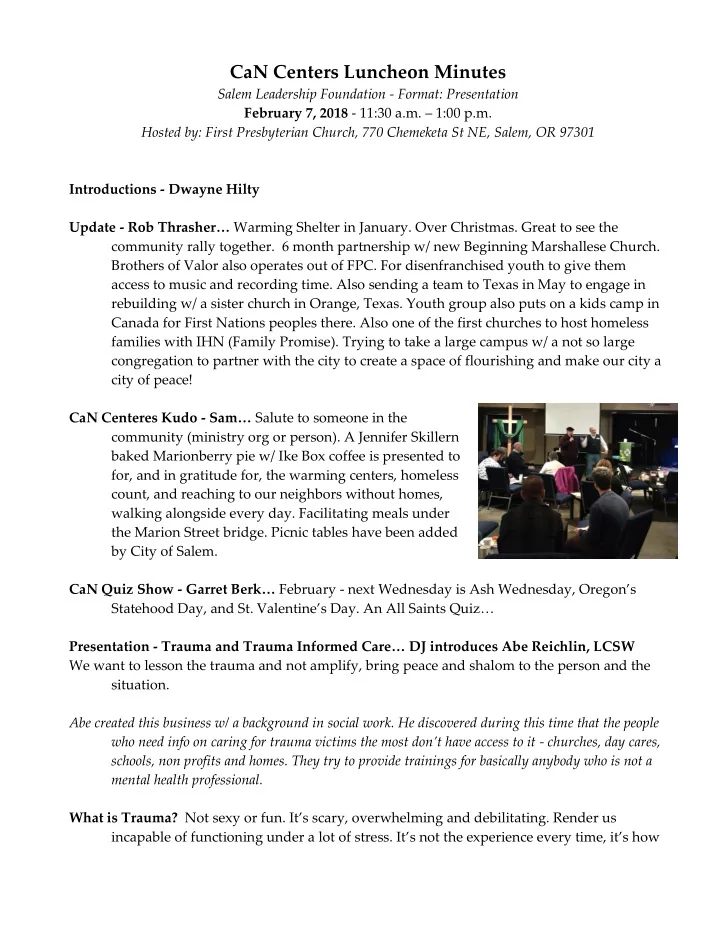
SLIDE 1
we respond to experiences and how those shape us. A fear-based lens can be created by the way we respond to trauma (see brochure). Brainstorm: The group shared some of their own ideas as to what trauma is: an event or trigger that overwhelms emotions to the point that one doesn’t respond normally; the inability to listen to the rational side of your brain; your world as you know it (or your paradigm) is shattered; injury (physical or mental). These answers were validated because they are all based on experience. We don’t get to decide if something is ‘traumatic’ or not. It affects on all the planes: physical, mental, relational, spiritual. It affects our processing of information and thinking logically, rationally through the scenario. Fight or flight is initiated and response is based on emotion (amygdala, small pea-sized part of the brain)
- vs. rationally with the frontal lobe (rational, front of the brain).
Window of Tolerance is a tool: imagine a box. In the middle of the box, is the time period where you can think rationally and logically. Above the line is hyper-arousal: unable to recognize how to address situations and react rationally. Under the line is hypo-arousal: numb out, unable to address situation; freeze response. Use Window to address your day - when you’re in it or not in your window. What triggers you to leave the window
- r leave the window. What processing techniques help you stay w/in that window?
Since trauma affects so many areas, it’s important to deal with it. Sensation is one area that affects our ability to remain present, focus and process/understand information being given to us. Sensation work in therapy can be very helpful with traumatized individuals (body orientation therapies). It can be more productive than talk-therapy because our memory holds our traumas in our bodies; our body memory of sensations is deeper, and allows us to feel experiences rather than think about them. Triggers are a good example of sensations that hold memories of trauma. Night terrors, flashbacks, panic attacks, and difficulty focusing are all examples of triggers / symptoms
- f PTSD. Hard to talk about, but important to know and address. These symptoms are
triggered in the body because of something in the environment that you’re in. It’s sensational and cognitive. There’s information you’re always reading in your environment… the more traumatized we’ve been, the more we scan our environment; the more we look for danger. If you look for danger, you’re usually able to find it. Ironically, that hyper awareness can lead to the inability to discern danger from non
- danger. When we’re in fight or flight (danger mode) our bodies secret cortisone. The