
SLIDE 1
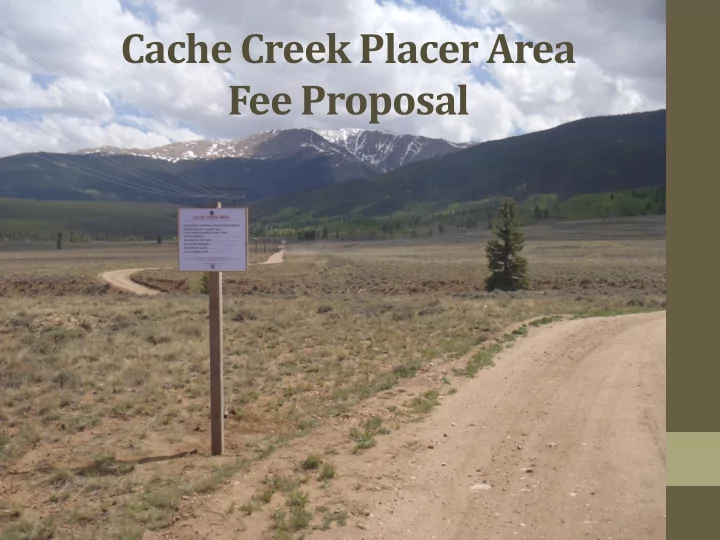
Cache Creek Placer Area Fee Proposal History of Placer Mining at - - PowerPoint PPT Presentation
Cache Creek Placer Area Fee Proposal History of Placer Mining at Cache Creek Prospecting in Colorado began in 1858 1859, First discovery of gold in Cache Creek Park 1860, Campbell and Shoewalter excavated their first pits in Cache
Clear Creek and Lake Creek
and flume nearly tripled placer gold output to $100,000.
nozzle (monitor), 6 were used in Cache Creek
Pueblo sued the mining company for an injunction against operations due to sediment loads in the river
remains in the area.
Brown, Robert L., Colorado Ghost Towns - Past and Present, 1972. p 63-66.
2,160 acres, through which Cache Creek flows, extending from the USFS boundary to Highway 24.
with support from Colorado Parks and Wildlife
as well as provide recreational access.
can’t be filed and mining regulations don’t apply
Location Map
designated area within the parcel. The document estimated minimal impacts and low volumes of use.
activities at the site and associated impacts to resources. Public safety concerns were also identified.
increase in interest in prospecting.
solutions.
providing multiple public input opportunities.
land owner.
the cemetery for easier access to water
2016* 2017 2018 2019 2020 Toilets1 $ 1,377 $ 1,377 $ 0 $ 0 $ 0 Reclamation $ 5,400 $ 5,400 $ 5,400 $ 5,400 $ 5,400 Road Maintenance $ 500 $ 500 $ 500 $ 500 $ 500 Patrolling/Monitoring/Law Enforcement (anticipate larger need upfront) $ 30,946 $ 30,946 $ 22,306 $ 22,306 $ 22,306 Campground Host ($125/week x 20 weeks) $ 2,500 $ 2,500 $ 2,500 $ 2,500 $ 2,500 Materials and Supplies $ 300 $ 300 $ 500 $ 500 $ 500 Capital Improvements2 $ 10,000 $ 0 $ 30,000 $ 0 $ 0 Annual Cost Totals $ 51,023 $ 41,023 $ 61,206 $ 31,206 $ 31,206
Comparable Site Rate Reed Gold Mine, SC $2.00/day Big Thunder Gold Mine SD $25/five hours with equipment Jamestown CA $6.00/day Crow Creek AK $20.00/day Alabama Gold Camp AL $5.00/day Crow Creek AK $10.00/half day Country Boy Mine CO $9.95/day Custer State Park $15.00/vehicle BLM-Redding, CA $5.00/five days BLM-Point Barr $25/two years Gold Prospectors of Colorado (GPOC) club $25.00/year Colorado Prospectors club $69.00/year Cache Creek Placer Area $5.00/day or $25.00/year
Private Facility- Daily Annual Fee- Clubs Annual Fee-Point Barr Daily Rate- BLM Proposed Combination- Daily/Annual Fee $10.33* $25** $12.50 $5.00 $25/$5 # of day-pass Users/Year 1909 N/A N/A 1909 954.5
(1/2 of average # of users)
# of annual-pass Users/ Year *** N/A 1909 1909 N/A 954.5
(1/2 of average # of users)
Estimated Revenue $19,719.97 $47,725 $23,862.50 $9,545 $28,635.00 Revenue/Expense Difference, 2016 ($31,303) ($3,298) ($27,161) ($41,478) ($22,388) Revenue/Expense Difference, 2017 ($21,303) $6,702 ($14,534.21) ($31,478) ($12,388) Revenue/Expense Difference, 2018 ($41,203) ($13,481) ($37,343.50) ($51,661) ($32,571) Revenue/Expense Difference, 2019 ($11,486) $16,519 ($7,343.50) ($21,661) ($2,571) Revenue/Expense Difference, 2020 ($11,486) $16,519 ($7,343.50) ($21,661) ($2,571)
process
families based on comment