
SLIDE 1
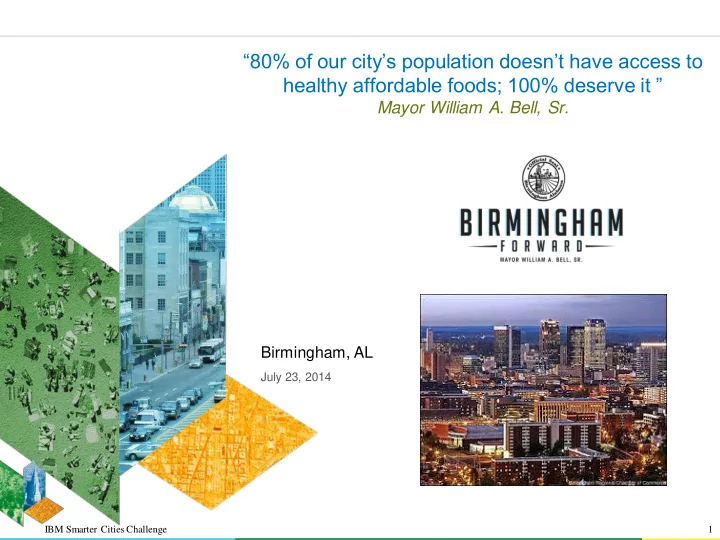
“80% of our city’s population doesn’t have access to healthy affordable foods; 100% deserve it ”
Mayor William A. Bell, Sr.
Birmingham, AL
July 23, 2014
1 IBM Smarter Cities Challenge
80% of our citys population doesnt have access to healthy affordable - - PowerPoint PPT Presentation
80% of our citys population doesnt have access to healthy affordable foods; 100% deserve it Mayor William A. Bell, Sr. Birmingham, AL July 23, 2014 IBM Smarter Cities Challenge 1 Acknowledgement City of Birmingham Community
“80% of our city’s population doesn’t have access to healthy affordable foods; 100% deserve it ”
Mayor William A. Bell, Sr.
Birmingham, AL
July 23, 2014
1 IBM Smarter Cities Challenge
2 2
2 IBM Smarter Cities Challenge
City of Birmingham
Mayor William A. Bell, Sr.
Community Development
John Colon, Director Amber Courtney Brandon Bias Jamey Roberts Phil Amthor Shirley Gordon Charlene Smith
Department of Planning, Engineering, And Permits
Andre Bittas Tom Magee Doug Hale Matthew Churnock
Birmingham City Council
Lashunda Scales, District 1 Kim Rafferty, District 2 Valerie Abbott, District 3 William Parker, District 4 Jonathan Austin, Pres. & District 5 Sheila Tyson, District 6 Jay Roberson, District 7 Steven Holt, District 8 Marcus Lundy, Jr., District 9
Community Engagement UAB
Maria C. Norena, Assistant Director/Strategy & Innovation
David Flemming, Taylor Clark, REV Birmingham Kadie Peters, United Way of Central Alabama
Grant Brigham, Sara Williamson, Katie Davis, Jones Valley Teaching Farm Melodie Echols, Norwood Resource Center
Paulette Van Matre, Magic City Harvest Mary Michael Kelly, Community Food Bank of Central Alabama Sally Allocca, P.E.E.R., Inc. Ellen Spencer, Citizens Advisory Board Alonzo Darrow, Citizens Advisory Board Clarence Ford, Citizens Advisory Board Anthony Marino and Anthony Marino, Jr. (AJ), Marino’s Markets Basim Ajlouny, Vice President, Piggly Wiggly Corlette Burns, Shift Marketing Paul Carruthers, Senior VP/Comm Affairs Regional Mgr, Regions Bank George Trible, Area President/Mid-South Central Alabama, Wells Fargo Richard Busby, VP, Community Development, Wells Fargo Chris Hastings, Chef/Owner, Hot & Hot Fish Club Jeffrey Bayer, President/CEO, Bayer Properties, Inc. Jennifer Barnett, Freshfully Ken Johnson, Echo Highlands Maurice Bothwell, AL Truck Growers Assn John Obert, J3 Organics Darcy Lenz, Hannah Klinger, Cooking Light, Inc. Angela Schmidt, Chef U Bart Slawson, Slawson, Esq. P.C.
Stakeholders
Michael German, Director, HUD Alabama Field Office Hollis Wormsby, Housing and Urban Development Randall Woodfin, Pres., Birmingham Board of Education
Nan Baldwin, VP, Regional Development, Birmingham Business Alliance Ann Dawson-August, Exec. Director, Birmingham Jefferson County Transit Bryn Manzella, Jefferson County Dept. of Health
Economic Development
Lisa Cooper Andrew Mayo
Mayor’s Office
Jarvis Patton, Sr. Kwani Carson Irenio Johnson,Jr. Srikanth Karra April Odom Chuck Faush
3
OVERVIEW OF CHALLENGE
Birmingham has faced challenges with the loss of key sustaining industries
decades. The loss of these industries has impacted neighborhoods across the city. One major impact is the closure of full service grocery stores.
IMPACT
HEALTH OUTCOMES FACING COMMUNITIES
insecurity also have the lowest life expectancy - up to 20 years less.
diabetes, asthma, heart disease.
multiply and strain service delivery organizations.
FOOD INSECURITY KEY NUMBERS
Of the151.9 square miles in Birmingham
food deserts
live in these neighborhoods
Hispanic
Source: Jefferson County Health Dept. Source: UAB
4
Objectives Recommendations
Mobile Food Markets Community Nutrition Education Community Food Insecurity Task Force Optimize Transit To Improve Food Access Economic Action Authority Data-driven Decisions Information Sharing Platform Expanded Nutrition Education for All Age Groups Data-driven Decisions Sustainable Economic Development Quick Wins Addressing Food Insecurity Unified Focus and Common Vision Improved Communications
Expected Outcomes
5
RECOMMENDATIONS
Action Authority
Insecurity Task Force Integrated Program Management Change Management Stakeholder Engagement and Communication
Fundamental Change Enablers
Decisions
Markets
Nutrition Education
to Improve Food Access
Sharing Platform
6
7
DESCRIPTION
The IBM Smarter Cities Challenge Team recommends the City establish a temporary community-wide task force accountable to the Mayor in charge of eradicating food insecurity.
EXPECTED OUTCOMES
UAB Food Insecurity Task Force City Schools Non-Profit Groups Faith Organizations Citizens Association Business Community
8
DESCRIPTION
The IBM Smarter Cities Challenge Team recommends a comprehensive nutrition education effort for youth and families to increase the consumption and demand of healthy food. The effort will create a drumbeat of the benefits of nutrition starting in pre-kindergarten and continuing as a lifelong benefit.
EXPECTED OUTCOMES
Nutrition Education
Schools and Community Organizations
Students and Families
9
DESCRIPTION
The IBM Smarter Cities Challenge Team recommends the City implement a mobile food markets program under the auspices of the Community Food Insecurity Task Force.
EXPECTED OUTCOMES
10
Mobile food markets are a low cost alternative to brick and mortar markets. This solution has numerous benefits:
development.
Leverage local farmers to provide fresh food access Provide fresh and healthy food to needy communities Convert old transit buses as mobile food market
11
DESCRIPTION
The IBM Smarter Cities Challenge Team recommends the City and the Birmingham Jefferson County Transit Authority (BJCTA) review the current bus routes to provide better access in areas of food insecurity.
EXPECTED OUTCOMES
12
DESCRIPTION
The IBM Smarter Cities Challenge Team recommends the City establish an expanded platform to communicate between citizens and the City. This platform would expand the City’s 311 and website capabilities and add mobile and text options.
EXPECTED OUTCOMES
efforts.
Portal Mobile Web
13
DESCRIPTION
The IBM Smarter Cities Challenge Team recommends the establishment of a consolidated Economic Action Authority. The Authority would be chartered to improve economic vitality within the City of Birmingham and coordinate economic development activities.
EXPECTED OUTCOMES
economic development efforts.
14
DESCRIPTION
The Smarter Cities Challenge team recommends the City engage with the University of Alabama at Birmingham (UAB) to develop a comprehensive data and analytics framework. This framework would enable city and community leaders to make data-driven decisions.
EXPECTED OUTCOMES
health and funding. City Officials
15 VIEWABLE REPORTS
Census Data Crime Data Economic Activity Other Data Sources
Portal Mobile Web
DATA GOVERNANCE
Economic Development Social Services City of Birmingham
Gathering, Reporting & Analytics City Data
Citizens
16
Integrated Program Management Continuous focus on community needs Demonstrate results Change Management Anticipate and reduce impact of change to communities Build understanding, coordination and community involvement Stakeholder Engagement and Communication Consistent stakeholder input, sharing of results, vision alignment & communication
17
18
0-3 months 6 months 9 months 12 months 18+ months
Concept & Discovery Incubate Implement Enhance & Scale
IBM Presents Report
Governance Strategy Plan for Action & Metrics Operate & Scale
Economic Action Authority Data-driven Decisions
Architecture Build Data Sources, Dashboard, and Analytics Operate and Scale Nutrition Education and Information Sharing Platform
Education and Communication Platform
Food Insecurity Task Force, Mobile Food Markets, and Transit System Review
Quick Wins
19
Thank you Birmingham for your hospitality