
SLIDE 1
Proportion of population with sustainable access to an improved water source
- Proportion of population with access to improved sanitation
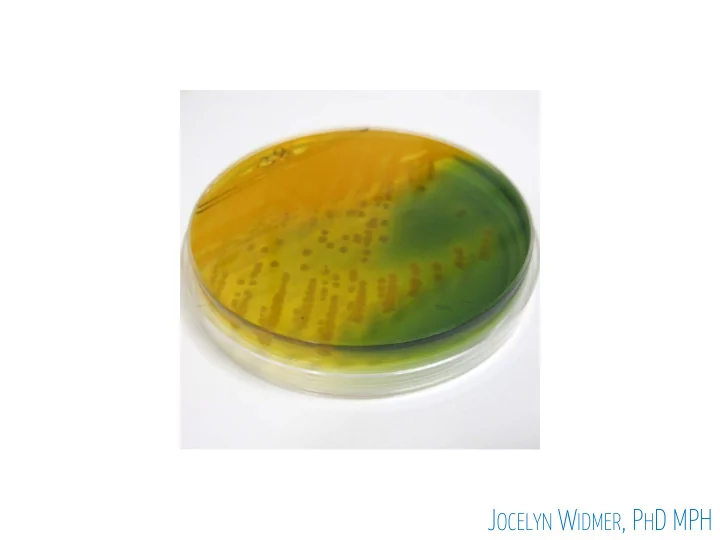
J OCELYN W IDMER , P H D MPH Proportion of population with - - PowerPoint PPT Presentation
Proportion of population with sustainable access to an improved water source Proportion of population with access to improved sanitation J OCELYN W IDMER , P H D MPH Proportion of population with sustainable access to an improved water source
Proportion of population with sustainable access to an improved water source
Proportion of population with sustainable access to an improved water source
IMPROVED WATER SOURCE
DEVELOPED USING ANDROID-BASED TABLET SYSTEM
ESTABLISH COMMUNITY PRESENCE / DEFINE CHARACTERISTIC OF AREA
NO WATER SAMPLES COLLECTED
STORM HIT 8/24-8/25 (RAIN FOR 36-HR PERIOD) ~ 460 WATER POINTS (NOT ALL ACCESSIBLE DUE TO FLOODING) BAG TESTS + 20% MICROBIOLOGICAL SUBSAMPLE (NOT CLEAN)
OF WATER POINTS
DRY CONDITIONS ~ 446 WATER POINTS (DUPLICATES, CLOSED, ETC…) BAGS + RE-SAMPLING OF MICROBIOLOGICAL SUB-SAMPLE (~ 72) COORDINATED SAMPLE COLLECTION WITH MICROBIOLOGY TEAM
STORM HIT 10/24 (RAIN FOR 36-HR PERIOD) SAMPLE COLLECTION MIRRORED SUBSAMPLE AFTER ISAAC ~ 57 WATER POINTS
369 WATER POINTS (EFFORT TO REMOVE DUPLICATES) JUN 2012 JUL 2012 AUG 2012
TROPICAL STORM ISAAC
OCT 2012 MAR 2013
7/4-7/12 8/26-9/1 10/12-10/19 3/18-3/28
OCT 2012
TROPICAL STORM SANDY 10/29-11/2
AREAS (ASSIGNED SAME WATER POINTS EACH SAMPLE RUN)
AND DINEPA HAVE PROPOSED (TEAM-BASED)
PERPETUATE THE PROBLEM?)
SIGNIFICANT POINTS LIMITING FACTORS
SYSTEM FOR ADDING NEW WATER POINTS SYSTEM FOR CLEANING / CLOSING WATER POINTS
POPULATION
ADDRESSING SCALE OF PROBLEM)
WATER POINTS + ADD NEW)
SHOWS PEOPLE DON’T NECESSARILY DRINK POTABLE WATER WHEN AVAILABLE)
THAN THAT CURRENTLY)
PROVIDES RELIABLE INFORMATION FOR TIMELY DECISION-MAKING
Samaritano Segundo . Verón June 2015
Focus Investigation on
BA, Global Justice and Policy; Spanish James Madison University (current)
MURP, Urban and Regional Planning University of Florida (current) BS, Environmental Policy and Planning Virginia Tech
MURP, Urban & Regional Planning Virginia Tech (current) BA, Public & Urban Afgairs Virginia Tech
MS, Civil Engineering (Transportation) Virginia Tech (current) BE, Civil Engineering, Macaulay Honors College The City College of New York
MPH, Public Health Virginia Tech BA, Communication Virginia Tech
BS, Human Nutrition, Foods and Exercise Virginia Tech
College of Design . Construction + Planning, University of Florida
The interdisciplinary group of Project Contributors represent disciplines of urban planning; transportation engineering; environmental policy and planning; public health; human nutrition, food and exercise; and global justice
Punta Cana Ecological Foundation Precedence | Impact Assessment Water in Samaritano Segundo
Philosophy + Investment in Water Water as an Emergent Theme History of Water Management System Video Perspective (Spanish)
June 2015 Proposal to Punta Cana Ecological Foundation
Narrative Background on Water Water Theme Infographic January 2015 Impact Assessment Notes from Carrasco Notes from Jake Kheel
6/12
6/20 Full Schedule Pre-Test Survey [English] Focus Group Protocol Storyboards Pre-Test Survey [Spanish] Survey [English] WhatsApp Video Call [English] Interview Protocol Terms + Defjnitions Survey [Spanish] WhatsApp Video Call [Spanish]
June 2015 Field Work
Project Findings
INFOGRAPHIC INFOGRAPHIC INFOGRAPHIC INFOGRAPHIC
[98%]
community water system
Some households have elected to construct and use their own wells.
[2] Number of times per week water is distributed by the water system manager, Jorge
Many households in this community support multiple families, because of this, some households run
day.
[94%]
service would be cut if they missed a payment for the community water system [100,000] (RD) Estimated cost of a pump for second well that exists in Samaritano Segundo [90%]
from the community water system as good [5] Number of years ago the community water system was last tested by Grupo Punta Cana
The quality of the water was reported satisfactory.
[55%]
require water for cooking [45%]
water system when they require water for cooking [$50] (RD) Cost to buy water from the colmados [$30] (RD) Cost to buy water from a water truck that visits the community twice a week
It is reported that the water from the truck is of lower quality than those from the colmado
[45%]
take precautions with the water that comes from the community water system [71%]
health issues associated with using water from the community water system
Local doctors have advised women that they should not use well water to wash their private parts, as doctors have linked use of the well water to vaginal infections.
[90%]
community water system for bathing/ personal hygiene [93%]
pumped into their water tanks with chlorine before use [2013] Year the Ministry of Health conducted in person training for the treatment of water [3] Caps of liquid chlorine per 500 gallons of water is the current practice for treating water in Samaritano Segundo
People can normally tell when their water is under or
the water.
[38%]
collect waste water from their home
This was mostly interpreted as greywater and not blackwater.
[43%]
water to wash their clothes [98%]
water [27%]
pipes have happened since gaining access to water
Water pressure in Samaritano Segundo is extremely low and is said to be the biggest problem in accessing water for the community
[40%]
water from the community water system more than 2 times per month
[1] Functioning well for entirety of Samaritano Segundo
Proportion of population with sustainable access to an improved water source
RESULTS
action? While Samaritano Segundo was able to self-identify its Strengths, Opportunities and Aspirations, without adequate resources, the community was not able to articulate an actionable way forward beyond the status quo. Below outlines areas for action that would need to be facilitated by the Punta Cana Ecological
(1) Impact Driven by Punta Cana Ecological Foundation (immediate) Stabilize and begin to monitor water situation in Samaritano Segungo (2) Impact Driven by Samaritano Segundo (facilitated by FEPC) Empower Samaritano Segundo to continue with current efgorts despite
(3) Impact Driven by Outside Consultation In consultation with outside expertise, develop programs aimed at health and fjnancial literacy around water resources, utilizing technology for transparent/democratic monitoring and evaluation
ASPIRATIONS
stakeholders?
(1) Water Treatment A reservoir-based treatment system should be integrated into the existing water system and its management structure so that water can be properly treated before distribution through the existing system (2) Black + Grey Water Treatment A community-based sewer system needs to be developed so that it treats blackwater and greywater before discharge, therefore diverting potentially untreated wastewater from the aquifer in Samaritano Segundo; In addition to the infrastructure, proper training need to be embedded in the existing water management structure (3) Bolstering Additional Community Infrastructure Paved roads would provide easier access to the community, creating some protection for the water infrastructure that is susceptible alongside the community’s main dirt road. Increased impervious surfaces throughout the community would also reduce dust-affjliated health problems (mainly respiratory and ocular) but attention would need to be paid to balancing impervious/pervious surfaces to ofg-set environmental threats.
OPPORTUNITIES
(1) Improving Resiliency of Water System The community water system can become more resilient as it is extremely vulnerable to breaks due to its exposure and proximity the unpaved roadway (2) Facilitating Financial Literacy in the Community Funds need to be used for their intended purposes rather than being diverted when an emergency arises Additional funds should be collected towards an emergency fund
STRENGTHS
What does the community do really well? What do strengths reveal about available skills? (1) The community has a highly organized community board (2) The community members have a high level of trust in the community leadership (3) There is a high level of civic engagement and community participation among the community members (4) There is a functioning system in place to deliver water to the community, with an associated management strategy
What is a SOAR Analysis
A SOAR Analysis is a way to take a traditional SWOT Analysis and made the information gleaned through data analysis actionable for the community and relevant stakeholders. This SOAR analysis applies to Samaritano Segundo based on results from January and June 2015 fjeldwork. The same analysis could be done with Domingo Maiz based on work from the January 2015 Impact Assessment.
S u r v e y D e s i g n
Because of limitations in survey design, data collection and analysis, it was not possible to establish the relationship between cost, volume and frequency related to water. The dynamics of water in Samaritano Segundo are too complex to create
variables. COST: The data revealed one consistent cost associated with drawing water from the community water system (300 RD) VOLUME: It was not clear how much water an individual could have for the set price, since water was turned on for a specifjc amount of time and/or until water ran out; there was no clear relationship between cost and volume of container used to collect water FREQUENCY: Questions with volume became more complex with how frequently an individual/household could access the community water system – and if additional water could always be purchased from the community water system; distance from the water source and frequency of availability to water were also not clear, since it was reported that water often ran out or substantially lost pressure to service homes further away from the water source
(1) Because Fulcrum App did not have an offmine GPS location option, it was not possible to track the location of each survey; data collected was not geo-referenced, which was a limitation in analyzing trends based on location within the study area and distance from the water pump (2) Data collected about usage of the community water system could have been skewed because the survey did not account for the households using another household’s private wells; in this case, the respondent’s water source was categorized as “other” (3) The amount of time available for data analysis was limited, resulting in minimal time to perform in-depth analyses; this limited the scope of identifjed trends, and thus limited the extent of recommendations
(1) The method used to administer surveys may have afgected the quality and quantity of data collected; surveys were administered via the convenience sample method; the survey team went house to house in addition to approached people in public spaces (e.g. streets, colmados) to gather survey responses; the surveys were administered by the team, which could have afgected the number and types of people surveyed (conversely, this meant that the surveys were administered correctly and fully) (2) There were a number of time constraints in thee fjeld; surveys were only administered during two specifjc times of day: mid-afternoon and early evening; the seasonal nature of employment in the region could have caused local population fmuctuations; these factors could have afgected the availability of a wide range of survey respondents and general community dynamics Use of translators created the opportunity for gatekeeper bias (3) Administering surveys in Spanish by Spanish-speakers of varying fmuency could have afgected the intent of questions and understanding
(4) Surveys were administered during a time of controversial national governance that could have afgected the willingness of some respondents to answer the race demographic question or even be willing to complete the survey (5) Weather played a role in the number of surveys that were administered, and the type of people being surveyed, because many people were in and out of homes and businesses
(1) Questions were formulated based on the capabilities of Fulcrum App, the mobile data collection application that was used to collect survey responses; due to the limitations of the App, questions had to be worded and formatted according to the options available in the App (2) The surveys were originally written in English; translation of the survey into Spanish could have altered the intended meaning behind certain questions, words, and/or phrases
l e c t i
D a t a A n a l y s i s F i n d i n g s
Project Findings
There are series of limitations that impact the validity and reliability of the study. Time constraints in the fjeld limited the amount of time that could be allocated to survey design, and data collection and analysis. Due to time constraints, the data collection was done using convenience sampling in Samaritano Segundo, which is also a limitation of the study. Even though the study utilized translators, there was still a language barrier between English and Spanish.
The KEY TAKEAWAYS of the assessment are based on the fjndings from the survey, focus groups or interviews. The research team also discovered phenomena
that were not captured in the aforementioned data collection
have been deemed integral to the community and should be considered in the decision- making process moving forward. Together, the key takeaways and trends provide relevant stakeholders a comprehensive understanding of how integral water is to Samaritano’s governance structure and resource stewardship, two characteristics that could positively impact
communities in Verón.
(1) The Samaritano Segundo has a community board that is highly
The members of the community are primarily homeowners and are not subjected to the seasonal hiring cycle (in contrast to Domingo Maiz), so there is a better chance for a sustainable return on investments in water- related infrastructure (2) At the household level, most residents efgectively maintain and manage infrastructure themselves, rather than relying on an outside body to do so (3) There is a clear understanding among individuals that the water from the community system is not safe to drink (98%). There was a clear divide between people who used the water from the community system for cooking and those who used bottled water. (1) While only a handful of community members have private wells, there is a growing trend of households to convert to a private well. The initial start- up costs are signifjcantly higher to have a private well but households ultimately have on-going access to water. (2) Currently, water usage among households is not regulated. While the system of RD $300 per month for one tank or RD $500 per month for two tanks is in place, some members often receive less than a full tank. Furthermore, members can pay the water system manger more money to have their tank refjlled, but the additional payment does not go towards the electricity cost of using the pump. (3) There was a higher likelihood for households to receive less water from the community water system if they were further from the pump.
KEY TAKEAWAYS: Trends in community confjrmed through data collection TRENDS: Prevalent threads in the data but that cannot be mapped to specifjc questions asked in survey, focus group or interview questions
Key Takeaways Trends
Defjnition of Terms
RECOMMENDATIONS derive from the SOAR Analysis and have been categorized across relevant stakeholder groups. These recommendations also map onto time increments for potential impact. Coupling the initial investment needed in water- related infrastructure with training and community obligations that link Samaritano Segundo’s strengths with other communities in Verón in a peer-to-peer capacity will embed accountability measures and will maximize return on the initial investment. Collectively, the series of recommendations will have the greatest impact if they are phased in as recommended and phases are evaluated so that each stakeholder group is held accountable for the collective impact.
(1) Test community water system water in Samaritano Segundo (2) Use Positive Legacy funds to purchase new pump for Samaritano Segundo in exchange for Samaritano Segundo serving in peer training capacity to Domingo Maiz
(1) Connect Samaritano Segundo with Domingo Maiz on water-related issues for ongoing peer-to-peer exchange (2) Identify point of contact in Samaritano Segundo who connects with FEPC at identifjed increments of time This will allow FEPC to have a presence in the community to troubleshoot/connect, but will do so in a decentralized, as- needed basis
(1) Develop community-based program whereby technology inspires accountability (2) Develop public health literacy campaign to improve understanding
water
(3) Develop fjnancial literacy to improve how fee-for-service model can be sustainable and subsidize community needs
Impact Driven by Punta Cana Ecological Foundation Impact Driven by Community Impact Driven by Consultation
Timing for Impact
The Punta Cana Ecological Foundation should take the lead on investing in the immediate water-related infrastructure needs. If investments in resources are matched with measurable expectations of community involvement, the return
Innovative Ideas at Play (Precedence) Punta Cana Ecological Foundation The Community
Link Link Link Link Innovative Ideas at Play
Co-working spaces are popping up in urban areas and are based on principles of growth by creating sharing economies; co- working spaces are thought to accelerate development by connecting ideas, people, resources and problems so that locally- sourced solutions emerge
Trash in exchange for health services at a local clinic in Indonesia
Self-assessment mapping tool to connect community-based needs with appropriate resources and interventions; eliminates wasteful allocations by governments, NGOs and the private sector
Systematic stages include handing out assets, followed by several months of cash transfers, followed by period of training and encouragement
FEPC as Knowledge Hub
solutions learn from intended and unintended consequences of implementation
to implementation Knowledge Transfer to Practice
co-working space to implement, monitor and evaluate innovations
The Punta Cana Ecological Foundation should serve as an innovation hub and resource center to foster solutions that are implementable in communities throughout Verón. A Hub-and-Spoke model would:
to create organic growth + scalability
to better meet the needs of the communities in Verón
solutions so that all ideas are subject to a measurable framework
unintended consequences of any one solution are worked into future solutions Innovation Hub + Spoke Model: An innovation-hub is an informal organization, which joins individuals, groups and communities to act as ideas catalysts for innovation and allows the interaction among real and virtual communities through its available infrastructure/resources. This model supports the exchange of experiences and knowledge to foster the innovation-to-implementation process throughout a network of spokes. Fundamentally, community-based projects must: (1) Focus on lifecycle approaches + systems- based impacts if projects are to be sustainable (2) Include monitoring and evaluation (M&E) as a prerequisite for project implementation so that data is generated from the start (3) Consider scalability from the onset, so that innovation is realized through connective potential across similar contexts IDEAS HUB SPOKE Community-Based Projects Moving Forward What is an Innovation Hub + Spoke Model Innovation Hub + Spoke Model applied to Verón
Proportion of population with sustainable access to an improved water source