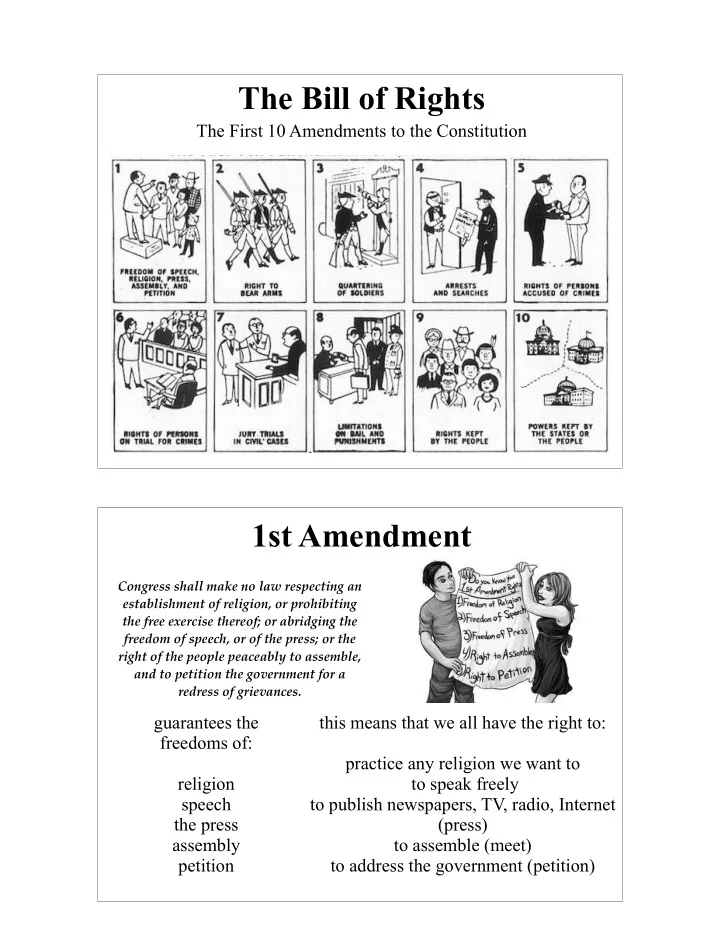
SLIDE 3 The 4th Amendment says that the police must have a warrant to enter our homes.
- It also means the government
cannot take our property, papers,
- r us, without a valid warrant
based on probable cause (good reason).
4th Amendment
The ¡right ¡of ¡the ¡people ¡to ¡be ¡secure ¡in ¡their ¡persons, ¡ houses, ¡papers, ¡and ¡effects, ¡against ¡unreasonable ¡searches ¡ and ¡seizures, ¡shall ¡not ¡be ¡violated, ¡and ¡no ¡warrants ¡shall ¡ issue, ¡but ¡upon ¡probable ¡cause, ¡supported ¡by ¡oath ¡or ¡ affirmation, ¡and ¡particularly ¡describing ¡the ¡place ¡to ¡be ¡ searched, ¡and ¡the ¡persons ¡or ¡things ¡to ¡be ¡seized.
5th Amendment
No ¡person ¡shall ¡be ¡held ¡to ¡answer ¡for ¡a ¡capital, ¡or ¡
- therwise ¡infamous ¡crime, ¡unless ¡on ¡a ¡presentment ¡or ¡
indictment ¡of ¡a ¡grand ¡jury, ¡except ¡in ¡cases ¡arising ¡in ¡the ¡ land ¡or ¡naval ¡forces, ¡or ¡in ¡the ¡militia, ¡when ¡in ¡actual ¡ service ¡in ¡time ¡of ¡war ¡or ¡public ¡danger; ¡nor ¡shall ¡any ¡ person ¡be ¡subject ¡for ¡the ¡same ¡offense ¡to ¡be ¡twice ¡put ¡in ¡ jeopardy ¡of ¡life ¡or ¡limb; ¡nor ¡shall ¡be ¡compelled ¡in ¡any ¡ criminal ¡case ¡to ¡be ¡a ¡witness ¡against ¡himself, ¡nor ¡be ¡ deprived ¡of ¡life, ¡liberty, ¡or ¡property, ¡without ¡due ¡process ¡of ¡ law; ¡nor ¡shall ¡private ¡property ¡be ¡taken ¡for ¡public ¡use, ¡ without ¡just ¡compensation. ¡
The 5th Amendment protects people from:
- being held for committing a crime unless they are properly indicted
- being tried twice for the same crime (double jeopardy)
- testifying against yourself in court
(self-incrimination)