1 Middle Pleistocene hominins -Europe becomes more permanently and - - PowerPoint PPT Presentation

1 middle pleistocene hominins
SMART_READER_LITE
LIVE PREVIEW

1 Middle Pleistocene hominins -Europe becomes more permanently and - - PowerPoint PPT Presentation

1 Middle Pleistocene hominins -Europe becomes more permanently and densely populated -Middle Pleistocene hominins remained and expanded ranges of H. erectus 2 Late Pleistocene: 125-10 kya -Last glaciations -Neandertal emerges in Europe H.


slide-1
SLIDE 1

1

slide-2
SLIDE 2

2

  • Europe becomes more permanently and densely populated
  • Middle Pleistocene hominins remained and expanded ranges of
  • H. erectus

Middle Pleistocene hominins

slide-3
SLIDE 3

3

Late Pleistocene: 125-10 kya

  • Last glaciations
  • Neandertal emerges in Europe
  • H. heidelbergensis in Europe gave rise to Neandertal
  • H. heidelbergensis in Africa gave rise to Homo sapiens
slide-4
SLIDE 4

4

Homo heidelbergensis

850,000-200,000 ya Widely dispersed in Africa and Europe

slide-5
SLIDE 5

5

Homo heidelbergensis

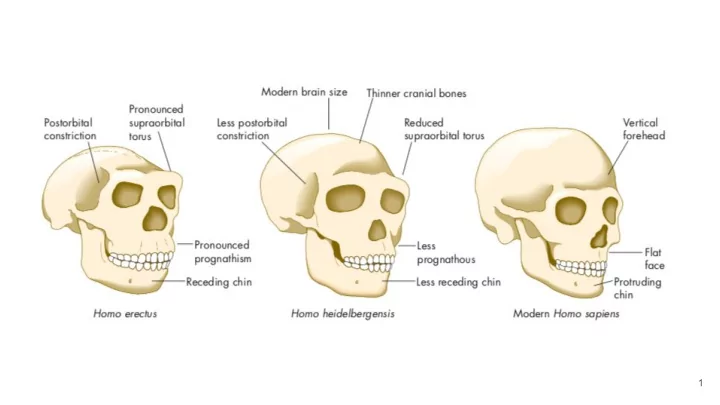
Morphological changes from Homo erectus

  • Increased brain size, rounded braincase
slide-6
SLIDE 6

The Pleistocene Epoch

6

slide-7
SLIDE 7

7

Pleistocene epoch 1.8 mya-10 kya

The Ice Age Middle Pleistocene: 780-125 kya

  • Numerous glacial and interglacials occurred
  • Climatic oscillations affected African, European, and Asian hominins

Late Pleistocene: 125-10 kya

  • Last glaciations
  • Neandertal emerges in Europe
slide-8
SLIDE 8

8

Interglacial periods: more rainfall Glacial periods: more arid

Middle Pleistocene African setting

slide-9
SLIDE 9

9

Interglacial periods: Open migration routes to Europe thru Eurasia Glacial periods: Colder and inaccessible to migrating hominins thru Eurasia

Middle Pleistocene European setting

slide-10
SLIDE 10

10

Homo heidelbergensis

850-200 kya Widely dispersed in Africa and Europe Morphological changes from Homo erectus

  • Increased brain size, rounded braincase
slide-11
SLIDE 11

11

Middle Pleistocene hominins (MPh) sites

Europe 500-400 kya Atapuerca, Spain

  • 80% of MPh remains found here
  • Evidence of early Neandertal transition
slide-12
SLIDE 12

12

Middle Pleistocene culture

  • Still using Acheulian tools

Levallois technique

  • More control over flake size/shape
  • Suggests increased cognitive capabilities
slide-13
SLIDE 13

13

  • Caves and open-air campsites
  • Made temporary structures

Subsistence: increased variety in food resources: fruits, vegetables, seeds, nuts, eggs, and... Unique: marine resources: fish, mussels, shellfish, etc.

Middle Pleistocene hominin culture

slide-14
SLIDE 14

14

Middle Pleistocene hominins sites

Africa 600 kya Bodo, Ethiopia

  • Earliest H. heidelbergensis site
slide-15
SLIDE 15

15

Neandertal

130-30 kya

slide-16
SLIDE 16

16

Neandertal

  • Most neandertal sites are in Europe
slide-17
SLIDE 17

17

Neandertal morphology

Cranial

  • Occipital bun

CC=1520 cm3

slide-18
SLIDE 18

18

Neandertal morphology

Postcranial

  • Robust, muscular, stockier
  • Shorter limbs

Morphology = adaptations to colder European climate

slide-19
SLIDE 19

19

Neandertal culture

Mousterian tool industry (125-40 kya)

  • More flake tools vs core tools
  • Tools for skinning and making clothes
  • Regular fire use
slide-20
SLIDE 20

20

Neandertal culture

Confrontational hunters

  • Close-proximity hunting with thrusting spears
  • Pattern of trauma on Neandertal skeletons matches pattern of

trauma on rodeo performers

slide-21
SLIDE 21

21

Neandertal culture and behavioral traits

Symbolic behavior

  • Intentional burials
  • Personal art: applied pigment to shells
  • Capable of making human-like sounds
  • No evidence of human-like language
slide-22
SLIDE 22

22

Neandertal sites

Western Asia 70-60 kya Shanidar, Iraq

  • Burial of disabled man
slide-23
SLIDE 23

23

Neandertal sites

Western Asia 70-60 kya Shanidar, Iraq

  • Burial of disabled man
slide-24
SLIDE 24

24

Denisovans

  • Genetic evidence of an extinct hominin
slide-25
SLIDE 25

25

Neandertal culture recap

  • Confrontational hunters
  • Infrequent intentional burials
  • Capable of symbolic behavior
  • Adapted to cold climates
  • No evidence of human-like language