What is It used to be this, is it sCll? - - PDF document

what is
SMART_READER_LITE
LIVE PREVIEW

What is It used to be this, is it sCll? - - PDF document

26/11/14 Principles of Musical Assessment An Inspire Event for Teach Through Music 25 th November 2014 Professor MarCn Fautley Dr. Alison


slide-1
SLIDE 1

26/11/14 ¡ 1 ¡ Principles ¡of ¡Musical ¡Assessment ¡– ¡

An ¡Inspire ¡Event ¡for ¡ ¡ Teach ¡Through ¡Music ¡ ¡ 25th ¡November ¡2014 ¡

Professor ¡MarCn ¡Fautley ¡

  • Dr. ¡Alison ¡Daubney ¡

What ¡is… ¡

  • Progression ¡in ¡KS3 ¡Class ¡Music? ¡
  • What ¡is ¡the ¡role ¡of ¡assessment ¡in ¡supporCng ¡

progression? ¡

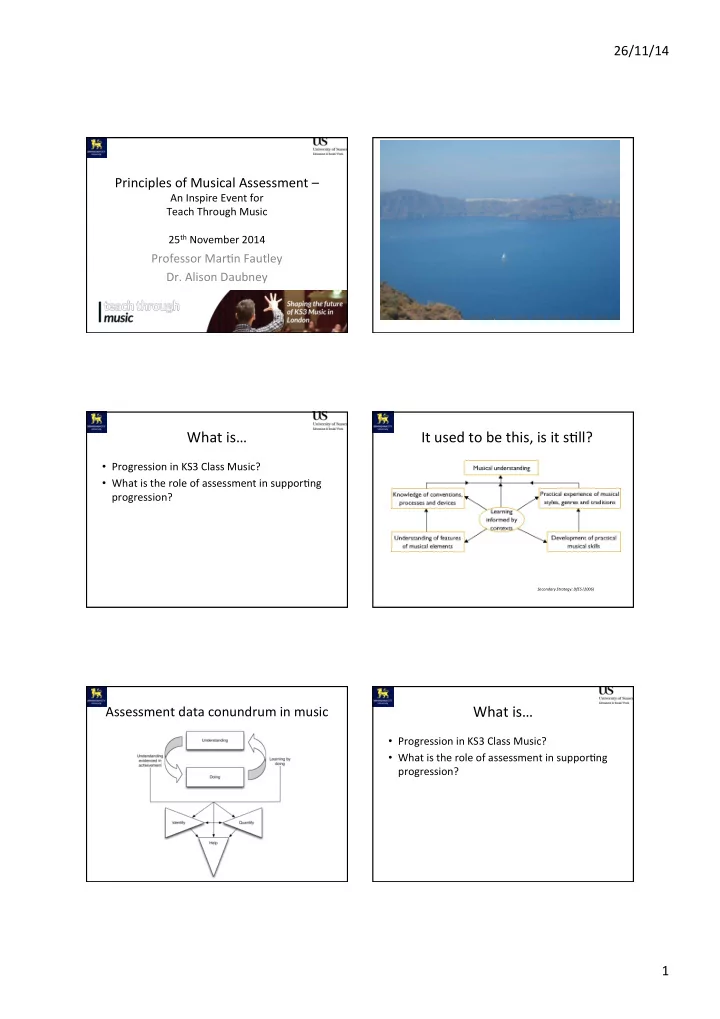
It ¡used ¡to ¡be ¡this, ¡is ¡it ¡sCll? ¡

Secondary ¡Strategy: ¡DfES ¡(2006) ¡

Assessment ¡data ¡conundrum ¡in ¡music ¡

What ¡is… ¡

  • Progression ¡in ¡KS3 ¡Class ¡Music? ¡
  • What ¡is ¡the ¡role ¡of ¡assessment ¡in ¡supporCng ¡

progression? ¡

slide-2
SLIDE 2

26/11/14 ¡ 2 ¡

A ¡quesCon ¡for ¡you… ¡

  • What ¡do ¡you ¡value ¡in ¡a ¡musical ¡educaCon? ¡

How ¡did ¡we ¡get ¡to ¡where ¡we ¡are ¡ now? ¡

Assessment ¡as ¡Grading ¡

Assessment ¡levels ¡

  • Originally ¡intended ¡only ¡for ¡use ¡once, ¡at ¡end ¡
  • f ¡key ¡stage ¡
  • i.e. ¡in ¡lower ¡secondary ¡school ¡at ¡age ¡14 ¡

¡

Levels ¡and ¡Sublevels ¡

  • Were ¡only ¡designed ¡original ¡to ¡be ¡used ¡once, ¡at ¡

the ¡end ¡of ¡a ¡key ¡stage. ¡

  • This ¡caused ¡problems ¡for ¡music ¡teachers. ¡Were ¡

(last ¡year) ¡almost ¡ubiquitous. ¡

  • What ¡is ¡their ¡status ¡now? ¡
  • Many ¡teachers ¡contact ¡us ¡with ¡problems ¡and ¡

issues ¡regarding ¡this ¡aspect ¡of ¡their ¡work ¡

  • Especially ¡the ¡issue ¡of ¡‘proof’ ¡(more ¡later...) ¡
  • Have ¡you ¡ever ¡been ¡challenged ¡to ¡share ¡work ¡to ¡

‘prove’ ¡your ¡judgments? ¡

Ofsted ¡said ¡in ¡October ¡2012: ¡

Music ¡teaching ¡is ¡inadequate ¡when: ¡ ¡ “Arbitrary ¡grades ¡are ¡given ¡for ¡work, ¡which ¡are ¡ unrelated ¡to ¡naConal ¡grade/level ¡criteria ¡or ¡ based ¡on ¡manufactured ¡sub-­‑divisions ¡of ¡these ¡ levels.” ¡ ¡

h`p://www.ofsted.gov.uk/resources/generic-­‑grade-­‑descriptors-­‑and-­‑supplementary-­‑subject-­‑specific-­‑guidance-­‑for-­‑inspectors-­‑making-­‑judgemen ¡

¡

Earlier ¡this ¡year… ¡

“…using ¡levels ¡and ¡sub ¡levels ¡to ¡try ¡to ¡prove ¡ pupils’ ¡ongoing ¡progress ¡in ¡music ¡doesn’t ¡work, ¡ as ¡Ofsted ¡has ¡pointed ¡out ¡many ¡Cmes. ¡It ¡is ¡ usually ¡superficial, ¡Cme ¡wasCng ¡and ¡neither ¡ reliable ¡nor ¡valid. ¡It ¡is ¡most ¡certainly ¡not ¡any ¡ kind ¡of ¡‘Ofsted ¡requirement’. ¡To ¡be ¡absolutely ¡ clear, ¡our ¡inspectors ¡do ¡not ¡expect ¡to ¡see ¡it. ¡ There ¡are ¡no, ¡and ¡never ¡were, ¡sub ¡levels ¡in ¡ music ¡anyway, ¡for ¡good ¡reason.” ¡ Robin ¡Hammerton ¡(HMI ¡Music) ¡ ¡16/6/14 ¡

¡ ¡ ¡ ¡ ¡ ¡ ¡ ¡ ¡ ¡ ¡ ¡ ¡ ¡ ¡ ¡ ¡ ¡ ¡ ¡ ¡ ¡ ¡ ¡ ¡ ¡ ¡ ¡ ¡ ¡ ¡ ¡

¡

h`p://community.tes.co.uk/ofsted_resources/b/weblog/archive/2014/06/16/music-­‑in-­‑schools-­‑where-­‑words-­‑finish-­‑music-­‑ begins.aspx ¡ ¡

¡

slide-3
SLIDE 3

26/11/14 ¡ 3 ¡

What ¡about ¡this ¡statement? ¡

“A ¡grade ¡is ¡an ¡inadequate ¡report ¡of ¡an ¡ inaccurate ¡judgment ¡by ¡a ¡biased ¡and ¡variable ¡ judge ¡of ¡the ¡extent ¡to ¡which ¡a ¡student ¡has ¡ a`ained ¡an ¡undefined ¡level ¡of ¡mastery ¡of ¡an ¡ unknown ¡proporCon ¡of ¡an ¡indefinite ¡amount ¡of ¡ material” ¡(Dressell, ¡1976. ¡p2) ¡

¡ ¡ ¡ ¡

(Dressel, ¡P. ¡1976 ¡Grades: ¡one ¡more ¡Llt ¡at ¡the ¡windmill ¡Memphis ¡State ¡University, ¡Center ¡for ¡the ¡Study ¡of ¡Higher ¡EducaLon, ¡

  • BulleLn. ¡Memphis, ¡TN) ¡

¡

Fautley ¡2010 ¡

QuesCon: ¡

Assessment ¡and ¡Progression ¡

What ¡is ¡there ¡that ¡can ¡progress ¡ ¡ in ¡NaConal ¡Curriculum ¡music? ¡

Aims

The national curriculum for music aims to ensure that all pupils: perform, listen to, review and evaluate music across a range of historical periods, genres, styles and traditions, including the works of the great composers and musicians learn to sing and to use their voices, to create and compose music on their own and with others, have the opportunity to learn a musical instrument, use technology appropriately and have the opportunity to progress to the next level of musical excellence understand and explore how music is created, produced and communicated, including through the inter-related dimensions: pitch, duration, dynamics, tempo, timbre, texture, structure and appropriate musical notations.

Attainment targets

AcCvity ¡

  • QuesCon: ¡ ¡
  • What ¡progresses ¡in ¡musical ¡progression ¡

during ¡the ¡course ¡of ¡KS3 ¡music ¡lessons? ¡

Using ¡formaCve ¡strategies ¡

What ¡range ¡of ¡strategies ¡have ¡you ¡used: ¡

  • to ¡generate ¡talk, ¡discussion ¡and ¡quesCons? ¡
  • to ¡check ¡understanding ¡/ ¡awareness? ¡
  • to ¡highlight ¡misconcepCons? ¡
  • to ¡find ¡out ¡what ¡pupils ¡think? ¡
  • to ¡provoke ¡reflecCon? ¡
  • to ¡scaffold, ¡promote ¡and ¡challenge ¡musical ¡

learning? ¡

¡
slide-4
SLIDE 4

26/11/14 ¡ 4 ¡

Your ¡role… ¡

  • How ¡much ¡Cme ¡do ¡you ¡spend ¡in ¡an ¡average ¡

lesson ¡being ¡a ¡‘musician ¡in ¡the ¡classroom’? ¡ ¡ ¡

  • How ¡does ¡this ¡link ¡to ¡the ¡quesCons ¡on ¡the ¡

previous ¡slides ¡about ¡promoCng ¡progression? ¡

AcCvity ¡

Using ¡the ¡schemes ¡of ¡work ¡(or ¡whatever ¡your ¡ school ¡calls ¡them!) ¡that ¡you ¡have ¡brought ¡with ¡you ¡ Discuss: ¡

  • How ¡progression ¡is ¡evidenced ¡in ¡the ¡SoW? ¡

– Specifically ¡what ¡aspect(s) ¡of ¡musical ¡learning? ¡(List) ¡

  • How ¡a`ainment ¡is ¡assessed ¡in ¡the ¡SoW? ¡
  • How ¡progression ¡is ¡assessed ¡during ¡the ¡SoW? ¡

Then ¡return ¡and ¡report ¡back. ¡ ¡

What ¡about… ¡

  • Progression ¡in ¡quality ¡of ¡music ¡made? ¡
  • What ¡does ¡this ¡mean? ¡
  • How ¡is ¡it ¡defined? ¡
  • Whose ¡music? ¡

Meta ¡proof ¡problem ¡

  • Knowing ¡progression ¡has ¡occurred ¡
  • Proving ¡progression ¡has ¡occurred ¡
  • Proving ¡that ¡you’ve ¡proved ¡progression ¡has ¡
  • ccurred ¡

www.edmodo.com ¡

But…. ¡

¡“…Ofsted ¡won't ¡be ¡bothered ¡about ¡all ¡of ¡that ¡ ¡when ¡they ¡visit ¡us, ¡as ¡they ¡will ¡want ¡to ¡see ¡ ¡consistency ¡across ¡the ¡school.” ¡ ¡

¡(personal ¡communicaCon ¡from ¡teacher) ¡ ¡ ¡ ¡ ¡ ¡

QuesCons ¡

  • Does ¡‘consistency’ ¡mean ¡doing ¡things ¡

idenCcally? ¡

  • DifferenCaCon ¡in ¡teaching ¡and ¡learning ¡

doesn’t ¡mean ¡doing ¡the ¡same ¡thing ¡for ¡ everyone… ¡

  • Why ¡do ¡schools ¡recommend ¡this ¡for ¡teaching, ¡

but ¡not ¡for ¡subjects? ¡

slide-5
SLIDE 5

26/11/14 ¡ 5 ¡

Reclaiming ¡Assessment ¡I ¡

  • Assessment ¡in ¡music ¡in ¡music ¡should ¡musical ¡
  • Assessment ¡in ¡maths ¡should ¡be ¡mathemaCcal, ¡

geography, ¡geographical ¡(etc.) ¡

  • Assessment ¡can ¡be ¡coherent, ¡it ¡doesn’t ¡need ¡

to ¡be ¡consistent ¡

A`ainment ¡and ¡Progress ¡

  • How ¡can ¡assessments ¡measuring ¡a`ainment ¡

be ¡used ¡to ¡demonstrate ¡progress? ¡

  • Are ¡separate ¡measures ¡needed? ¡
  • Are ¡overarching ¡curriculum ¡goals ¡the ¡starCng ¡

point ¡for ¡progression ¡measurement? ¡

Assessment ¡words ¡and ¡their ¡ meanings ¡

QuesCon: ¡ ¡ What ¡do ¡these ¡words ¡mean? ¡

  • Set ¡1: ¡
  • Assessment ¡
  • EvaluaCon ¡
  • Measurement ¡
  • Grading ¡
  • Set ¡2: ¡
  • A`ainment ¡
  • Achievement ¡
  • Set ¡3: ¡
  • Progress ¡
  • Progression ¡
  • Development ¡

Maybe ¡it’s ¡Cme ¡to ¡revisit… ¡

  • AR&R: ¡
  • Assessment ¡
  • Recording ¡
  • ReporCng ¡

AR&R ¡

slide-6
SLIDE 6

26/11/14 ¡ 6 ¡

What ¡can ¡be ¡done ¡about ¡it? ¡ Assessing ¡a`ainment ¡

  • Maybe ¡should ¡be ¡criterion ¡referenced ¡
  • Criteria ¡wri`en ¡specifically ¡for ¡the ¡musical ¡

task/project/acCvity ¡being ¡undertaken ¡

  • Different ¡criteria ¡needed ¡for ¡each ¡task/

project/acCvity ¡being ¡undertaken ¡

  • Criteria ¡need ¡to ¡be ¡uniquely ¡defined, ¡and ¡have ¡

a ¡scalable ¡measure ¡

Recent ¡work ¡ Possible ¡Grading ¡Criteria ¡

¡Three ¡levels ¡of ¡a`ainment: ¡

  • ­‑ ¡/ ¡= ¡/ ¡+ ¡

¡

  • Working ¡Towards ¡
  • Working ¡At ¡
  • Working ¡Beyond ¡

¡Or: ¡ ¡

  • Can ¡achieve ¡with ¡some ¡help ¡
  • Can ¡achieve ¡
  • Can ¡achieve ¡well ¡

¡Or ¡other ¡variants! ¡ ¡ More ¡info ¡at ¡ www.ism.org/ naConalcurriculum ¡ ¡ ¡

Example ¡

¡Assessment ¡Criterion: ¡ Pupil ¡composed ¡piece ¡demonstrates ¡effecCve ¡use ¡

  • f ¡dynamics: ¡
  • ­‑ ¡piece ¡does ¡not ¡show ¡effecCve ¡use ¡of ¡dynamics ¡

= ¡piece ¡shows ¡effecCve ¡use ¡of ¡dynamics ¡ + ¡piece ¡shows ¡very ¡effecCve ¡use ¡of ¡dynamics ¡ ¡ ¡ NB ¡you ¡do ¡not ¡always ¡need ¡to ¡write ¡down ¡the ¡ wordings, ¡+/=/-­‑ ¡will ¡osen ¡be ¡sufficient ¡ ¡

Assessment ¡grids ¡

Specific ¡to ¡each ¡project, ¡apply ¡only ¡to ¡that ¡project ¡ Source: ¡h`p://drfautley.wordpress.com ¡ ¡

slide-7
SLIDE 7

26/11/14 ¡ 7 ¡

Kolb: ¡“Kite” ¡chart ¡ Circular ¡Graph ¡Paper ¡ Musical ¡Bridges ¡“transiCon ¡tracker” ¡ ¡

0 ¡ 1 ¡ 2 ¡ 3 ¡ 4 ¡ 5 ¡ Performing ¡ Composing ¡ Listening ¡ Appraising ¡ Group ¡Work ¡

Charts ¡

CollecCng ¡pupil ¡thoughts ¡in ¡ ¡useful ¡and ¡evidenced ¡ways ¡ How ¡do ¡you ¡bring ¡in ¡a ¡pupil’s ¡ ¡ whole ¡musical ¡life? ¡ One ¡of ¡my ¡Masters ¡students ¡(a ¡HoM) ¡ wrote: ¡

“…I ¡set ¡out ¡to ¡create ¡the ¡ulCmate ¡curriculum ¡ design ¡in ¡terms ¡of ¡a ¡fixed ¡sequence ¡of ¡lessons ¡to ¡ best ¡promote ¡musical ¡progress ¡and ¡ development.” ¡ (12 ¡months ¡and ¡20,000 ¡words ¡later:) ¡ “…the ¡realisaCon ¡this ¡is ¡not ¡only ¡an ¡impossible ¡ dream ¡but ¡likely ¡[to ¡be] ¡restricCve ¡to ¡the ¡ progress ¡and ¡development ¡of ¡individuals” ¡

slide-8
SLIDE 8

26/11/14 ¡ 8 ¡

Big ¡quesCons: ¡

  • Do ¡you ¡know ¡what ¡you ¡value ¡in ¡music ¡educaCon? ¡ ¡
  • If ¡you ¡don’t ¡value ¡it, ¡do ¡you ¡not ¡teach ¡it? ¡
  • What ¡is ¡the ¡purpose ¡of ¡music ¡in ¡KS3 ¡in ¡your ¡school? ¡ ¡(How) ¡

does ¡it ¡link ¡to ¡what ¡came ¡before ¡and ¡the ¡mulCple ¡opCons ¡ post ¡KS3? ¡

  • Have ¡you ¡worked ¡out ¡your ¡prioriCes ¡for ¡music ¡educaCon ¡in ¡

the ¡Cme ¡available? ¡(e.g. ¡15 ¡– ¡30 ¡hours ¡per ¡year) ¡

  • Is ¡your ¡curriculum ¡coherent? ¡
  • Is ¡it ¡a ¡“Cook’s ¡Tour” ¡of ¡cultures, ¡styles ¡and ¡genres, ¡tradiCons, ¡

and ¡the ¡“great ¡composers”? ¡

  • How ¡does ¡your ¡curriculum ¡in ¡and ¡of ¡itself ¡evidence ¡

progression? ¡

  • Do ¡you ¡start ¡from ¡planned ¡learning, ¡and ¡work ¡back ¡to ¡

curriculum? ¡

  • Is ¡curriculum ¡planning ¡undertaken ¡holisCcally ¡or ¡

atomisCcally? ¡ ¡

¡

How ¡do ¡you ¡plan ¡your ¡curriculum? ¡

This? ¡ Or ¡this? ¡

Assessment ¡ ¡

  • Arises ¡from ¡planning ¡
  • Does ¡the ¡planning ¡impose ¡a ¡ceiling ¡on ¡the ¡

learning? ¡ ¡

  • Is ¡progression ¡delineated ¡in ¡planning? ¡
  • Is ¡assessment ¡specific ¡to ¡the ¡task ¡in ¡hand? ¡

Reclaiming ¡Assessment ¡II ¡

  • Validity: ¡Assessment ¡for ¡musical ¡learning ¡– ¡in, ¡

with, ¡and ¡through ¡musical ¡a`ainment ¡ ¡ ¡

  • Assessment ¡in ¡music ¡needs ¡to ¡be ¡owned ¡by ¡

the ¡music ¡department ¡and ¡the ¡pupils ¡

  • Progress ¡needs ¡to ¡be ¡really ¡carefully ¡thought ¡

about ¡

  • Learning ¡programmes ¡need ¡to ¡be ¡constructed ¡

carefully ¡too ¡

Knowing ¡what ¡you ¡know ¡now… ¡

  • Return ¡to ¡your ¡unit ¡of ¡work. ¡

– How ¡will ¡you ¡develop ¡the ¡definiCon ¡of ¡the ¡ learning ¡you ¡are ¡seeking? ¡ ¡ – How ¡will ¡you ¡develop ¡the ¡way ¡in ¡which ¡learning ¡is ¡ planned ¡and ¡organised? ¡ – How ¡will ¡you ¡develop ¡the ¡role ¡of ¡genuinely ¡ musical ¡assessment ¡to ¡use ¡it ¡in ¡ways ¡which ¡ promote ¡your ¡and ¡your ¡pupils’ ¡learning? ¡ – How ¡will ¡you ¡evidence ¡this ¡in ¡ways ¡which ¡are ¡ ethical ¡and ¡musical? ¡

slide-9
SLIDE 9

26/11/14 ¡ 9 ¡

…Cme ¡for ¡some ¡blue ¡sky ¡thinking ¡in ¡ ¡ relaCon ¡to ¡planning, ¡teaching ¡and ¡assessing ¡ music ¡educaCon ¡ ¡

¡Contact ¡Details ¡

  • Professor ¡MarCn ¡Fautley ¡

MarCn.fautley@bcu.ac.uk ¡ @DrFautley ¡ h`p://drfautley.wordpress.com ¡ ¡

  • Dr. ¡Ally ¡Daubney ¡

A.daubney@sussex.ac.uk ¡ @AllyDaubney ¡

Framework ¡Document ¡www.ism.org/naConalcurriculum ¡