
”
he “New Afghanistan” began its history with the collapse of the Taliban in November 2001. Returning to Kabul from refugee camps in Pakistan in December 2001, I found my native city transformed beyond recognition. Despite the terrible devastation from many years of war, the gates of Afghanistan were now open to the world, and the windows of the world were open to Afghanistan. Building the Marefat High School in the poverty-stricken community
- f western Kabul has been my lifelong mission. From a small team
- f faculty and just 37 students, the school now has more than 3,000
students, 43 percent of whom are girls. Ranked first among all private schools in Kabul, Marefat takes great pride in its success. At the core of its curriculum is an emphasis on civic awareness and democratic values. Courses on humanism and civic education, along with a student parliament, parent-teacher sessions, and community dialogue are all helping to develop an engaged citizenry. Nevertheless, the achievements of the past decade are threatened by fanaticism, a culture of violence, and a lack of reliable democratic institutions. Beyond the security transition of 2014, Afghans need to work toward a political and ideological transformation as well. Sustaining democratic progress, ensuring a safe and smooth transition of power, and sharing a message of collaboration between the international community and civic activists are the biggest missions ahead of us in Afghanistan.
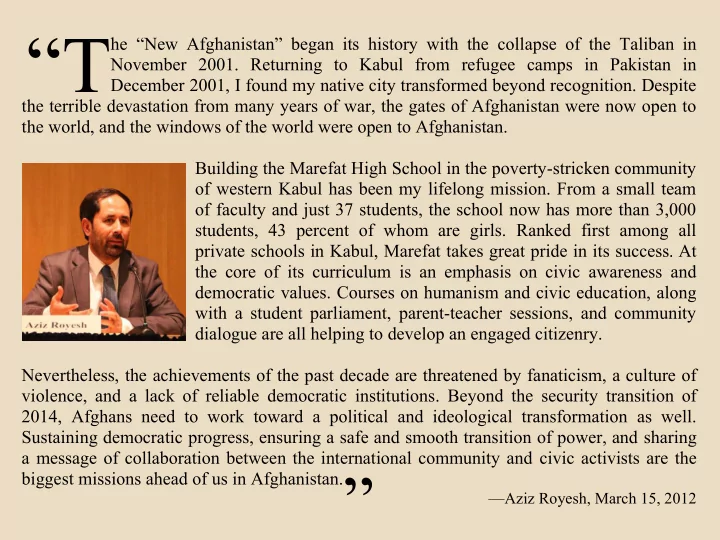
—Aziz Royesh, March 15, 2012