
SLIDE 1
International Union for Conservation of Nature
Sustainable Financing - MPAs
Case Study from Nha Trang Bay- Marine Protected Area, Vietnam
Bernard O’Callaghan, Programme Coordinator - IUCN Vietnam
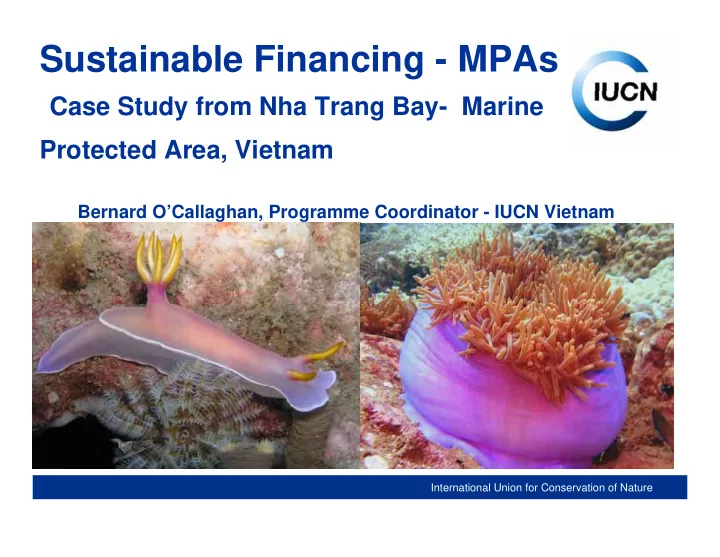
Sustainable Financing - MPAs Case Study from Nha Trang Bay- Marine - - PowerPoint PPT Presentation
Sustainable Financing - MPAs Case Study from Nha Trang Bay- Marine Protected Area, Vietnam Bernard OCallaghan, Programme Coordinator - IUCN Vietnam International Union for Conservation of Nature Introducing presentation Case study of
International Union for Conservation of Nature
Case Study from Nha Trang Bay- Marine Protected Area, Vietnam
Bernard O’Callaghan, Programme Coordinator - IUCN Vietnam
International Union for Conservation of Nature
for Protected Areas in Vietnam
support local communities
mechanism in marine and coastal areas
International Union for Conservation of Nature
protected areas
willingness to pay
protected area management
International Union for Conservation of Nature
Nha Trang City
Khanh Hoa Province Province
Southern Central Central Vietnam Vietnam
International Union for Conservation of Nature
International Union for Conservation of Nature
to demonstrate co-management regimes
implemented by MoFi / IUCN Viet Nam Country Program (2001-2005)
International Union for Conservation of Nature
hectares
villages
people; about 80% inhabitants living based on fishing activities;
annually
International Union for Conservation of Nature
Community involvement essential as actual loss
arrangements included:
committees
and operation of VILLAGE DEVELOPMENT FUNDS - Why ?
International Union for Conservation of Nature
International Union for Conservation of Nature
sustainable financing mechanism through user fees
generated was proposed to be returned to local communities.
reaching this target …………..
International Union for Conservation of Nature
community for MPA establishment
dispersal of funds
– US$2,000 for each of six villages = $12,000 / allocation
International Union for Conservation of Nature
– Restoration of market – Waste management system
– Road and walking path for school children
– Temple restoration – Development of village learning centre
International Union for Conservation of Nature
financing mechanism through:
– User fees for entry into the Protected Area – Visitor service charge for specific activities – MPA Conservation Fund – Other supports and – Corporate sponsorship
was proposed to be returned to local communities.
International Union for Conservation of Nature
– Nationals Tourists – US $0.30 – International Tourists – US $1-00
user fees
International Union for Conservation of Nature
Two fees established
– Dong 5,000 / person (US$ 0.30)/ pax – All tourists on boat to Nha Trang Bay
– Divers - Dong 30,000 /pax (US$ 2.00)/person – Snorkelers - Dong 10,000 / pax (US$ 0.60)/ pax – All tourists visiting the “core zone”
International Union for Conservation of Nature
Number of tourists
200000 400000 600000 800000 2000 2001 2002 2003 2004 2005 2006 2007 years Tourist numbers International Domestic
International Union for Conservation of Nature
3.1 Billion VND $200,000 700,000 2007 2.5 Billion VND $150,000 500,000 2006 Revenue Tourists
International Union for Conservation of Nature
International Union for Conservation of Nature
– 55% of total fees will be used by the Nha Trang Bay MPA Authority – 45 % will be remitted to Provincial Treasury and this money will be used for conservation activities of Nha Trang Bay and 10% providing back to local communities within the MPA
International Union for Conservation of Nature
communities, who is responsible ?
– Province, district, commune
– Additionally of revenue to be assured
benefit of resource allocation (not household level)
International Union for Conservation of Nature
International Union for Conservation of Nature
– but only contributes to one site of the national system (15 sites in national system)
– Otherwise only “pearls” are funded
and national system
International Union for Conservation of Nature
poverty alleviation and MPA management effectiveness are intimately linked
– Alternative Income Generation (e.g. nature- based tourism, sustainable aquaculture, MPA management etc.) – Credit schemes and trust funds – Sustainable financing – Evaluation!
International Union for Conservation of Nature
generated through tourism by user fees
management authorities to maintain the environment
for allocation of funds to local communities
International Union for Conservation of Nature
International Union for Conservation of Nature
coastal protection
biodiversity conservation conservation
Brood stock protection protection
International Union for Conservation of Nature
International Union for Conservation of Nature
International Union for Conservation of Nature
Service Providers
Local communities Services provided:
breeding and nursery grounds
Service Receivers
Fishermen Services received:
harvests
Ecosystem Services Payment Providers
International Union for Conservation of Nature
International Union for Conservation of Nature
International Union for Conservation of Nature
Ecosystem Services Payment Providers
Shoreline Protection
Service Receivers
Communities / cities and towns Services received:
resources
infrastructure
Service Providers
Local communities Government – resource managers Services provided:
from storms / typhoons, etc
International Union for Conservation of Nature
Maintenace of water quality
International Union for Conservation of Nature
International Union for Conservation of Nature
C
a l b i
i v e r s i t y Fisheries Production
Tourism
C
t r i b u t i
t
r
e c t e d a r e a s y s t e m S h a r k a n d t u r t l e c
s e r v a t i
International Union for Conservation of Nature
International Union for Conservation of Nature