
UNSW Study Abroad, in collaboration with the UNSW Department of Hispanic Studies, offers students the opportunity to study Spanish intensively in Seville, Spain for four weeks. Seville is the capital of Andalusia, an autonomous province in the south of Spain. Andalusia sits on the Mediterranean coast, across the sea from the north coast of Africa. Because of its location at the nexus of vibrant and contrasting civilisations, it has a rich and varied history, bringing together a striking blend
- f Berber, Islamic and traditional
Spanish cultures. Located on the plain of the River Guadalquivir, Seville is home to 700,000 inhabitants, making it the fourth largest city in Spain. Its fascinat- ing history dates back over two thousand years to the days of the Roman Empire. Traces of the empire remain preserved in and around the city, allowing visitors to the sites glimpses into the past. Arabic infl uences that came to the Iberian Penin- sula in later years permeated the region and can still be felt in every sphere of life, from the city’s architecture to its cuisine, gardens and literature. Following Christopher Columbus’ foray to the New World and the subsequent activities of the Spanish colonies, Seville became an important mercantile centre during the fl
- wering of Spain’s
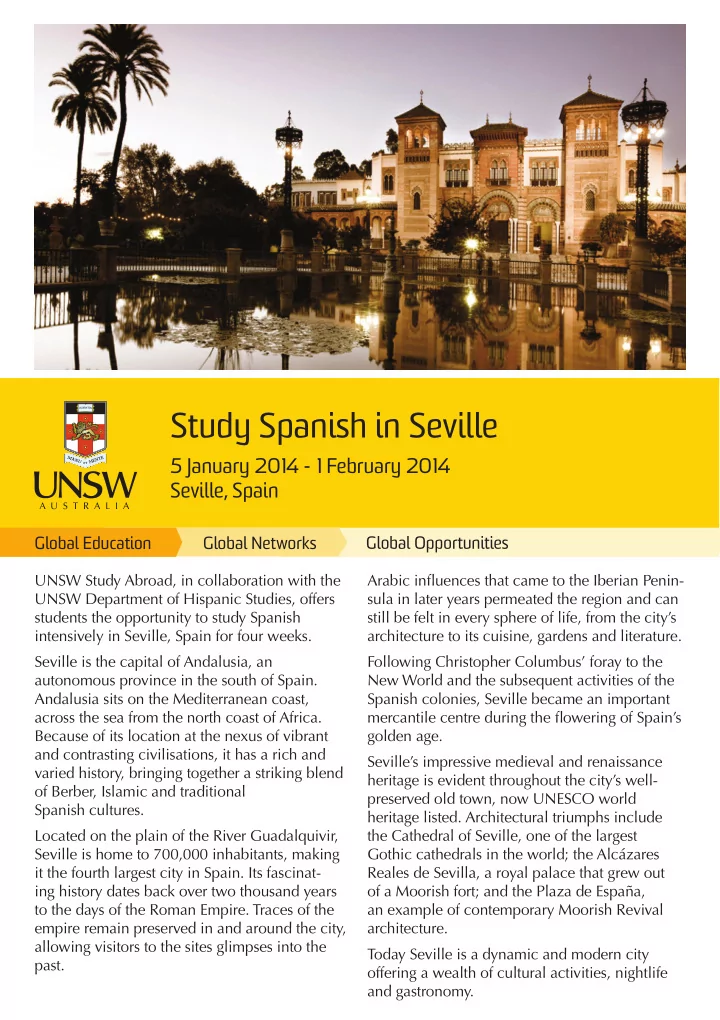
golden age. Seville’s impressive medieval and renaissance heritage is evident throughout the city’s well- preserved old town, now UNESCO world heritage listed. Architectural triumphs include the Cathedral of Seville, one of the largest Gothic cathedrals in the world; the Alcázares Reales de Sevilla, a royal palace that grew out
- f a Moorish fort; and the Plaza de España,
an example of contemporary Moorish Revival architecture. Today Seville is a dynamic and modern city
- ffering a wealth of cultural activities, nightlife
and gastronomy.