STREETS AND OPEN SPACES The spaces between buildings are where - - PDF document

streets and open spaces
SMART_READER_LITE
LIVE PREVIEW

STREETS AND OPEN SPACES The spaces between buildings are where - - PDF document

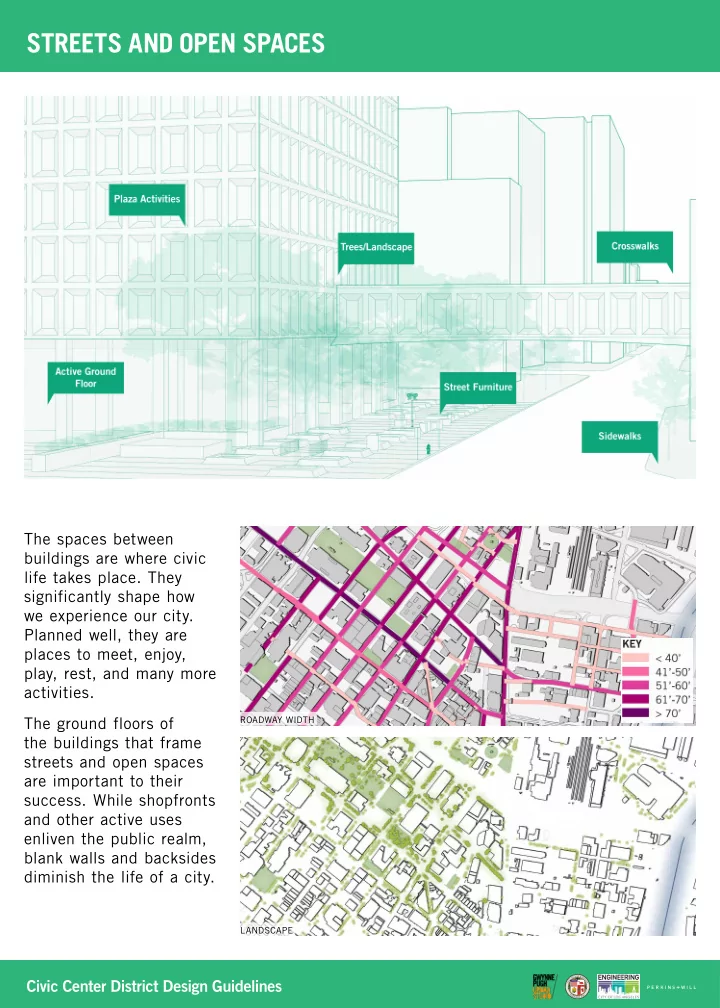
STREETS AND OPEN SPACES The spaces between buildings are where civic life takes place. They significantly shape how we experience our city. Planned well, they are places to meet, enjoy, play, rest, and many more activities. The ground


slide-1
SLIDE 1

STREETS AND OPEN SPACES

The spaces between buildings are where civic life takes place. They significantly shape how we experience our city. Planned well, they are places to meet, enjoy, play, rest, and many more activities. The ground floors of the buildings that frame streets and open spaces are important to their

  • success. While shopfronts

and other active uses enliven the public realm, blank walls and backsides diminish the life of a city.

ROADWAY WIDTH LANDSCAPE

Civic Center District Design Guidelines

slide-2
SLIDE 2

SIDEWALKS STREETS PASEOS PARKS GROUND-FLOOR ACTIVATION

TEXT

Precedent Images

slide-3
SLIDE 3

BUILDINGS AND ARCHITECTURE

BUILDING FOOTPRINT SIZE FIGURE GROUND

Buildings house the many different uses that make a vibrant neighborhood. They also shape the neighborhood with their presence in the public

  • realm. Well-designed

architecture that respects the human scape makes a neighborhood fell

  • welcoming. They can

provide a sense of safety day and night. In Civic Center, new buildings should enhance the appearance of City Hall and not overshadow it.

BUILDING ENTRANCES

Civic Center District Design Guidelines

slide-4
SLIDE 4

MASSING FACADES BULK AND HEIGHT RELATIONSHIP TO CITY HALL FABRIC VS. ICON

Precedent Images

slide-5
SLIDE 5

IDENTITY AND WAYFINDING

CIVIC CENTER INTERSECTIONS DISTRICTS

Great neighborhoods have an identity of their own. When you get there, you know that you have arrived. Many things come together to create this identity: the character of buildings, materials, plants and trees, the uses, the presence of art, and many more. The future Civic Center should reflect the Los Angeles we love. It should also have an identity of its

  • wn that reflects its role as

the center of government for all Angelenos. In addition, it should be easy to find your destination.

DISTRICT LOT COVERAGE FRONTAGE | MAIN & FIRST

Civic Center District Design Guidelines

slide-6
SLIDE 6

SKYLINE IDENTITY ART ACCESSIBILITY WAYFINDING

Precedent Images

slide-7
SLIDE 7

MOBILITY AND TECHNOLOGY

Civic Center District Design Guidelines Today, the way we con- nect with the city is chang- ing rapidly. There are more and more choices about how to get around. Bike shares, scooters, hoverboards, and

  • thers augment cars, bikes,

and transit. At the same time, the internet allows us to do business at City Hall without even going there. Civic Center will accommo- date not only today’s technol-

  • gies but also tomorrow’s.

How we build neighborhoods also influences our environ- mental footprint. New devel-

  • pment in Civic Center will

consider our use of water, energy, and other resources.

METRO TRANSIT SURFACE PARKING LOTS

slide-8
SLIDE 8

MULTI-MODALITY SUSTAINABILITY ACCESS VIA DEVICES DIGITAL INFORMATION

Precedent Images

slide-9
SLIDE 9

Little Tokyo/Arts District Station Union Station Civic Center / Grand Park Station

Streets and Open Spaces

  • Buildings and Architecture
  • Identity and Wayfinding
  • Mobility and Technology
  • Temple Street

101 FWY 1st Street 2 n d S t r e e t 3 r d S t r e e t Spring Street

G r a n d e A v e n u e H

  • p

e S t r e e t

Main Street Los Angeles Street San Pedro Street A l a m e d a S t r e e t J u d g e J

  • h

n A i s

  • S

t r e e t

Civic Center District Design Guidelines

Grand Park Parker Center Japanese American National Museum Japanese American Cultural & Community Center City Hall Walt Disney Concert Hall Union Station Caltrans LAPD