State Emergency Response Guides: Planning for Incident Waterway - - PDF document

state emergency response guides planning for incident
SMART_READER_LITE
LIVE PREVIEW

State Emergency Response Guides: Planning for Incident Waterway - - PDF document

6/25/2019 State Emergency Response Guides: Planning for Incident Waterway Debris Jessica Conway, NOAA Marine Debris Program/Genwest Systems Project Scope Focus on waterway debris Solid material (including vegetative debris)


slide-1
SLIDE 1

6/25/2019 1

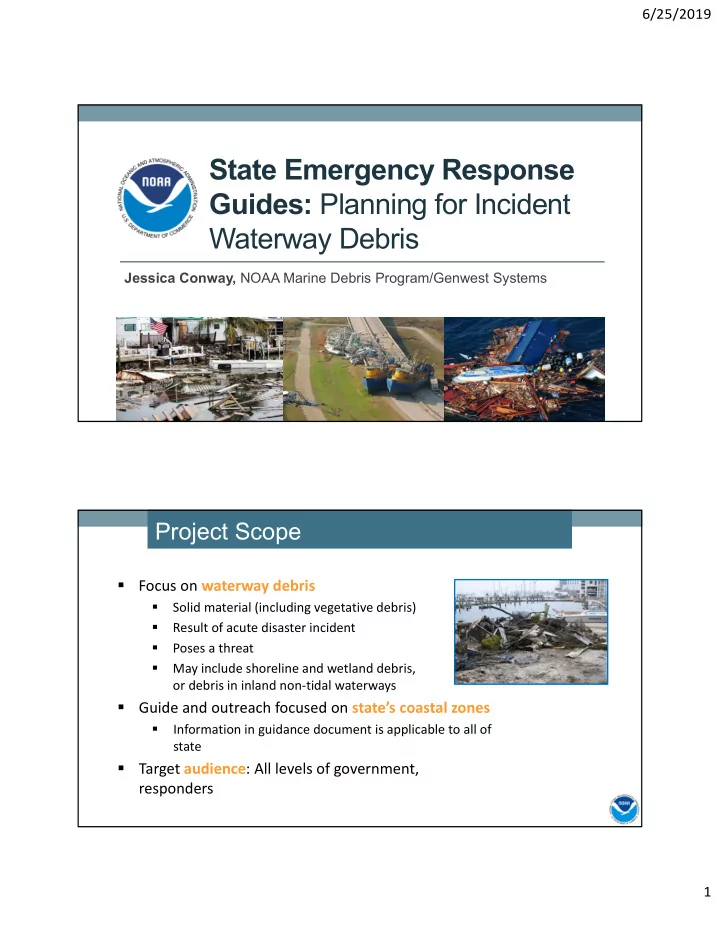
State Emergency Response Guides: Planning for Incident Waterway Debris

Jessica Conway, NOAA Marine Debris Program/Genwest Systems

  • Focus on waterway debris
  • Solid material (including vegetative debris)
  • Result of acute disaster incident
  • Poses a threat
  • May include shoreline and wetland debris,
  • r debris in inland non‐tidal waterways
  • Guide and outreach focused on state’s coastal zones
  • Information in guidance document is applicable to all of

state

  • Target audience: All levels of government,

responders

Project Scope

slide-2
SLIDE 2

6/25/2019 2

Improve preparedness for response to and recovery from acute marine debris incidents in coastal states

Outline existing response structures, procedures, and responsibilities at the local, state, and federal levels into individual state guidance documents

Project Goal

  • 1. Develop guidance document that facilitates the response to and

recovery from acute waterway debris incidents in coastal states

Consolidate waterway debris response information into a single document using information from existing plans, programs, and agency authorities

  • 2. Conduct waterway debris response exercises/drills to increase

preparedness, validate guide information, and identify response challenges

Stand‐alone exercises or as injects in larger response drills and exercises

Project Objectives

slide-3
SLIDE 3

6/25/2019 3

  • 3. Support the integration of response guide content into other

existing local, state, or regional plans and trainings

Such as U.S. Coast Guard Area Contingency Plans, state and county emergency management plans, etc.

Project Objectives National Project Status

Published & Complete Background Research In Progress

PR USVI

slide-4
SLIDE 4

6/25/2019 4

Guide Development Process

  • 1. Background research
  • 2. Engage stakeholders – one on one
  • 3. Document roles, responsibilities, points
  • f contact, and jurisdictions
  • 4. Outline permitting and compliance

structure

  • 5. Engage stakeholders – workshop
  • 6. Document edits and finalization
  • 7. Stakeholder review
  • 8. Publication

I. Introduction

  • II. Background Risk: Foreseeable Incidents

and Debris Types

  • III. Roles, Responsibilities, and Jurisdictions
  • IV. Permitting and Compliance

Requirements

  • V. Challenges, Needs, and Recommended

Actions

  • VI. Contact Information

Guide Contents

slide-5
SLIDE 5

6/25/2019 5 I. Introduction

  • II. Background Risk: Foreseeable Incidents

and Debris Types

  • III. Roles, Responsibilities, and Jurisdictions
  • IV. Permitting and Compliance

Requirements

  • V. Challenges, Needs, and Recommended

Actions

  • VI. Contact Information

Field Reference Guide

Guide Contents

Questions?

Jessica Conway 843-614-7427 jessica.conway@noaa.gov