Solent Maritime SAC Condition Assessment and improving water quality - - PowerPoint PPT Presentation

solent maritime sac condition assessment and improving
SMART_READER_LITE
LIVE PREVIEW

Solent Maritime SAC Condition Assessment and improving water quality - - PowerPoint PPT Presentation

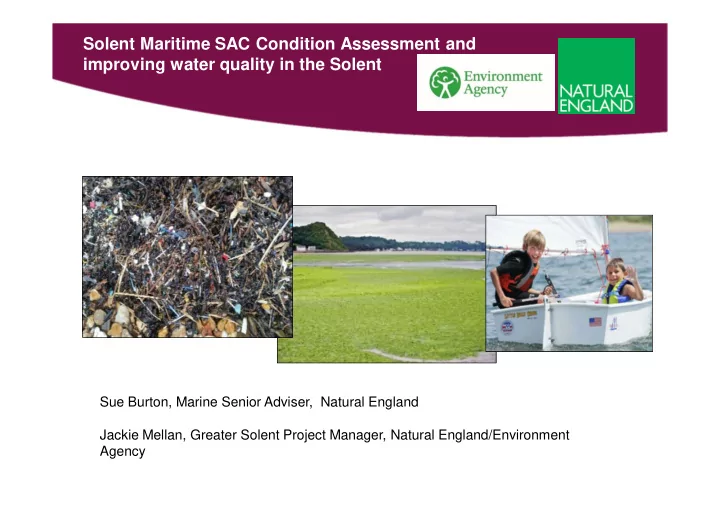
Solent Maritime SAC Condition Assessment and improving water quality in the Solent Sue Burton, Marine Senior Adviser, Natural England Jackie Mellan, Greater Solent Project Manager, Natural England/Environment Agency Solent Maritime SAC


slide-1
SLIDE 1

Solent Maritime SAC Condition Assessment and improving water quality in the Solent

Sue Burton, Marine Senior Adviser, Natural England Jackie Mellan, Greater Solent Project Manager, Natural England/Environment Agency

slide-2
SLIDE 2
  • Solent Maritime SAC condition assessment
  • Impacts of nutrients
  • Sources of nutrients
  • Measures currently being taken to reduce nutrients
  • What can SEMS group do to help?
slide-3
SLIDE 3

Solent Maritime SAC

  • Solent Maritime SAC Condition Assessment
  • Summary assessments, together with the qualifying sub feature assessments, are

given for the site’s marine qualifying features:

  • Estuaries

Unfavourable - water quality nutrients; reduced extent of saltmarshWater

quality – nutrientLoss of saltmarsh – zonation, exte

  • Mudflats and sandflats not covered by seawater at low tide

Unfavourable - water quality nutrients

  • Sandbanks which are slightly covered by sea water all the time

Unfavourable – water quality nutrients, TBT, slipper limpet, infaunal index

  • Coastal Lagoons

Favourable - but decline of lagoonal cockle and non native species

slide-4
SLIDE 4

Impacts of nutrients – Macro algae growth

  • Most clearly evidenced by lush green macroalgae growth
  • Leading to an impact on invertebrates and bird feeding

behaviour

slide-5
SLIDE 5

Impacts of Nutrients – Birds, Seagrass beds and Saltmarsh

  • Declines in shelduck numbers
  • Wider effects on the functioning of estuarine ecosystems
  • Saltmarsh and seagrass loss
slide-6
SLIDE 6

Impacts of nutrients– recreational users, tourism and fisheries

  • Bad smells effecting tourism
  • Entanglement in boat propellers
  • Impacts on shellfisheries
slide-7
SLIDE 7

Catchment overview of the sources and movement of nutrients

Source: Stratham et al, 2012

slide-8
SLIDE 8

Source of nutrients

slide-9
SLIDE 9

Management Measures

  • Diffuse Source regulatory measures
  • Point source regulatory measures
  • Point source voluntary measures
  • Diffuse source voluntary measures
slide-10
SLIDE 10

Natura 2000 – Judicial Review

slide-11
SLIDE 11

Timescales for recovery

slide-12
SLIDE 12

What can SEMS do? Benefits of tackling urban diffuse pollution

  • Multitude of in combination effects can be significant and

more so in some locations

  • A reduction will become transparent quicker than

agricultural diffuse due to time lag through groundwater

  • Other consequential benefits eg reduction of E coli

(bathing water and shellfish)

  • Raises awareness and understanding of this issue
slide-13
SLIDE 13

What can SEMS do? Producing materials to improve awareness

  • Improve public awareness of

the nutrient issue and algal mats

  • Collate images and

information on impacts on habitats and other possible consequences for CSF

  • fficers to convey to farmers
slide-14
SLIDE 14

What can SEMS do? Taking action to protect your local estuary

  • Public awareness campaigns e.g. ‘Only pee, paper

and poo down the loo’, Dorset Litter Free Coast and Sea, ‘Think before you flush’

slide-15
SLIDE 15

What can SEMs do? Encouraging good practice

  • Use holding tanks and

sewage pump out facilities

  • Fit house boats with STWs
slide-16
SLIDE 16

What can SEMs do? Citizen Science Citizen science collection of data – e.g. Thames Outfalls safaris

slide-17
SLIDE 17

What can SEMS group do to help reduce nutrients in the Solent?

Promoting Good practice

  • Improve public awareness
  • Collating images and information on impacts to convey to farmers
  • Encouraging other to take action

Monitoring activities

  • Citizen science –identifying priority areas for misconnections
  • Reporting pollution - Point and diffuse sources of soil, sewage, litter,

boat washings, etc. Regulatory

  • Enforcement of relevant byelaws?

Operations

  • Provision of public toilets and pump out facilities for boat users