
SLIDE 1
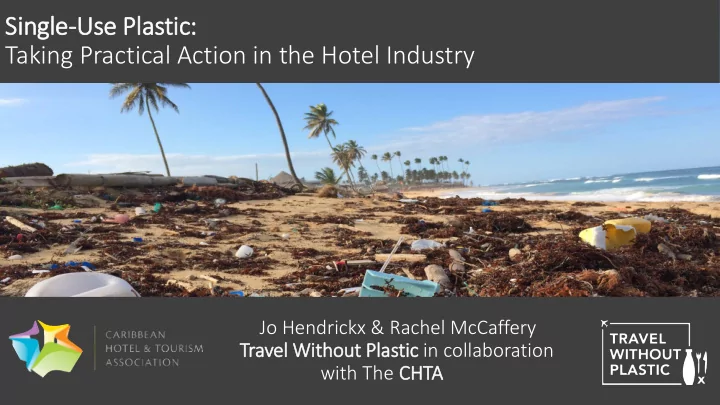
Singl gle-Us Use P Plastic: Taking Practical Action in the Hotel - - PowerPoint PPT Presentation
Singl gle-Us Use P Plastic: Taking Practical Action in the Hotel Industry Jo Hendrickx & Rachel McCaffery Travel W l Without P Plastic ic in collaboration with The CHTA TA Jo Hendrickx Rachel McCaffery Founder & CEO Bu siness
References for any research mentioned during the presentation will be available in the slide deck
REASONS
Health, Safety, Hygiene
Minimise injuries at pool side and/or on the beach, minimise incidences of cross contamination, concerns around safe tap water
Habit
Bathroom amenities, cups wrapped in plastic, plastic wraps informing that the toilet is clean
Convenience
Take-Away options - less space required in dining areas, easy to clear away, no requirements for dishwashing or storage, keeps buffets clean and tidy
Staff
No need to pay additional staff to clear, wash, stack and prepare reusable items
Alternatives
Cost, availability, usability, infrastructure
alternatives (environmentally and ethically)
seems
have a limited shelf life
that some alternatives clash with current H&S expectations
for help in sourcing alternatives
reducing unnecessary packaging
reduce carbon associated with transport
most popular items banned by a range of Caribbean islands including Dominica, Jamaica, Turks and Caicos, Haiti, St. Vincent and The Grenadines, a move publicly supported by the UN Environment
polystyrene fast-food containers, ear-buds, coffee cups by 2021
UNITED NATIONS ENVIRONMENT
Eliminate Unnecessary plastics that add no value to the customer experience and cost money that your business doesn’t need to spend Choose Reusable Select from a range of reusable alternatives, including plastics, bamboo, silicon, stainless steel, aluminium, fabric – always considering the full natural capital cost of those replacements Sustainable Single-Use Consider organic based alternatives that do break down naturally and are not harmful to environments
Know your Baseline Engage Staff and Guests Implement and Evaluate
Phase 1 – Knowing your baseline
business purchases and how much it costs
commit to eliminating them
you to prioritise particular items
items that you believe can make the biggest impact (environmentally and financially)
Phase 2 – Engaging Others
share with them the statistics from your cost/consumption exercise
would have upon workload, customer satisfaction, current processes, disposal etc
gain support for your objectives
Phase 3 (Implementation & Evaluation)
customer feedback and staff feedback before making a final decision
they come into the market place.
Offer valid until 30th April 2019
Count
Be counted towards our goal of reducing single-use plastic items by ONE BILLION by 2020
Feature
Be featured in our portfolio of hotels working to reduce single-use
Receive
Receive updates when new alternatives hit the market
Accelerate
Accelerate change and reach your goals more quickly if you've already taken the first steps
Engage
Engage staff with training presentations and guests with communications guidance
Calculate
Calculate the total number of plastic items used and the associated cost
Identify
Identify where plastic is used in your hotel
Website: https://www.travelwithoutplastic.com Email: info@travelwithoutplastic.com Telephone: 0034 611 42 36 42 (GMT)