
Secession and War
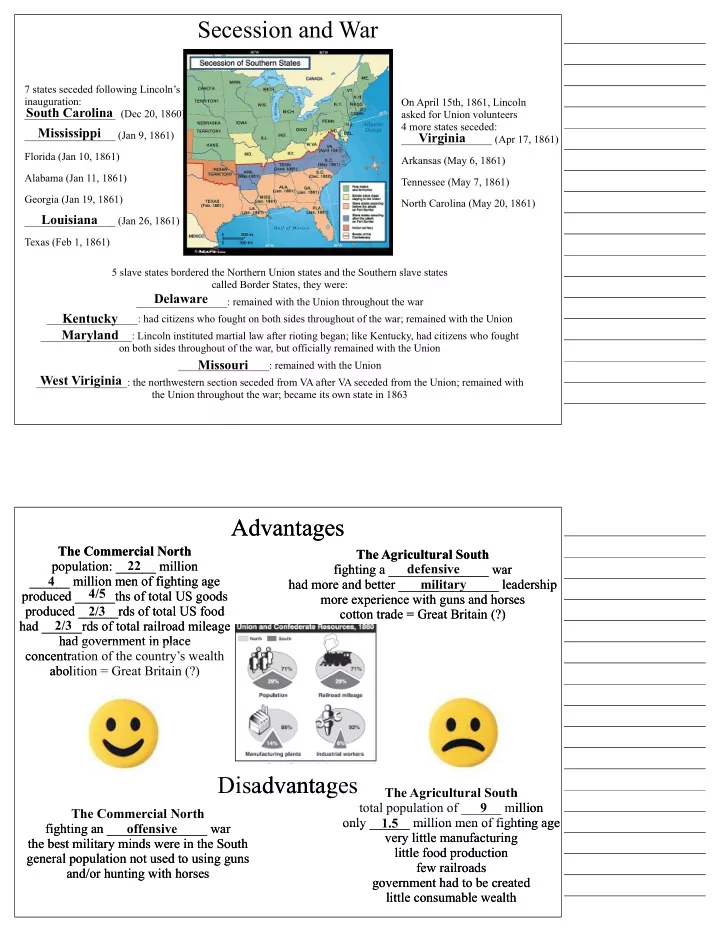
7 states seceded following Lincoln’s inauguration: _________________ (Dec 20, 1860) _________________ (Jan 9, 1861) Florida (Jan 10, 1861) Alabama (Jan 11, 1861) Georgia (Jan 19, 1861) _________________ (Jan 26, 1861) Texas (Feb 1, 1861) On April 15th, 1861, Lincoln asked for Union volunteers 4 more states seceded: _________________ (Apr 17, 1861) Arkansas (May 6, 1861) Tennessee (May 7, 1861) North Carolina (May 20, 1861)
South Carolina Mississippi Louisiana Virginia
5 slave states bordered the Northern Union states and the Southern slave states called Border States, they were: _________________: remained with the Union throughout the war _________________: had citizens who fought on both sides throughout of the war; remained with the Union _________________: Lincoln instituted martial law after rioting began; like Kentucky, had citizens who fought
- n both sides throughout of the war, but officially remained with the Union
_________________: remained with the Union _________________: the northwestern section seceded from VA after VA seceded from the Union; remained with the Union throughout the war; became its own state in 1863
Delaware Kentucky Maryland Missouri West Viriginia
Advantages
The Agricultural South fighting a _______________ war had more and better _______________ leadership more experience with guns and horses cotton trade = Great Britain (?) The Commercial North population: ______ million ______ million men of fighting age produced ______ths of total US goods produced ______rds of total US food had ______rds of total railroad mileage had government in place concentration of the country’s wealth abolition = Great Britain (?) The Commercial North fighting an _______________ war the best military minds were in the South general population not used to using guns and/or hunting with horses
Disadvantages
The Agricultural South total population of ______ million
- nly ______ million men of fighting age
very little manufacturing little food production few railroads government had to be created little consumable wealth
Advantages
The Agricultural South fighting a _______________ war had more and better _______________ leadership more experience with guns and horses cotton trade = Great Britain (?) The Commercial North population: ______ million ______ million men of fighting age produced ______ths of total US goods produced ______rds of total US food had ______rds of total railroad mileage had government in place concentration of the country’s wealth abolition = Great Britain (?) The Commercial North fighting an _______________ war the best military minds were in the South general population not used to using guns and/or hunting with horses
Disadvantages
The Agricultural South total population of ______ million
- nly ______ million men of fighting age
very little manufacturing little food production few railroads government had to be created little consumable wealth 22 4 4/5 2/3 2/3 defensive military 1.5
- ffensive