Scaling up rou-ng CSCI 466: Networks Keith Vertanen - - PowerPoint PPT Presentation

scaling up rou ng
SMART_READER_LITE
LIVE PREVIEW

Scaling up rou-ng CSCI 466: Networks Keith Vertanen - - PowerPoint PPT Presentation

Scaling up rou-ng CSCI 466: Networks Keith Vertanen Fall 2011 Overview Last -me: Intradomain rou-ng Distance-vector (RIP,


slide-1
SLIDE 1

Scaling ¡up ¡rou-ng ¡

CSCI ¡466: ¡Networks ¡• ¡ ¡Keith ¡Vertanen ¡ ¡• ¡ ¡Fall ¡2011 ¡
slide-2
SLIDE 2

Overview ¡

2 ¡

  • Last ¡-me: ¡

– Intradomain ¡rou-ng ¡

  • Distance-­‑vector ¡(RIP, ¡EIGRP) ¡
  • Link-­‑state ¡(OSPF) ¡
  • This ¡-me: ¡

– Scaling ¡to ¡a ¡global ¡network ¡ – Interdomain ¡rou-ng ¡

  • Path-­‑vector ¡
slide-3
SLIDE 3

The ¡Internet: ¡1969 ¡

3 ¡

slide-4
SLIDE 4

The ¡Internet: ¡1971 ¡

4 ¡

slide-5
SLIDE 5

The ¡Internet: ¡1973 ¡

5 ¡

slide-6
SLIDE 6

The ¡Internet: ¡1975 ¡

6 ¡

slide-7
SLIDE 7

The ¡Internet: ¡1977 ¡

7 ¡

slide-8
SLIDE 8

The ¡Internet: ¡1979 ¡

8 ¡

slide-9
SLIDE 9

The ¡Internet: ¡1987 ¡

9 ¡

slide-10
SLIDE 10

The ¡Internet: ¡1999 ¡

10 ¡

slide-11
SLIDE 11

Distance-­‑vector ¡vs. ¡Link-­‑state ¡

11 ¡

Distance-­‑vector ¡ Link-­‑state ¡ Knowledge ¡of ¡neighbors' ¡distance ¡to ¡ des-na-ons ¡ Knowledge ¡of ¡every ¡router's ¡links ¡ (en-re ¡network ¡graph) ¡ Router ¡has ¡O(# ¡neighbors ¡* ¡# ¡nodes) ¡ Router ¡has ¡O(# ¡edges) ¡ ¡ Messages ¡only ¡between ¡neighbors ¡ Messages ¡between ¡all ¡nodes ¡ Trust ¡a ¡peer's ¡rou-ng ¡computa-on ¡ Trust ¡a ¡peer's ¡info ¡ Do ¡rou-ng ¡yourself ¡ Bellman-­‑Ford ¡algorithm ¡ Dijkstra's ¡algorithm ¡ Enhanced ¡Interior ¡Gateway ¡Rou-ng ¡ Protocol ¡(EIGRP) ¡ Proprietary ¡Cisco ¡protocol ¡ Open ¡Shortest ¡Path ¡First ¡(OSPF) ¡ Open ¡protocol ¡standard ¡ Advantages: ¡ Less ¡info ¡has ¡to ¡be ¡stored ¡ Lower ¡computa-on ¡overhead ¡ Advantages: ¡ Fast ¡to ¡react ¡to ¡changes ¡

slide-12
SLIDE 12

Shortest ¡path ¡rou-ng ¡

  • Problems ¡with ¡always ¡taking ¡shortest ¡path: ¡

– All ¡traffic ¡must ¡travel ¡on ¡shortest ¡path ¡ – All ¡nodes ¡must ¡do ¡same ¡link ¡cost ¡calcula-on ¡ – Not ¡possible ¡to ¡enforce ¡various ¡business ¡rules ¡

12 ¡

Customer ¡2 ¡ Customer ¡1 ¡ Customer ¡3 ¡ Regional ¡ISP ¡2 ¡ Regional ¡ISP ¡1 ¡ Na@onal ¡ ¡ ISP ¡2 ¡ Na@onal ¡ ¡ ISP ¡1 ¡ Regional ¡ISP ¡3 ¡

slide-13
SLIDE 13

Shortest ¡path ¡rou-ng ¡

  • Example: ¡customer ¡3 ¡talking ¡to ¡customer ¡1 ¡

– Shortest ¡path ¡transits ¡Regional ¡ISP ¡2 ¡ – Regional ¡ISP ¡2 ¡isn't ¡being ¡paid ¡by ¡either ¡customer ¡

13 ¡

Customer ¡1 ¡ Customer ¡2 ¡ Customer ¡3 ¡ Regional ¡ISP ¡2 ¡ Regional ¡ISP ¡1 ¡ Na@onal ¡ ¡ ISP ¡2 ¡ Na@onal ¡ ¡ ISP ¡1 ¡ Regional ¡ISP ¡3 ¡

slide-14
SLIDE 14

Shortest ¡path ¡rou-ng ¡

  • Example: ¡customer ¡3 ¡talking ¡to ¡customer ¡1 ¡

– Goes ¡through ¡Na-onal ¡ISP ¡1 ¡& ¡2 ¡ – Regional ¡3 ¡is ¡paying ¡Na-onal ¡ISP ¡2 ¡ – Regional ¡1 ¡is ¡paying ¡Na-onal ¡ISP ¡1 ¡

¡

14 ¡

Customer ¡1 ¡ Customer ¡2 ¡ Customer ¡3 ¡ Regional ¡ISP ¡2 ¡ Regional ¡ISP ¡1 ¡ Na@onal ¡ ¡ ISP ¡2 ¡ Na@onal ¡ ¡ ISP ¡1 ¡ Regional ¡ISP ¡3 ¡

slide-15
SLIDE 15

Shortest ¡path ¡rou-ng ¡

  • Example: ¡customer ¡3 ¡talking ¡to ¡customer ¡2 ¡

– Regional ¡2 ¡and ¡3 ¡are ¡peered ¡ – Avoid ¡going ¡through ¡Na-onal ¡ISP ¡2 ¡since ¡then ¡ both ¡regionals ¡would ¡incur ¡expense ¡

15 ¡

Customer ¡1 ¡ Customer ¡2 ¡ Customer ¡3 ¡ Regional ¡ISP ¡2 ¡ Regional ¡ISP ¡1 ¡ Na@onal ¡ ¡ ISP ¡2 ¡ Na@onal ¡ ¡ ISP ¡1 ¡ Regional ¡ISP ¡3 ¡

slide-16
SLIDE 16

Other ¡rou-ng ¡issues ¡

  • Policies ¡may ¡be ¡poli-cal, ¡security, ¡or ¡

economic: ¡

– Some ¡examples ¡(Tanenbuam): ¡

  • Don't ¡carry ¡commercial ¡traffic ¡on ¡educa-onal ¡network ¡
  • Never ¡send ¡Pentagon ¡traffic ¡through ¡Iraq ¡
  • Use ¡TeliaSonera ¡instead ¡of ¡Verizon ¡because ¡it ¡is ¡

cheaper ¡

  • Don't ¡use ¡AT&T ¡in ¡Australia ¡because ¡performance ¡is ¡

poor ¡

  • Traffic ¡star-ng ¡or ¡ending ¡at ¡Apple ¡should ¡not ¡transit ¡

Google ¡

16 ¡

slide-17
SLIDE 17

Link-­‑state, ¡disadvantages ¡

  • Floods ¡topology ¡informa-on ¡

– High ¡bandwidth ¡and ¡storage ¡requirements ¡ – Nodes ¡divulge ¡poten-ally ¡sensi-ve ¡informa-on ¡

  • En-re ¡path ¡computed ¡locally ¡

– High ¡processing ¡overhead ¡for ¡large ¡network ¡

  • Distance ¡calcula-on ¡hides ¡informa-on ¡

– Everyone ¡has ¡to ¡have ¡a ¡shared ¡no-on ¡of ¡link ¡cost ¡

  • Typically ¡used ¡within ¡one ¡organiza-on ¡

– Autonomous ¡System ¡(AS) ¡

  • e.g. ¡university, ¡company, ¡ISP ¡

– Popular ¡link-­‑state ¡protocols: ¡OSPF, ¡IS-­‑IS ¡

17 ¡

slide-18
SLIDE 18

Distance-­‑vector ¡

  • Disadvantages: ¡

– Count ¡to ¡infinity, ¡"bad ¡news ¡travels ¡slow" ¡ – Slow ¡to ¡converge ¡ – Hides ¡informa-on ¡that ¡you ¡might ¡need ¡in ¡an ¡interdomain ¡ sehng ¡

  • Advantages: ¡

– Summarizes ¡details ¡of ¡network ¡topology ¡

  • Trades ¡op-mality ¡for ¡scalability ¡

– Each ¡node ¡only ¡needs ¡to ¡know ¡about ¡next ¡hop ¡

18 ¡

slide-19
SLIDE 19

Path-­‑vector ¡rou-ng ¡

  • Extension ¡of ¡distance-­‑vector ¡

– Support ¡flexible ¡rou-ng ¡policies ¡ – Avoid ¡count-­‑to-­‑infinity ¡problem ¡

  • Key ¡idea: ¡adver-se ¡the ¡en-re ¡path ¡

– Distance ¡vector: ¡send ¡distance ¡metric ¡per ¡des-na-on ¡d ¡ – Path ¡vector: ¡send ¡the ¡en?re ¡path ¡per ¡des-na-on ¡d ¡

19 ¡

d

“d: path (2,1)” “d: path (1)” data traffic data traffic

2 ¡

1 ¡ 3 ¡

slide-20
SLIDE 20

Detec-ng ¡loops ¡

  • Path-­‑vector ¡can ¡easily ¡detect ¡loop ¡

– Look ¡for ¡your ¡own ¡node ¡ID ¡in ¡the ¡path ¡ – e.g. ¡node ¡1 ¡sees ¡itself ¡in ¡path ¡"3, ¡2, ¡1" ¡

  • Node ¡can ¡discard ¡paths ¡with ¡loops ¡

– e.g. ¡node ¡1 ¡drops ¡adver-sement ¡ ¡

20 ¡

2 ¡

1 ¡

“d: path (2,1)” “d: path (1)” “d: path (3,2,1)”

3 ¡

slide-21
SLIDE 21

Flexible ¡rou-ng ¡policies ¡

  • Each ¡node ¡can ¡apply ¡local ¡policies: ¡

– Path ¡selec-on: ¡Which ¡path ¡to ¡use? ¡ – Path ¡export: ¡Which ¡path ¡to ¡adver-se? ¡

21 ¡

2 3 1 2 3 1 Node ¡2 ¡may ¡prefer ¡the ¡path ¡ "2, ¡3, ¡1" ¡over ¡the ¡path ¡"2, ¡1". ¡ ¡ Perhaps ¡it ¡is ¡cheaper. ¡ Node ¡1 ¡may ¡not ¡export ¡the ¡ path ¡"1, ¡2". ¡ ¡Perhaps ¡node ¡1 ¡ reserves ¡the ¡1-­‑>2 ¡link ¡for ¡ special ¡traffic. ¡

slide-22
SLIDE 22

Scaling ¡up ¡

  • How ¡to ¡scale ¡a ¡single ¡company's ¡network? ¡

– Add ¡a ¡level ¡of ¡hierarchy ¡

  • Within ¡a ¡single ¡organiza-on ¡(aka ¡autonomous ¡system) ¡

– Rou-ng ¡areas ¡

  • Most ¡routers ¡in ¡a ¡single ¡area ¡

– Routers ¡only ¡send ¡informa-on ¡within ¡their ¡area ¡ – Detailed ¡topology ¡for ¡only ¡their ¡area ¡ – Traffic ¡going ¡outside ¡of ¡area, ¡send ¡to ¡backbone ¡

  • Area ¡0 ¡= ¡backbone ¡

– Some ¡routers ¡in ¡both ¡backbone ¡and ¡other ¡area(s) ¡ – Area ¡Border ¡Router ¡(ABR) ¡

¡

22 ¡

slide-23
SLIDE 23

Rou-ng ¡areas ¡

23 ¡

R1, ¡R2, ¡and ¡R3 ¡are ¡in ¡the ¡ backbone ¡area. ¡ ¡ R1 ¡is ¡an ¡ABR ¡for ¡area ¡1 ¡and ¡2. ¡ R2 ¡is ¡an ¡ABR ¡for ¡area ¡2. ¡ R3 ¡is ¡an ¡ABR ¡for ¡area ¡3. ¡

slide-24
SLIDE 24

Rou-ng ¡areas ¡

  • Contains ¡informa-on ¡flow ¡

– Link-­‑state ¡adver-sements ¡contained ¡in ¡your ¡area ¡ – Reduces ¡cost ¡of ¡flooding ¡and ¡route ¡calcula-on ¡

  • Summarizes ¡informa-on ¡

– ABRs ¡adver-se ¡cost ¡of ¡networks ¡in ¡their ¡areas ¡as ¡if ¡ directly ¡connected ¡to ¡the ¡ABR ¡

  • Non-­‑op-mal ¡rou-ng ¡

– Going ¡via ¡backbone ¡may ¡not ¡be ¡the ¡fastest ¡route ¡

24 ¡

slide-25
SLIDE 25

Scaling ¡up ¡and ¡up ¡

  • How ¡to ¡scale ¡to ¡the ¡global ¡Internet? ¡

– Add ¡another ¡level ¡of ¡hierarchy! ¡ – Rou-ng ¡amongst ¡Autonomous ¡Systems ¡(ASes) ¡

  • Dis-nct ¡regions ¡of ¡admin ¡control ¡
  • Routers/links ¡managed ¡by ¡a ¡single ¡ins-tu-on

¡ ¡

  • ASes ¡can ¡use ¡policy-­‑based ¡rou-ng ¡

– Interac-on ¡between ¡ASes ¡

  • Neighboring ¡ASes ¡interact ¡to ¡coordinate ¡rou-ng ¡
  • Internal ¡topology ¡not ¡shared ¡

25 ¡

slide-26
SLIDE 26

Autonomous ¡System ¡Numbers ¡

  • Each ¡AS ¡assigned ¡a ¡unique ¡number ¡

– Before ¡2007: ¡AS ¡Numbers ¡16-­‑bit ¡ – Aper ¡2007: ¡IANA ¡began ¡alloca-ng ¡32-­‑bit ¡AS ¡numbers ¡ – Currently ¡over ¡50,000 ¡allocated ¡

26 ¡

  • Level ¡3: ¡1 ¡ ¡
  • MIT: ¡3 ¡
  • Harvard: ¡11 ¡
  • Yale: ¡29 ¡
  • Princeton: ¡88 ¡
  • AT&T: ¡7018, ¡6341, ¡5074, ¡… ¡ ¡
  • UUNET: ¡701, ¡702, ¡284, ¡12199, ¡… ¡
  • Sprint: ¡1239, ¡1240, ¡6211, ¡6242, ¡… ¡
  • … ¡
slide-27
SLIDE 27

Autonomous ¡System ¡Numbers ¡

27 ¡

slide-28
SLIDE 28

AS ¡stub ¡

28 ¡

Stub ¡AS ¡

– Single ¡connec-on ¡to ¡another ¡AS ¡ – AS ¡only ¡carries ¡local ¡traffic ¡ – e.g. ¡Small ¡corpora-on, ¡university ¡

slide-29
SLIDE 29

AS ¡mul-homed ¡

29 ¡

Mul-homed ¡AS ¡

– Connected ¡to ¡mul-ple ¡ASes ¡ – Refuses ¡to ¡carry ¡transit ¡traffic ¡ – Improves ¡reliability ¡ ¡

slide-30
SLIDE 30

AS ¡transit ¡

30 ¡

Transit ¡AS ¡

– Connected ¡to ¡mul-ple ¡ASes ¡ – Designed ¡to ¡carry ¡transit ¡and ¡local ¡ traffic ¡ ¡

slide-31
SLIDE 31

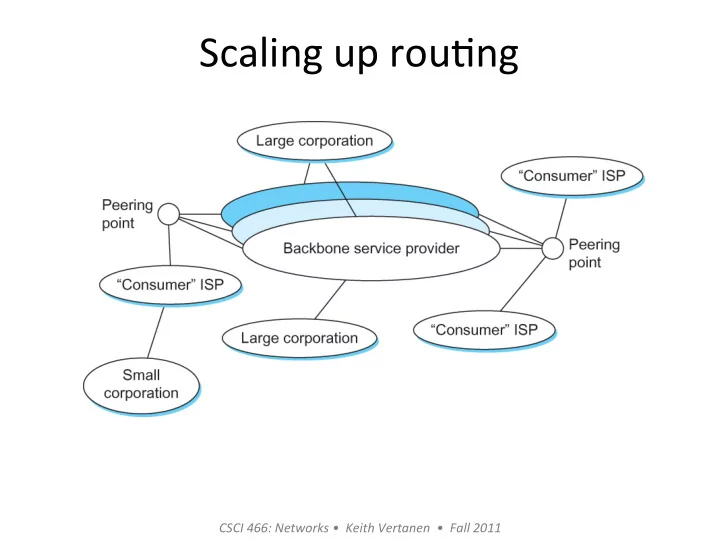
Peering ¡point ¡

31 ¡

Peering ¡point ¡

– Allows ¡ASes ¡to ¡connect ¡directly, ¡ bypassing ¡a ¡transit ¡AS. ¡

slide-32
SLIDE 32

Peering ¡point ¡

  • Peering ¡point ¡

– Many ¡networks ¡come ¡together ¡in ¡one ¡loca-on ¡ – Exchange ¡traffic ¡ ¡

  • reduce ¡cost ¡
  • improve ¡performance ¡
  • improve ¡reliability ¡

– e.g. ¡DE-­‑CIX ¡

  • One ¡of ¡the ¡world's ¡largest ¡peering ¡points ¡
  • 400 ¡ISPs ¡from ¡45+ ¡countries ¡

32 ¡

slide-33
SLIDE 33

DE-­‑CIX ¡daily ¡graph ¡

33 ¡

slide-34
SLIDE 34

DE-­‑CIX ¡yearly ¡graph ¡

34 ¡

slide-35
SLIDE 35

Interdomain ¡rou-ng ¡

  • AS-­‑level ¡topology ¡

– Des-na-ons ¡are ¡IP ¡prefixes ¡(e.g. ¡12.0.0.0/8) ¡ – Nodes ¡are ¡Autonomous ¡Systems ¡(ASes) ¡ – Edges ¡are ¡links ¡and ¡business ¡rela-onships ¡

35 ¡

Client Web server

1 2

3 4

5 6

7

slide-36
SLIDE 36

Interdomain ¡rou-ng ¡challenges ¡

  • Scale: ¡

– IP ¡prefixes: ¡200,000+ ¡ – ASes: ¡20K+ ¡visible, ¡50k+ ¡allocated ¡ – Routers: ¡millions ¡

  • Privacy: ¡

– ASes ¡don't ¡want ¡other ¡to ¡known ¡topology ¡ – ASes ¡don't ¡want ¡business ¡rela-onships ¡exposed ¡

  • Policy: ¡

– No ¡internet-­‑wide ¡no-on ¡of ¡link ¡cost ¡metric ¡ – Need ¡control ¡over ¡where ¡you ¡send ¡traffic, ¡who ¡you ¡send ¡ traffic ¡through, ¡etc. ¡

36 ¡

slide-37
SLIDE 37

Border ¡Gateway ¡Protocol ¡

  • Interdomain ¡rou-ng ¡protocol ¡for ¡the ¡Internet ¡

– Prefix-­‑based ¡path-­‑vector ¡protocol ¡ – Policy-­‑based ¡rou-ng ¡using ¡AS ¡paths ¡ – Evolved ¡over ¡the ¡past ¡18 ¡years ¡

37 ¡

  • 1989 : BGP-1 [RFC 1105], replacement for EGP
  • 1990 : BGP-2 [RFC 1163]
  • 1991 : BGP-3 [RFC 1267]
  • 1995 : BGP-4 [RFC 1771], support for CIDR
  • 2006 : BGP-4 [RFC 4271], update
slide-38
SLIDE 38

Summary ¡

  • Dealing ¡with ¡scale ¡of ¡Internet ¡

– Separate ¡into ¡autonomous ¡systems ¡(ASes) ¡ – Within ¡an ¡AS: ¡

  • Use ¡an ¡intradomain ¡rou-ng ¡protocol ¡(OSPF) ¡
  • Route ¡op-mally ¡

– Between ¡ASes: ¡

  • Use ¡an ¡interdomain ¡rou-ng ¡protocol ¡that ¡routes ¡

between ¡ASes ¡

  • Path-­‑vector ¡rou-ng ¡allows ¡scaling ¡and ¡implementa-on ¡
  • f ¡policy ¡compliant ¡paths ¡
  • Next: ¡details ¡of ¡BGP, ¡IPv6, ¡NAT ¡

38 ¡