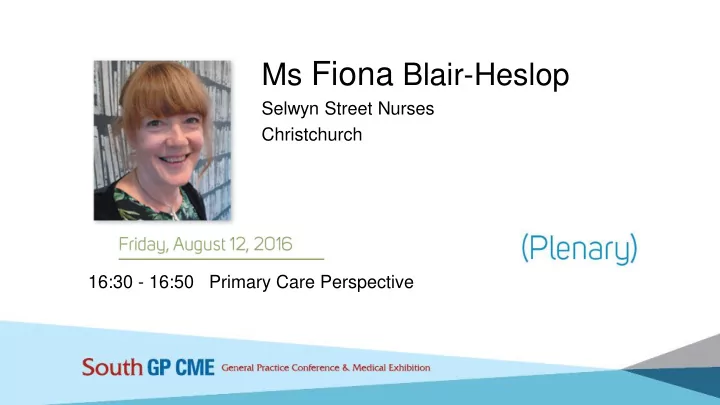
SLIDE 1 Ms Fiona Blair-Heslop
Selwyn Street Nurses Christchurch 16:30 - 16:50 Primary Care Perspective
SLIDE 2
Primary Care Perspective
SLIDE 3
Selwyn Village HealthCare
2013, started considering how to better manage
COPD within the practice
Some ‘Frequent flyers’ requiring high input, feeling
we’re perpetuating reliance and ‘fire fighting’ not ‘managing’ or ‘empowering’
Anecdotally under-diagnosing or miss- diagnosing Coding variance
SLIDE 4
Focus on case finding – likely under or miss
diagnosing COPD. Data Provided included;
Smoking rates, Coding, Spirometry, Admissions,
Pulmonary rehab rates and Dispensing
Coincided with the introduction of Acute Plans for
patients at risk of admission
Visit from Respiratory Team CPH December 2013
SLIDE 5
The Practice chose to take this further with a two pronged approach;
Develop a practice wide protocol for managing
known COPD And
Case finding for undiagnosed COPD Quality focus and best practice principles
SLIDE 6
Protocol
Known COPD
QB and search to find current patients Review lists Nurse/GP team – frequent attendees, complex,
symptomatic, admissions and exacerbations invited in Case Finding
QB to find smokers over 40, on a reliever Review notes and post out an offer letter and flyer
SLIDE 7 Known COPD
Nurse previews notes and prepares, requests repeat Spirometry
if appropriate to confirm diagnosis and severity
30 min nurse, 15 min GP appt Nurse does physical exam, CAT and mMRC score, checks inhaler
technique and changes spacers, and...
education, smoking cessation, vaccines, BMI & dietary advice,
falls risk, offers pulmonary rehab, medicines management, accessible parking
establishes Gold severity group
SLIDE 8
GP reviews diagnosis, co-morbidities and
medications action plan agreed between all parties and scripted separately
Nurse gives patient/Family home action plan and
also enters into CCMS for view by ED/After Hours
Recall on to repeat in 12 months – usually pre
winter
Patient centred approach
SLIDE 9
Enablers & what went well
Enthusiastic drivers within staff IT Tools – ERMS, ePortal, screening terms,
HealthPathways, recurring tasks, QB
Acute Plan funding GP Nurse Team approach with specialist support High level of awareness and opportunistic screening,
education and intervention
SLIDE 10 Roll on effect to managing other conditions Patient and family satisfaction - confidence! Better, and innovative use of other PHC
services – physio, dietician, resp nurses, PCW, Pharmacy and MMS, falls prevention, CREST, age concern
Patients prepared to advocate and mentor
Potential whanau and generational benefit
SLIDE 11
Barriers, Issues and opportunities
Complexity – high level of co-morbidities Dangers of a disease centric approach Patient reluctance – ‘unwanted’ diagnosis Variance of coding and managing Uneven rollout – acute plan Cultural and language issues not addressed –
ethnicity, age, gender
Staff training and working up to scope
SLIDE 12
Funding
We’re quite good at funding interventions e.g.
acute plans
Not good at funding prevention e.g. case finding A group of patients need the education and
intervention but not an acute plan – therefore no funding
New funded COPD meds aren’t helping reduce
complexity
SLIDE 13
Results?
Stats a Little better - still not up to predicted rates Big increase in referrals for spirometry and pulmonary
rehab
Smoking cessation advice up+ GP Nurse team spin offs A platform to launch other disease management – CHF, CRF Raised level of awareness – lots of opportunistic testing and
discussions e.g. at triage
SLIDE 14 Like the rest of general practice;
- ‘Its all about people and relationships’
- ‘More than one bite of the apple’
- Team approach is key – all LTC
- Cleverness with funding and services