
SLIDE 1
Presentation
- DR. RENAISA ANTHONY, MD, MPH
Deputy Director, Center for Reducing Health Disparities University of Nebraska Medical Center
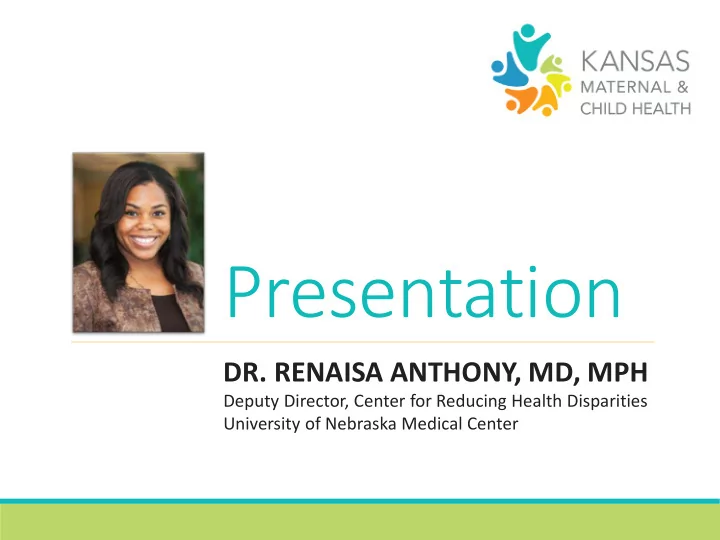
Presentation DR. RENAISA ANTHONY, MD, MPH Deputy Director, Center - - PowerPoint PPT Presentation
Presentation DR. RENAISA ANTHONY, MD, MPH Deputy Director, Center for Reducing Health Disparities University of Nebraska Medical Center Adverse Childhood Experiences (ACE Scores) Theory, Application & Implementation Renaisa S. Anthony MD,
Deputy Director, Center for Reducing Health Disparities University of Nebraska Medical Center
Renaisa S. Anthony MD, MPH
Deputy Director/Assistant Professor Center for Reducing Health Disparities College of Public Health (402) 559-9660 January 11, 2017
Adverse Childhood Experiences (ACE Scores) Theory, Application & Implementation
Who is passionate about women, children and adolescents? MCH?
MODIFIABLE
NON MODIFIABLE
OTHERS (may or may not be modifiable)
Where you live, work, play and pray makes a tremendous impact on health and long term life outcomes.
Also what you experienced before the age of 18…makes a significant impact Unfortunately, children DO NOT Start at the same Start Line
Adverse Childhood Experiences
http://www.npr.org/sections/health-shots/2015/03/02/387007941/take-the-ace-quiz-and- learn-what-it-does-and-doesnt-mean
Childhood Experiences Underlie Chronic Depression
10 20 30 40 50 60 70 80 % With a Lifetime History of Depression 1 2 3 >=4 ACE Scores Women Men
ACE Score vs. Unintended Pregnancy or Elective Abortion
10 20 30 40 50 60 70 80
% have Unintended PG, or AB
1 2 3 4 or more
ACE Score
Unintended Pregnancy Elective Abortion
Childhood Experiences Underlie Later Suicide
5 10 15 20 25 % Attempting Suicide
ACE Score
0 1 2 3 >=4
What happens to these children? What determines their outcomes?
What happens to these children? What determines their outcomes?
34 From Neal Halfon
Influences Over the Life Course
Risk vs. Protective Factors:
Drinking alcohol Smoking tobacco Sexual promiscuity Using drugs Overeating/eating disorders Delinquent behavior Poor Impulse Control Self inflicted harm (self injury) Relationship Trauma and more…..
is right!
groups whose uncommon behaviors and strategies enable them to find better solutions to problems than their peers, while having access to the same resources. Adverse Childhood Experiences, 40 Developmental Assets, Resilience,
Mitigate ACEs
HOW CAN YOU APPLY THIS FOR YOUR POPULATION & KEY STAKEHOLDERS
Prevention & Lifecourse Model
Trauma Informed Care http://www.traumainformedcareproject.org/
Reproductive Life Planning! http://www.cdc.gov/preconception/reproductiveplan.html
Preconception & Interconception
http://www.cdc.gov/preconception/index.html
Centering Pregnancy
Poverty Simulator playspent.org
Bridges Out of Poverty
Collaboration: Academic Partners
Socio-ecological model (SEM)
https://www.youtube.com/watch?v=yQrBCJpTewc
Renaisa S. Anthony MD, MPH University of Nebraska Medical Center Center for Reducing Health Disparities College of Public Health Renaisa.anthony@unmc.edu 402 559-9660