Potomac Highlands CWPMA Are all non native species invasive? - - PowerPoint PPT Presentation

potomac highlands cwpma are all non native species
SMART_READER_LITE
LIVE PREVIEW

Potomac Highlands CWPMA Are all non native species invasive? - - PowerPoint PPT Presentation

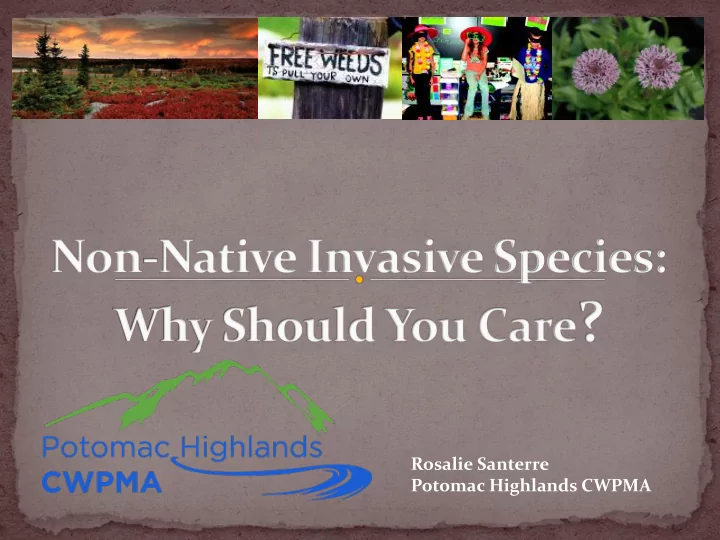
Rosalie Santerre Potomac Highlands CWPMA Are all non native species invasive? Exotic? o Rapid Growth Rate o No Predators o High Seed Production o Early Germination Cause Environmental and/or Economic Damage! Intentionally Accidentally


slide-1
SLIDE 1

Rosalie Santerre Potomac Highlands CWPMA
slide-2
SLIDE 2
slide-3
SLIDE 3

Are all non native species invasive?

slide-4
SLIDE 4

Exotic?

  • Rapid Growth Rate
  • High Seed Production
  • No Predators
  • Early Germination

Cause Environmental and/or Economic Damage!

slide-5
SLIDE 5

 Intentionally  Accidentally

slide-6
SLIDE 6

West Virginia

  • Wood products industry = $4 billion

annually and 30,000 jobs.

  • Recreational pursuits= $803 million annually.
slide-7
SLIDE 7

 The forests contribute to the overall quality of life by

 reducing energy costs  lowering pollution  protecting watersheds from erosion and sedimentation  providing for long -term carbon sequestration  improving air quality

slide-8
SLIDE 8
slide-9
SLIDE 9
  • If left unchecked, invasive species will limit many

uses on lands now and for future generations

  • The wetlands, prairies, forests, lakes, and rivers as

we know and love them may be less diverse and vibrant for our children

slide-10
SLIDE 10

An ounce of prevention is worth a pound of cure!

  • Save Time
  • Save Energy
  • Save Money
  • Protect Native Landscapes!
slide-11
SLIDE 11
  • Don’t plant invasive plants.
  • Don’t move firewood.
  • Clean equipment, clothing and gear when moving

between different outdoor activities.

  • Manage invasive species on your land, look to your

extension agent for more information

  • Contact the Potomac Highlands CWPMA to report

infestations and learn more about how to manage them

slide-12
SLIDE 12

5 plants 3 insects 2 diseases

slide-13
SLIDE 13
slide-14
SLIDE 14
slide-15
SLIDE 15
slide-16
SLIDE 16
slide-17
SLIDE 17
slide-18
SLIDE 18
slide-19
SLIDE 19
slide-20
SLIDE 20
slide-21
SLIDE 21
slide-22
SLIDE 22

Trees at Risk:

 Ash  Birches  Elm  European mountain ash  Hackberry  Horsechestnut  Maple  Mimosa  Poplars  Willow

slide-23
SLIDE 23
slide-24
SLIDE 24
slide-25
SLIDE 25
slide-26
SLIDE 26
slide-27
SLIDE 27