Pho to b y Pa tric k E nd re s T his do c ume nt wa s suppo rte d - - PowerPoint PPT Presentation

pho to b y pa tric k e nd re s
SMART_READER_LITE
LIVE PREVIEW

Pho to b y Pa tric k E nd re s T his do c ume nt wa s suppo rte d - - PowerPoint PPT Presentation

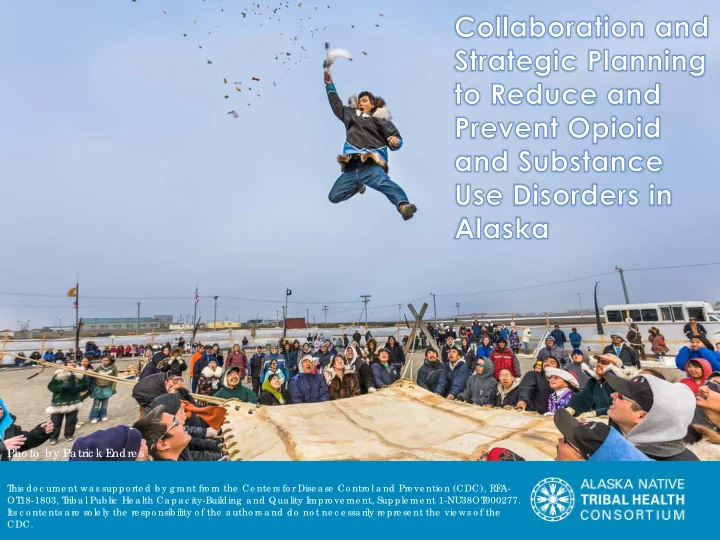
Pho to b y Pa tric k E nd re s T his do c ume nt wa s suppo rte d b y g ra nt fro m the Ce nte rs fo r Dise a se Co ntro l a nd Pre ve ntio n (CDC), RF A- OT 18-1803, T rib a l Pub lic He a lth Ca pa c ity-Building a nd Qua lity I mpro


slide-1
SLIDE 1

T his do c ume nt wa s suppo rte d b y g ra nt fro m the Ce nte rs fo r Dise a se Co ntro l a nd Pre ve ntio n (CDC), RF A- OT 18-1803, T rib a l Pub lic He a lth Ca pa c ity-Building a nd Qua lity I mpro ve me nt, Supple me nt 1-NU38OT 000277. I ts c o nte nts a re so le ly the re spo nsib ility o f the a utho rs a nd do no t ne c e ssa rily re pre se nt the vie ws o f the CDC.

Pho to b y Pa tric k E nd re s

slide-2
SLIDE 2

Introductions

Pho to b y Cla rk Mishle r

slide-3
SLIDE 3

Learning Objectives

By the end of this session, participants will

  • Describe how public health policies impact behavioral

health service delivery;

  • Be able to name the top six public information needs

identified in the ANTHC statewide needs assessment; and

  • Identify collaborative strategies to improve tribal public

health systems.

slide-4
SLIDE 4

Agenda

I. ANTHC and Alaska Tribal Health System Overview

  • II. Alaska Tribal Statewide Needs Assessment
  • III. 42 CFR Part 2
  • IV. Collaborative Strategies
  • V. Results from Strategic Planning Session
  • VI. What’s Next
slide-5
SLIDE 5

Ala ska Na tive T riba l He a lth Consortium

An Ove rvie w

slide-6
SLIDE 6
slide-7
SLIDE 7

Alaska Tribal Health System (ATHS)

slide-8
SLIDE 8
slide-9
SLIDE 9
slide-10
SLIDE 10

Ala ska T riba l Sta te wide Ne e ds Asse ssme nt

Pho to b y Amy Gulic k

slide-11
SLIDE 11

Education Epidemiology Behavioral Health Clinical Research Dead Sick Clinical At risk Surveillance Prediction Prediction Media Health Personnel Special Groups General Population Coordination/ Education DHHS Law Enforcement Municipalities DOI CDC NIH SAMHSA Tribal Health Organization Coordination DOL DOJ Coordination

Education Clinical Tribal Health Organization Education Clinical Tribal Health Organization Education Clinical Tribal Health Organization Education Clinical Tribal Health Organization

229 Tribes 31 Tribal Health Organizations

Education Clinical Tribal Health Organization Education Clinical Tribal Health Organization

slide-12
SLIDE 12

Emergency Operating Center Model

Fatiregun, A. & Isere, E. (2017). Epidemic preparedness and management: A guide on Lassa fever outbreak preparedness plan. Niger Med J. 58(1):1-6. doi: 10.4103/0300-1652.218414.

Exposed Clinical Sick Media EDUCATION EPIDEMIOLOGY LABORATORY CLINICAL/ BEHAVIORAL COORDINATION Authorities General Population Special Groups Surveillance Investigation Specimen Transfer Vector Reservoir Dead Prediction Health Personnel Diagnostic

Decisions Infrastructure Regulations, etc.

slide-13
SLIDE 13

Gap: Need for Plain Language Materials

How do opioids ‘re-wire’ a brain? What causes addiction? How do brain changes affect behavior? Do brain changes stop people from wanting to end use?

slide-14
SLIDE 14

Key Messages

MEDICATION ASSISTED TREATMENT HOW TO GET TREATMENT HOW TO HELP SOMEONE CHRONIC PAIN EFFECT OF OPIOIDS ON BRAIN EFFECT OF LONG TERM USE

slide-15
SLIDE 15

42 CF R Pa rt 2

Bac kg ro und and Challe ng e s

Pho to b y Ma rc L e ste r

slide-16
SLIDE 16

42 CFR Part 2

  • Purpose: to ensure privacy for individuals

seeking help for drug or alcohol problems, who might otherwise be deterred from accessing services.

  • Prohibits all disclosures without consent,

except those specifically outlined by the regulations.

slide-17
SLIDE 17

Challenges Related to 42 CFR Part 2

  • Intentionally designed to limit information

sharing

  • Limits collaboration
slide-18
SLIDE 18
slide-19
SLIDE 19
slide-20
SLIDE 20

Colla bora tive Stra te g ie s

Pho to b y Pa tric k E nd re s

slide-21
SLIDE 21

Collaborative Partners

  • Regional tribal health
  • rganizations
  • Native villages
  • State
  • Federal
slide-22
SLIDE 22

Applying Adult Learning Principles

  • Learning styles
  • Communication styles
  • Engagement tools
  • Brain breaks
slide-23
SLIDE 23
slide-24
SLIDE 24

Gamestorming

  • Storyboard
  • Flip It
  • Speed Boat
  • Carousel
slide-25
SLIDE 25

Stra te g ic Prioritie s

slide-26
SLIDE 26

Strategic Priorities

Behavioral health workforce development among Alaska residents; Treating root causes of addiction; and Destigmatizing and humanizing prevention, intervention, and treatment.

slide-27
SLIDE 27

What’s Ne xt?

slide-28
SLIDE 28

Alaska Blanket Exercise

slide-29
SLIDE 29

HoloLens2

https://youtu.be/lRHd5CeZ6fg

slide-30
SLIDE 30

Affinity Groups

slide-31
SLIDE 31

Learning Objectives

By the end of this session, participants will

  • Describe how public health policies impact behavioral

health service delivery;

  • Be able to name the top six public information needs

identified in the ANTHC statewide needs assessment; and

  • Identify collaborative strategies to improve tribal public

health systems.

slide-32
SLIDE 32

Cody Chipp, PhD Director of Behavioral Health clchipp@anthc.org Jackie Engebretson, MSW Behavioral Health Program Manager jlengebretson@anthc.org