
SLIDE 1
59
PECAN ANTHRACNOSE AND OTHER UNUSUAL DISEASES: LEARNING FROM AN UNUSUAL YEAR
Tim Brenneman Department of Plant Pathology University of Georgia Tifton GA With the exception of a dry spell in June, 2009 will be remembered as a year
- f frequent rain starting in early spring and in many areas continuing through
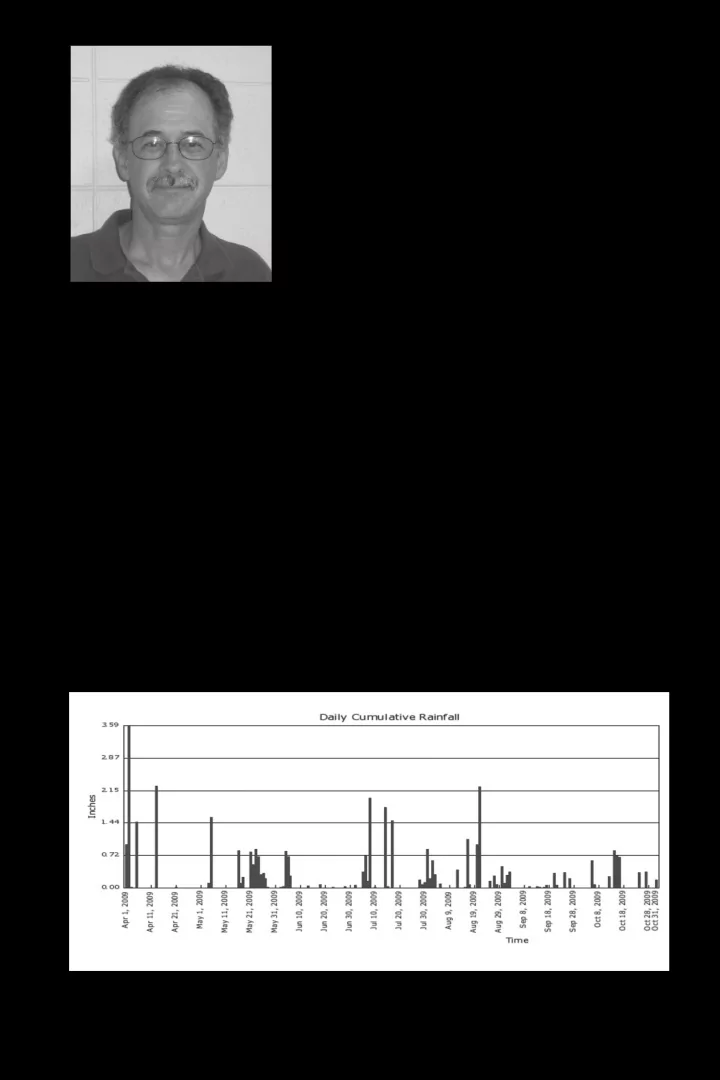
- harvest. Fig. 1 shows the daily rainfall events recorded in Tifton from April
through October, and some areas were wetter than this. Weather such as this always brings disease problems on pecans, and this year was no exception. In addition to the increased infection periods, it also makes it much harder to stay
- n a timely spray schedule. The combined effects lead to serious scab issues as
well as outbreaks of more minor diseases like downy spot. Another disease that made an appearance this year was anthracnose, caused by Glomerella cingulata. Anthracnose has been a problem for growers in the southeastern United States as far back as the early 1900’s. It frequently occurs on nonsprayed or poorly managed trees and can contribute to premature defolia-
- tion. In well managed orchards it is usually a minor disease and has not been
the cause of major yield losses. However, in wetter years it can be a significant issue even in better maintained orchards. Last year was one of those years when it was observed all over the state. Early symptoms were observed on leaves in
- Fig. 1. Daily Rainfall in Tifton from April – October, 2009.