Oral Abstract Session #1 116 A Retrospective Review - - PDF document

oral abstract session 1
SMART_READER_LITE
LIVE PREVIEW

Oral Abstract Session #1 116 A Retrospective Review - - PDF document

Oral Abstract Session #1 116 A Retrospective Review of Nutritional Status as Reflected by Weight Change in Pediatric Patients Post Allogeneic Matched


slide-1
SLIDE 1

Oral ¡Abstract ¡Session ¡#1 ¡

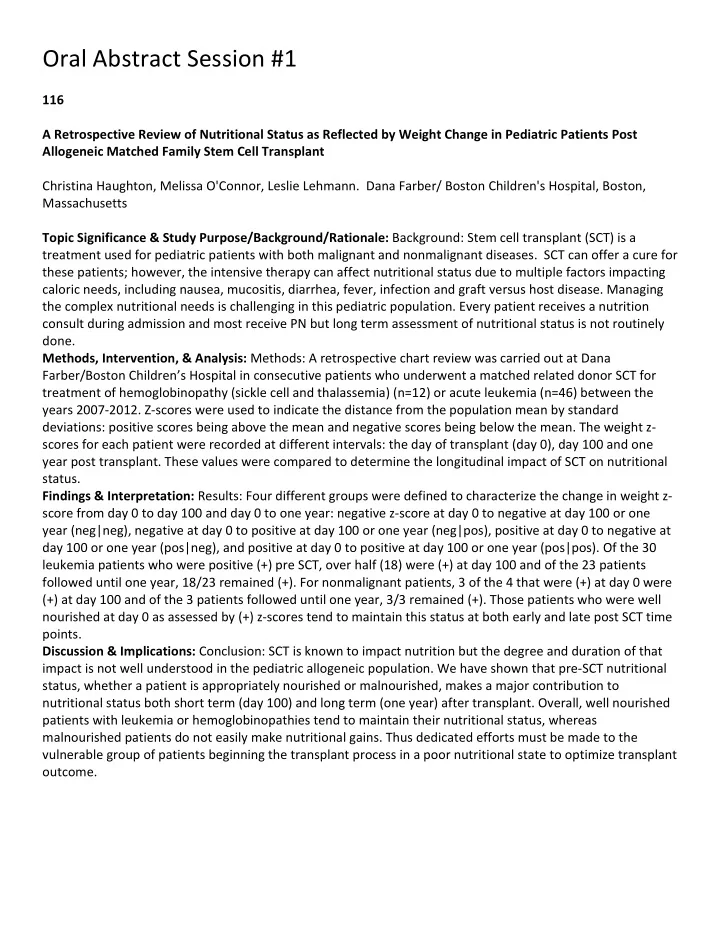
¡ 116 ¡ ¡ A ¡Retrospective ¡Review ¡of ¡Nutritional ¡Status ¡as ¡Reflected ¡by ¡Weight ¡Change ¡in ¡Pediatric ¡Patients ¡Post ¡ Allogeneic ¡Matched ¡Family ¡Stem ¡Cell ¡Transplant ¡ ¡ ¡ Christina ¡Haughton, ¡Melissa ¡O'Connor, ¡Leslie ¡Lehmann. ¡ ¡Dana ¡Farber/ ¡Boston ¡Children's ¡Hospital, ¡Boston, ¡ Massachusetts ¡ ¡ Topic ¡Significance ¡& ¡Study ¡Purpose/Background/Rationale: ¡Background: ¡Stem ¡cell ¡transplant ¡(SCT) ¡is ¡a ¡ treatment ¡used ¡for ¡pediatric ¡patients ¡with ¡both ¡malignant ¡and ¡nonmalignant ¡diseases. ¡ ¡SCT ¡can ¡offer ¡a ¡cure ¡for ¡ these ¡patients; ¡however, ¡the ¡intensive ¡therapy ¡can ¡affect ¡nutritional ¡status ¡due ¡to ¡multiple ¡factors ¡impacting ¡ caloric ¡needs, ¡including ¡nausea, ¡mucositis, ¡diarrhea, ¡fever, ¡infection ¡and ¡graft ¡versus ¡host ¡disease. ¡Managing ¡ the ¡complex ¡nutritional ¡needs ¡is ¡challenging ¡in ¡this ¡pediatric ¡population. ¡Every ¡patient ¡receives ¡a ¡nutrition ¡ consult ¡during ¡admission ¡and ¡most ¡receive ¡PN ¡but ¡long ¡term ¡assessment ¡of ¡nutritional ¡status ¡is ¡not ¡routinely ¡

  • done. ¡ ¡

Methods, ¡Intervention, ¡& ¡Analysis: ¡Methods: ¡A ¡retrospective ¡chart ¡review ¡was ¡carried ¡out ¡at ¡Dana ¡ Farber/Boston ¡Children’s ¡Hospital ¡in ¡consecutive ¡patients ¡who ¡underwent ¡a ¡matched ¡related ¡donor ¡SCT ¡for ¡ treatment ¡of ¡hemoglobinopathy ¡(sickle ¡cell ¡and ¡thalassemia) ¡(n=12) ¡or ¡acute ¡leukemia ¡(n=46) ¡between ¡the ¡ years ¡2007-­‑2012. ¡Z-­‑scores ¡were ¡used ¡to ¡indicate ¡the ¡distance ¡from ¡the ¡population ¡mean ¡by ¡standard ¡ deviations: ¡positive ¡scores ¡being ¡above ¡the ¡mean ¡and ¡negative ¡scores ¡being ¡below ¡the ¡mean. ¡The ¡weight ¡z-­‑ scores ¡for ¡each ¡patient ¡were ¡recorded ¡at ¡different ¡intervals: ¡the ¡day ¡of ¡transplant ¡(day ¡0), ¡day ¡100 ¡and ¡one ¡ year ¡post ¡transplant. ¡These ¡values ¡were ¡compared ¡to ¡determine ¡the ¡longitudinal ¡impact ¡of ¡SCT ¡on ¡nutritional ¡

  • status. ¡ ¡

Findings ¡& ¡Interpretation: ¡Results: ¡Four ¡different ¡groups ¡were ¡defined ¡to ¡characterize ¡the ¡change ¡in ¡weight ¡z-­‑ score ¡from ¡day ¡0 ¡to ¡day ¡100 ¡and ¡day ¡0 ¡to ¡one ¡year: ¡negative ¡z-­‑score ¡at ¡day ¡0 ¡to ¡negative ¡at ¡day ¡100 ¡or ¡one ¡ year ¡(neg|neg), ¡negative ¡at ¡day ¡0 ¡to ¡positive ¡at ¡day ¡100 ¡or ¡one ¡year ¡(neg|pos), ¡positive ¡at ¡day ¡0 ¡to ¡negative ¡at ¡ day ¡100 ¡or ¡one ¡year ¡(pos|neg), ¡and ¡positive ¡at ¡day ¡0 ¡to ¡positive ¡at ¡day ¡100 ¡or ¡one ¡year ¡(pos|pos). ¡Of ¡the ¡30 ¡ leukemia ¡patients ¡who ¡were ¡positive ¡(+) ¡pre ¡SCT, ¡over ¡half ¡(18) ¡were ¡(+) ¡at ¡day ¡100 ¡and ¡of ¡the ¡23 ¡patients ¡ followed ¡until ¡one ¡year, ¡18/23 ¡remained ¡(+). ¡For ¡nonmalignant ¡patients, ¡3 ¡of ¡the ¡4 ¡that ¡were ¡(+) ¡at ¡day ¡0 ¡were ¡ (+) ¡at ¡day ¡100 ¡and ¡of ¡the ¡3 ¡patients ¡followed ¡until ¡one ¡year, ¡3/3 ¡remained ¡(+). ¡Those ¡patients ¡who ¡were ¡well ¡ nourished ¡at ¡day ¡0 ¡as ¡assessed ¡by ¡(+) ¡z-­‑scores ¡tend ¡to ¡maintain ¡this ¡status ¡at ¡both ¡early ¡and ¡late ¡post ¡SCT ¡time ¡

  • points. ¡ ¡ ¡

Discussion ¡& ¡Implications: ¡Conclusion: ¡SCT ¡is ¡known ¡to ¡impact ¡nutrition ¡but ¡the ¡degree ¡and ¡duration ¡of ¡that ¡ impact ¡is ¡not ¡well ¡understood ¡in ¡the ¡pediatric ¡allogeneic ¡population. ¡We ¡have ¡shown ¡that ¡pre-­‑SCT ¡nutritional ¡ status, ¡whether ¡a ¡patient ¡is ¡appropriately ¡nourished ¡or ¡malnourished, ¡makes ¡a ¡major ¡contribution ¡to ¡ nutritional ¡status ¡both ¡short ¡term ¡(day ¡100) ¡and ¡long ¡term ¡(one ¡year) ¡after ¡transplant. ¡Overall, ¡well ¡nourished ¡ patients ¡with ¡leukemia ¡or ¡hemoglobinopathies ¡tend ¡to ¡maintain ¡their ¡nutritional ¡status, ¡whereas ¡ malnourished ¡patients ¡do ¡not ¡easily ¡make ¡nutritional ¡gains. ¡Thus ¡dedicated ¡efforts ¡must ¡be ¡made ¡to ¡the ¡ vulnerable ¡group ¡of ¡patients ¡beginning ¡the ¡transplant ¡process ¡in ¡a ¡poor ¡nutritional ¡state ¡to ¡optimize ¡transplant ¡

  • utcome. ¡ ¡
slide-2
SLIDE 2

Oral ¡Abstract ¡Session ¡#1 ¡ ¡

121 ¡ ¡ Comparing ¡the ¡safety ¡and ¡efficacy ¡of ¡red ¡blood ¡cell ¡transfusion ¡dose ¡in ¡hematopoietic ¡stem ¡cell ¡transplant ¡ patients: ¡single ¡versus ¡double ¡unit ¡transfusions ¡ ¡ Rhonda ¡Evans, ¡Aldijana ¡Avdic, ¡Anne ¡Smith, ¡Sharon ¡Tucker. ¡ ¡University ¡of ¡Iowa ¡Hospitals ¡& ¡Clinics, ¡Iowa ¡City, ¡ Iowa ¡ ¡ ¡ Topic ¡Significance ¡& ¡Study ¡Purpose/Background/Rationale: ¡Until ¡recently, ¡the ¡national ¡standard ¡practice ¡for ¡ blood ¡transfusions ¡in ¡bone ¡marrow ¡transplant ¡patients ¡was ¡two ¡units ¡of ¡red ¡blood ¡cells ¡(RBCs) ¡per ¡transfusion ¡

  • episode. ¡This ¡practice ¡was ¡called ¡into ¡question ¡due ¡to ¡safety ¡concerns, ¡suggesting ¡that ¡one ¡unit ¡of ¡RBCs ¡per ¡

transfusion ¡episode ¡may ¡be ¡an ¡equivalent ¡or ¡even ¡safer ¡and ¡less ¡costly ¡practice ¡(assuming ¡factors ¡such ¡as ¡ amount ¡of ¡bleeding ¡and ¡hemoglobin ¡level ¡are ¡equal). ¡Following ¡a ¡thorough ¡review ¡of ¡existing ¡blood ¡ management ¡practices ¡and ¡review ¡of ¡the ¡literature, ¡our ¡academic ¡medical ¡center ¡changed ¡practice ¡to ¡ routinely ¡transfuse ¡one ¡unit ¡of ¡RBCs ¡per ¡low ¡hemoglobin ¡(7-­‑8 ¡g/dL) ¡episode ¡if ¡certain ¡clinical ¡criteria ¡were ¡met. ¡ Following ¡IRB ¡approval, ¡a ¡retrospective ¡medical ¡record ¡review ¡began ¡to ¡evaluate ¡this ¡practice ¡change ¡among ¡ two ¡groups ¡of ¡hematology-­‑oncology ¡patient ¡populations ¡(allogeneic ¡and ¡autologous ¡bone ¡marrow ¡transplant). ¡ Patient ¡records ¡from ¡these ¡two ¡groups ¡of ¡patients ¡are ¡being ¡evaluated ¡before ¡and ¡after ¡the ¡practice ¡change ¡ (one ¡vs ¡two ¡units ¡of ¡RBCs/transfusion) ¡looking ¡at ¡average ¡units ¡of ¡blood ¡products ¡transfused ¡per ¡patient, ¡ impact ¡on ¡length ¡of ¡stay, ¡and ¡estimate ¡of ¡nursing ¡time ¡costs. ¡The ¡project ¡is ¡expected ¡to ¡generate ¡new ¡ knowledge ¡regarding ¡safe ¡blood ¡management ¡practices ¡in ¡hematology ¡oncology ¡patients. ¡ Methods, ¡Intervention, ¡& ¡Analysis: ¡The ¡project ¡is ¡using ¡the ¡hematology ¡oncology ¡inpatient ¡unit ¡log ¡of ¡ admissions ¡and ¡discharges ¡to ¡identify ¡adult ¡allogeneic ¡and ¡autologous ¡bone ¡marrow ¡transplant ¡patients ¡who ¡ received ¡a ¡blood ¡transfusion ¡for ¡a ¡hemoglobin ¡of ¡7-­‑8g/dl ¡and ¡hematocrit ¡above ¡21%; ¡and ¡were ¡not ¡actively ¡ bleeding, ¡septic, ¡experiencing ¡a ¡major ¡infection, ¡or ¡pregnant. ¡Patient ¡data ¡are ¡being ¡obtained ¡from ¡the ¡ University ¡HealthSystem ¡Consortium ¡(UHC) ¡database. ¡400 ¡cases ¡are ¡being ¡enrolled, ¡200 ¡from ¡pre-­‑practice ¡ change ¡(7-­‑1-­‑2009 ¡to ¡6-­‑30-­‑2011) ¡and ¡200 ¡from ¡post-­‑practice ¡change ¡(9-­‑1-­‑2011 ¡to ¡8-­‑31-­‑2013). ¡A ¡two-­‑month ¡gap ¡ was ¡purposefully ¡included ¡between ¡the ¡two ¡time ¡periods ¡to ¡allow ¡for ¡full ¡transition ¡to ¡the ¡new ¡practice ¡ standard ¡of ¡one ¡unit ¡of ¡RBCs/transfusions. ¡Data ¡thus ¡far ¡suggests ¡a ¡reduction ¡in ¡red ¡blood ¡cell ¡utilization ¡at ¡an ¡ average ¡of ¡1.3 ¡units ¡per ¡hospital ¡discharge. ¡Based ¡on ¡these ¡utilization ¡trends, ¡we ¡are ¡estimating ¡a ¡cost ¡savings ¡

  • f ¡at ¡least ¡$1300 ¡per ¡month ¡just ¡in ¡purchase ¡cost ¡($200 ¡per ¡RBC ¡unit ¡X ¡1.3 ¡units ¡per ¡discharge ¡X ¡an ¡average ¡of ¡

5 ¡patients/month). ¡Additionally, ¡we ¡are ¡estimating ¡a ¡savings ¡in ¡nursing ¡hours ¡of ¡approximately ¡13 ¡hours ¡per ¡ month ¡(2 ¡hours ¡per ¡RBC ¡transfusion ¡X ¡1.3 ¡units ¡per ¡discharge ¡X ¡an ¡average ¡of ¡5 ¡patients/month). ¡ Findings ¡& ¡Interpretation: ¡Preliminary ¡project ¡findings ¡indicate ¡promise ¡for ¡the ¡standard ¡practice ¡of ¡ transfusing ¡one ¡unit ¡of ¡RBCs ¡per ¡low ¡hemoglobin ¡episode ¡for ¡allogeneic ¡bone ¡marrow ¡transplant ¡and ¡ autologous ¡bone ¡marrow ¡transplant ¡patients. ¡After ¡data ¡collection ¡is ¡complete, ¡formal ¡statistics ¡will ¡be ¡ completed ¡to ¡compare ¡the ¡mean ¡number ¡of ¡RBC ¡units ¡between ¡the ¡practice ¡of ¡routinely ¡transfusing ¡1 ¡RBC ¡unit ¡ and ¡the ¡practice ¡of ¡routinely ¡transfusing ¡2 ¡RBC ¡units, ¡as ¡well ¡as ¡comparing ¡length ¡of ¡stay ¡and ¡costs. ¡Early ¡ conclusions ¡suggest ¡the ¡goal ¡of ¡improving ¡the ¡safety ¡of ¡blood ¡transfusions ¡and ¡preserving ¡a ¡precious ¡resource ¡ might ¡be ¡achieved ¡with ¡this ¡important ¡practice ¡change ¡for ¡two ¡groups ¡of ¡oncology ¡patients. ¡These ¡results ¡will ¡ inform ¡other ¡practice ¡settings ¡to ¡improve ¡their ¡use ¡of ¡blood ¡management ¡products ¡for ¡oncology ¡patients ¡and ¡ promote ¡patient ¡safety ¡and ¡cost-­‑effective ¡practices. ¡Use ¡of ¡the ¡UHC ¡database ¡as ¡a ¡meaningful ¡resource ¡for ¡ practice ¡improvement ¡projects ¡and ¡research ¡studies ¡will ¡be ¡highlighted. ¡Continued ¡evaluation ¡and ¡ongoing ¡ improvement ¡of ¡blood ¡management ¡practices ¡at ¡the ¡project ¡site ¡will ¡be ¡discussed ¡with ¡suggestions ¡for ¡other ¡ settings ¡and ¡practices. ¡ ¡

slide-3
SLIDE 3

Oral ¡Abstract ¡Session ¡#1 ¡ ¡

Discussion ¡& ¡Implications: ¡This ¡will ¡help ¡improve ¡the ¡safety ¡of ¡blood ¡transfusions. ¡ ¡It ¡could ¡guide ¡future ¡ studies ¡with ¡baseline ¡information ¡from ¡this ¡transfusion ¡practice ¡change. ¡ ¡Other ¡oncology ¡areas ¡could ¡adopt ¡a ¡ similar ¡practice ¡change, ¡educate ¡patients ¡and ¡clinicians ¡on ¡safe ¡transfusion ¡practices. ¡ ¡ ¡ ¡

slide-4
SLIDE 4

Oral ¡Abstract ¡Session ¡#1 ¡ ¡

118 ¡ ¡ Practices ¡and ¡Experiences ¡of ¡Nurses ¡Working ¡on ¡a ¡Pediatric ¡Bone ¡Marrow ¡Transplant ¡Unit ¡ ¡ Caroline ¡Morrison1, ¡Edith ¡Morris2. ¡ ¡1Cincinnati ¡Children's, ¡Cincinnati, ¡Ohio; ¡2Cincinnati ¡Children's ¡Hospital ¡ Medical ¡Center, ¡Cincinnati, ¡Ohio ¡ ¡ ¡ Topic ¡Significance ¡& ¡Study ¡Purpose/Background/Rationale: ¡Bone ¡marrow ¡transplant ¡(BMT) ¡is ¡an ¡intensive ¡ and ¡complex ¡culture. ¡ ¡The ¡BMT ¡environment ¡is ¡associated ¡with ¡multiple ¡stressors ¡for ¡employees ¡that ¡often ¡ result ¡in ¡turnover, ¡burnout, ¡compassion ¡fatigue, ¡anxiety ¡and ¡emotional ¡exhaustion. ¡ ¡Leininger’s ¡Culture ¡Care ¡ Diversity ¡and ¡Universality ¡theory ¡guided ¡this ¡research ¡and ¡has ¡been ¡used ¡to ¡study ¡organizational ¡culture. ¡ ¡The ¡ purpose ¡of ¡this ¡study ¡was ¡to ¡explore ¡the ¡experiences, ¡care ¡meanings, ¡and ¡practices ¡of ¡nurses ¡working ¡on ¡a ¡ pediatric ¡BMT ¡unit. ¡ ¡The ¡goal ¡is ¡to ¡provide ¡meaningful ¡ways ¡to ¡care ¡for ¡nurses ¡working ¡with ¡children ¡receiving ¡ a ¡bone ¡marrow ¡transplant. ¡ Methods, ¡Intervention, ¡& ¡Analysis: ¡ ¡This ¡Ethnonursing ¡study ¡utilized ¡focus ¡groups ¡as ¡a ¡data ¡collection ¡ technique ¡to ¡foster ¡discussion ¡and ¡richness. ¡ ¡Data ¡were ¡collected ¡until ¡saturation ¡was ¡met. ¡ ¡Registered ¡nurses ¡ recruited ¡from ¡the ¡unit ¡were ¡grouped ¡as ¡experienced ¡(greater ¡than ¡2 ¡years ¡experience, ¡n=11) ¡or ¡less ¡ experienced ¡(less ¡than ¡2 ¡years ¡experience, ¡n=13). ¡ ¡Field ¡notes ¡were ¡used ¡to ¡capture ¡context ¡and ¡observations ¡ from ¡group ¡sessions ¡and ¡the ¡care ¡environment. ¡ ¡Focus ¡group ¡discussions ¡were ¡recorded, ¡transcribed, ¡and ¡

  • coded. ¡ ¡Code ¡words ¡were ¡identified ¡from ¡the ¡data ¡with ¡assistance ¡of ¡NVivo ¡qualitative ¡data ¡analysis ¡software. ¡

Patterns ¡and ¡finally ¡themes ¡emerged ¡from ¡the ¡data ¡that ¡explained ¡nursing ¡culture ¡on ¡the ¡BMT ¡unit. ¡ ¡ Findings ¡& ¡Interpretation: ¡There ¡were ¡four ¡themes ¡of ¡culture ¡care ¡for ¡BMT ¡nurses: ¡1. ¡experiencing ¡stressful ¡ situations, ¡2. ¡growing ¡and ¡developing ¡personally ¡and ¡professionally, ¡3. ¡providing ¡trustworthy ¡and ¡respectful ¡ care, ¡4. ¡acquiring ¡meaningful ¡coping ¡skills. ¡ ¡Many ¡stressors ¡identified ¡by ¡staff ¡align ¡with ¡the ¡literature ¡such ¡as ¡ interprofessional ¡communication, ¡moral/ethical ¡conflict, ¡patient ¡death, ¡and ¡workload. ¡ ¡The ¡majority ¡of ¡coping ¡ skills ¡were ¡personal ¡in ¡nature. ¡ ¡Although ¡not ¡generalizable, ¡results ¡may ¡be ¡transferable ¡to ¡similar ¡populations ¡ and ¡environments. ¡ Discussion ¡& ¡Implications: ¡Interventions ¡to ¡promote ¡healthy, ¡and ¡restructure ¡unhealthy, ¡stress ¡management ¡ techniques ¡and ¡coping ¡skills ¡should ¡be ¡designed ¡and ¡tested ¡in ¡this ¡population. ¡ ¡Interventions ¡aimed ¡at ¡ interprofessional ¡communication ¡and ¡professional ¡development ¡may ¡also ¡be ¡aid ¡in ¡promoting ¡care. ¡ ¡