On or Off? Outline Power Production Transition to Carbon-zero - - PowerPoint PPT Presentation

on or off outline
SMART_READER_LITE
LIVE PREVIEW

On or Off? Outline Power Production Transition to Carbon-zero - - PowerPoint PPT Presentation

NextGenSim 2020: On or Off? Outline Power Production Transition to Carbon-zero Energy Nuclear Power Risks Power Production Like all energy sources, nuclear power has advantages and disadvantages. Fossil Fuel Power 1. Boil water 2.


slide-1
SLIDE 1

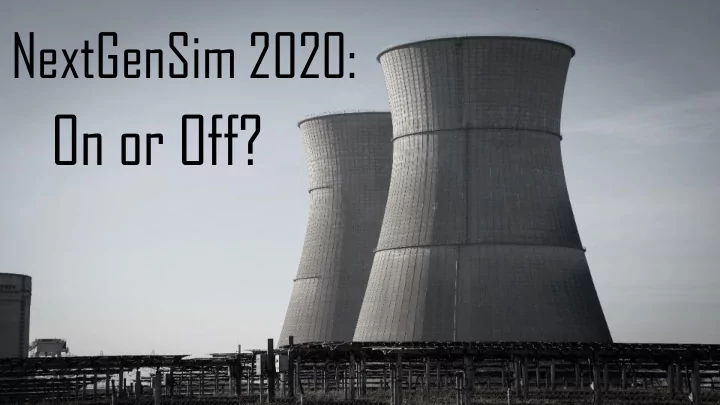
On or Off?

NextGenSim 2020:

slide-2
SLIDE 2

Outline

  • Power Production
  • Transition to Carbon-zero Energy
  • Nuclear Power Risks
slide-3
SLIDE 3

Power Production

Like all energy sources, nuclear power has advantages and disadvantages.

slide-4
SLIDE 4

Fossil Fuel Power

  • 1. Boil water
  • 2. Steam turns turbine
  • 3. Turbine turns generator
  • 4. Water is cooled and returned
slide-5
SLIDE 5

Fossil Fuel Power

  • 1. Boil water
  • 2. Steam turns turbine
  • 3. Turbine turns generator
  • 4. Water is cooled and returned
slide-6
SLIDE 6

Fossil Fuel Power

  • 1. Boil water
  • 2. Steam turns turbine
  • 3. Turbine turns generator
  • 4. Water is cooled and returned
slide-7
SLIDE 7

Fossil Fuel Power

  • 1. Boil water
  • 2. Steam turns turbine
  • 3. Turbine turns generator
  • 4. Water is cooled and returned
slide-8
SLIDE 8

Fossil Fuel Power

  • 1. Boil water
  • 2. Steam turns turbine
  • 3. Turbine turns generator
  • 4. Water is cooled and returned
slide-9
SLIDE 9

Nuclear Power

  • 1. Boil water
  • 2. Steam turns turbine
  • 3. Turbine turns generator
  • 4. Water is cooled and returned
slide-10
SLIDE 10

Fossil Fuel Pollution

  • Almost anything can be burned to produce power
  • Coal
  • Natural gas
  • Wood pellets
  • The chemical burning process produces carbon dioxide and other

greenhouse gases that contribute to pollution and climate change.

  • Nuclear power produces no pollution from the nuclear burn. The only

source of pollution or greenhouse gasses is fuel fabrication and

  • peration.
slide-11
SLIDE 11

Nuclear Fuel Cycle

slide-12
SLIDE 12

Fuel Preparation

  • Natural uranium is mined
  • Natural uranium is 0.7% 235U and 99.3% 238U
  • Only the 235U is useful in a nuclear reactor.
  • Natural uranium must be enriched to 5% 235U
  • Centrifuges are used to enrich uranium.
  • 238U is heavier than 235U so if you spin them around

very fast, the heavier 238U will move to the outside.

  • Enriched uranium is made into fuel rods that are

loaded into the reactor.

slide-13
SLIDE 13

Reactor Operation

  • The fuel rods boil water, which creates steam. The

steam turns a turbine, which generates electricity.

  • In the process the fuel rods become highly

radioactive.

slide-14
SLIDE 14

Waste Management

  • The radioactive spent fuel rods are replaced after ~4.5

years in the reactor.

  • The spent fuel is submerged in a spent fuel pool located

next to the reactor.

  • Spent fuel stays in the spent fuel pool for 10+ years.
  • Eventually, spent fuel is moved to a permanent

geological repository underground.

  • Spent fuel remains radioactive for 1000s of years.
slide-15
SLIDE 15

Nuclear Power as a Transition to Carbon-zero Energy

slide-16
SLIDE 16

The need for electricity

  • Much of South Yasric does not currently have access to electricity,

especially rural districts.

  • Electricity is needed to attract foreign companies to build in South

Yasric, as well as raise living standards.

  • South Yasric believes it is unrealistic for the country, currently

dependent on coal for electricity, to transition to carbon-zero (renewable) energy within the next 2-3 decades.

slide-17
SLIDE 17

Transitioning to Carbon-zero Energy

  • Carbon-zero energy (wind and solar) is expensive.
  • The cost of installing carbon-zero energy infrastructure could not be

met without massive foreign loans that would take decades to pay off.

  • Without turning on Zelfia, the only other path to providing enough

energy to South Yasric, that could be completed quickly, is the expansion of the Anaya Coal Plant.

slide-18
SLIDE 18

Nuclear power plants produce a lot of energy

  • Anaya Coal Plant produces 200 Megawatts (which provides electricity to roughly

150,000 homes).

  • Russian Gas Pipeline provides 20 Megawatts (which provides electricity for

15,000 homes).

  • Zelfia Nuclear Plant could produce 4,000 Megawatts (which provides electricity

to 3 million homes).

  • A new solar farm could produce 50 Megawatts (which could provide electricity

for 38,000 homes and requires 500 acres).

slide-19
SLIDE 19
slide-20
SLIDE 20

Renewable Energy Fund

  • Development and energy experts believe that 1,000 Megawatts is enough to

provide every household with electricity in South Yasric.

  • Zelfia Nuclear Plant is capable of producing 4,000 Megawatts, which means

South Yasric could sell up to 3,000 Megawatts of electricity to neighbors.

  • With the profit earned from selling electricity to neighbors, South Yasric could

begin a renewable energy fund, which would facilitate a transition to carbon- zero energy within a decade.

slide-21
SLIDE 21

Nuclear Power Risks

slide-22
SLIDE 22

Proliferation Concerns

  • North Yasric fears that South Yasric may one day use its nuclear power

program to develop a nuclear weapon.

  • It will be challenging to convince North Yasric that Zelfia will not be

used to develop a nuclear weapon.

slide-23
SLIDE 23

Proliferation Concerns

  • There is a concern that spent fuel could be stolen and used

for illicit purposes.

  • Even if the stolen spent fuel were not used for illicit

purposes, the theft would be a major blow to the credibility

  • f South Yasric.
slide-24
SLIDE 24

Nuclear Accidents

  • During normal operation, a nuclear reactor is very safe.
  • In the event of a disaster (natural or otherwise), there is a risk that

radioactive contamination could leak from the reactor.

  • The worst scenario is that an accident leads to a meltdown.
slide-25
SLIDE 25

Nuclear Accidents

  • Radioactive particles are trapped in the fuel rods.
  • During a meltdown, the fuel rods get too hot and melt, releasing the

radioactive particles.

  • The particles get into the air and are carried by the wind.
  • People breathe in these particles and can become sick from radiation
  • poisoning. Radiation poisoning can lead to death or long-term illness

such as cancer.

slide-26
SLIDE 26

Long-term Environmental Concerns

  • Radioactive waste has to be stored permanently.
  • Over time there is a risk that radioactive contamination could leak

from the spent fuel containers in permanent storage.

  • That radiation would seep into groundwater and contaminate people

that drink it.

slide-27
SLIDE 27

Summary

  • Like all energy sources, nuclear power has advantages and

disadvantages.

slide-28
SLIDE 28

Questions?