ni hao ma? Online Module Prototype Learning Pronunciation of 10 - - PowerPoint PPT Presentation

ni hao ma online module prototype learning pronunciation
SMART_READER_LITE
LIVE PREVIEW

ni hao ma? Online Module Prototype Learning Pronunciation of 10 - - PowerPoint PPT Presentation

ni hao ma? Online Module Prototype Learning Pronunciation of 10 Commonly Mispronounced Chinese Surnames, Proper Salutations & Greetings Using VoiceThread Who is this man? What is his name? Next President of China?


slide-1
SLIDE 1

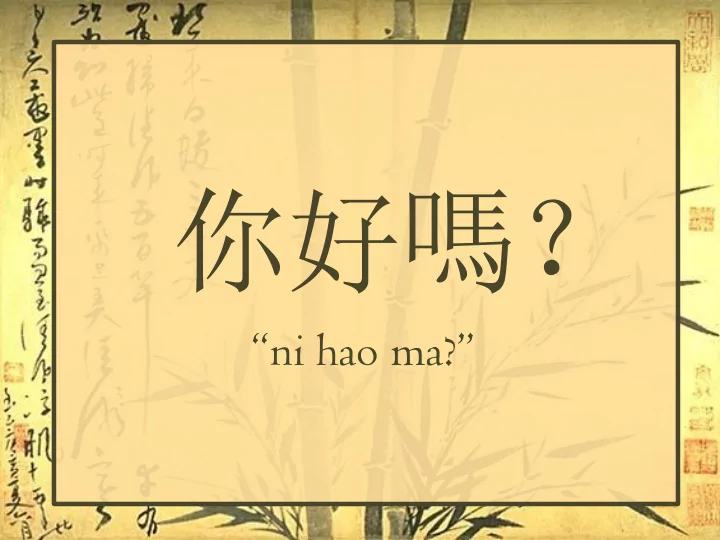
你好嗎?

“ni hao ma?”
slide-2
SLIDE 2
slide-3
SLIDE 3

Online Module Prototype

Learning Pronunciation of 10 Commonly Mispronounced Chinese Surnames, Proper Salutations & Greetings Using VoiceThread

slide-4
SLIDE 4

Who is this man? What is his name?

slide-5
SLIDE 5

Next President of China? Xi Jinping ing

slide-6
SLIDE 6

Next President of China? “ Xi Xi Jinping ” Surname goes first

slide-7
SLIDE 7

“Talk Story”

Learning Pronunciation of 10 Commonly Mispronounced Chinese Surnames, Proper Salutations & Greetings Using VoiceThread

slide-8
SLIDE 8

China’s Growth

  • 2nd largest world economy
  • GDP increased tenfold in past decade
  • Most important impor
  • rter

ter of U.S. goods

slide-9
SLIDE 9

Tourism in Hawai’i

  • 91,000 tourists from China in 2010
  • $60 million revenue from this group in 2010
  • World’s top spenders:
  • Tourist dollars
  • Luxury goods
slide-10
SLIDE 10

What’s Needed

  • Systematically designed
  • Effective & time-efficient
  • Accessible
  • Stand-alone
  • Practical
  • High ROI
slide-11
SLIDE 11

Methods

  • 15 U.H. grad students & alumni
  • 90% Ed. Tech. graduate students
  • Non-Chinese speakers
  • Approx. one-hour
  • 5 groups
  • Confidential
slide-12
SLIDE 12

Instructional Design Considerations & Implementations

slide-13
SLIDE 13

Theories & Principles

  • Dick & Carey’s Model of ID
  • Keller’s ARCS Model of Motivation
  • Gagne’s 9 Events of Instruction
  • Universal Design Guidelines
  • Principles of Adult Learning
  • Principles of Distance Education
slide-14
SLIDE 14
slide-15
SLIDE 15
slide-16
SLIDE 16
slide-17
SLIDE 17
slide-18
SLIDE 18
slide-19
SLIDE 19
slide-20
SLIDE 20
slide-21
SLIDE 21
slide-22
SLIDE 22
slide-23
SLIDE 23
slide-24
SLIDE 24
slide-25
SLIDE 25
slide-26
SLIDE 26

Learning

n=15

  • Avg. 156% overall improvement

Pre-test average: 30 30 Post-test average: 77 77

slide-27
SLIDE 27

Scoring of Pronunciation

0 to 5 scale

  • “bukeqi” – “you’re welcome”

bu/ke/qi Pre-test: 4/1/0 Post-test: 4/3/4

slide-28
SLIDE 28
slide-29
SLIDE 29

Encouraging Results

 Delivered what it intended to teach

  • Examples & non-examples
  • Multiple means of input & representation
  • Integrated approach
  • Scaffolding
  • Cultural knowledge
  • Additional links & resources

 Printable guide

slide-30
SLIDE 30
slide-31
SLIDE 31
slide-32
SLIDE 32

Motivation “Adults learn best when convinced that they need to know the information.”

(O’Brien, 2004)

slide-33
SLIDE 33

Areas to Improve

  • Increase inter-rater reliability
  • Design imperfections
  • VoiceThread “sandbox” for novice users
  • Consistent markings
  • Use fake flowers instead 
  • Target “needed” populations
slide-34
SLIDE 34

Implications

  • Global Citizenship &

Multicultural Competencies

  • VoiceThread’s versatility in language teaching
  • 21st century learning:
  • “Meet all learner needs”
  • “Beyond classroom walls”
slide-35
SLIDE 35

3 Little Syllables “ni hao ma”

slide-36
SLIDE 36

Questions & Comments

mroco@hawaii.edu

slide-37
SLIDE 37

謝謝!

“xie xie”

Thank You!