NASAP 2017 Annual Conference Vancouver, CA Getting to early - - PDF document

nasap 2017 annual conference vancouver ca
SMART_READER_LITE
LIVE PREVIEW

NASAP 2017 Annual Conference Vancouver, CA Getting to early - - PDF document

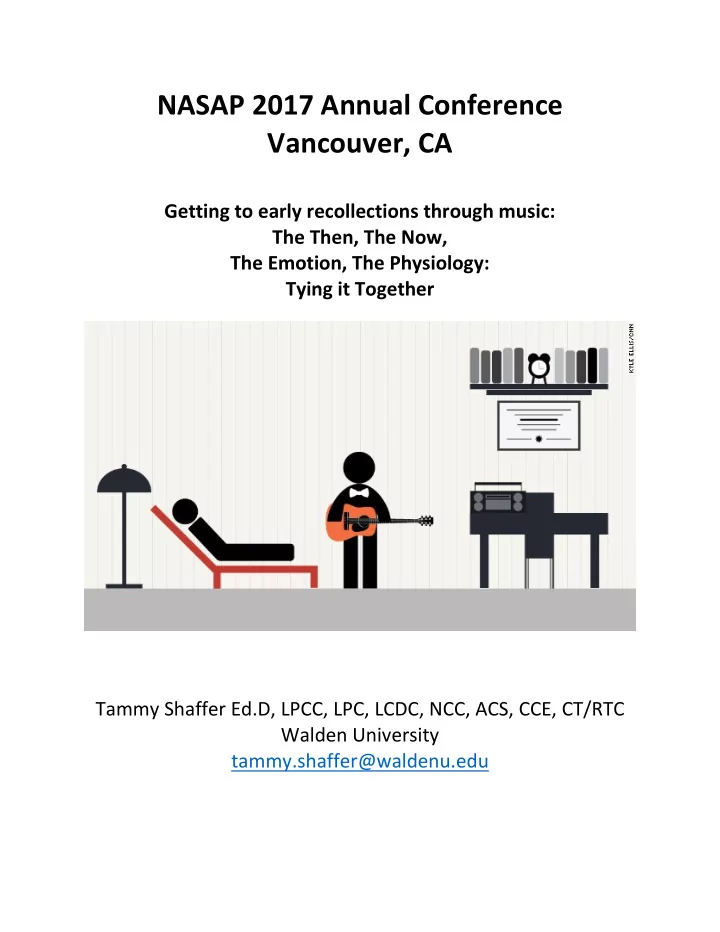
NASAP 2017 Annual Conference Vancouver, CA Getting to early recollections through music: The Then, The Now, The Emotion, The Physiology: Tying it Together Tammy Shaffer Ed.D, LPCC, LPC, LCDC, NCC, ACS, CCE, CT/RTC Walden University


slide-1
SLIDE 1

NASAP 2017 Annual Conference Vancouver, CA

Getting to early recollections through music: The Then, The Now, The Emotion, The Physiology: Tying it Together Tammy Shaffer Ed.D, LPCC, LPC, LCDC, NCC, ACS, CCE, CT/RTC Walden University tammy.shaffer@waldenu.edu

slide-2
SLIDE 2
slide-3
SLIDE 3

http://tinyurl.com/mg6s5uk

slide-4
SLIDE 4
slide-5
SLIDE 5

Why Early Recollections?

“Memory of early childhood experiences is selective and serves the function of helping us to be unconsciously guided by "rules" about life, ourselves and other people… The position that individuals create their

  • wn rules about life, themselves and others

which are useful to them in coping with life situations, provides for the value of self- examination at any point regardless of one’s age. Equally important, the avenue for examining the meaning that we have given to life is readily available in one of the past-times

  • f many older persons—reminiscing.”

(Sweeny & Myers, 1986)

slide-6
SLIDE 6

Issues Addressed by Music Therapists

Anxiety Confusion Depression Grief Impaired Communication Ineffective Coping Memory Loss Pain Restlessness Social Isolation

Music Therapy

slide-7
SLIDE 7
  • a. Evidence-based use of music in clinical situations that

help people reach desired health outcomes.

  • b. Licensed music therapist
  • c. Special training

Music Intervention

  • a. Listening/interpreting response to music
slide-8
SLIDE 8
  • b. Guided imagery
  • c. Playing an instrument in a therapeutic context or an

experimental context

  • d. Does not conform to the definition of the American Music

Therapy Association (http://www.apa.org/research/action/speaking-of- psychology/music-health.aspx_

  • e. Knowing Your Own Background
  • f. Being Aware of Biases
  • g. Being Willing to Learn
  • h. Meeting People Where They Are
  • i. Being Non-Judgmental
  • j. Familiarity with Music of Different Traditions
  • k. Selecting Music for Spiritual Care

Do these points match up well with Adlerian principles?

slide-9
SLIDE 9
slide-10
SLIDE 10
slide-11
SLIDE 11
slide-12
SLIDE 12