Biodiversity in Vancouver: Understanding Vancouvers Ecological - - PowerPoint PPT Presentation

biodiversity in vancouver
SMART_READER_LITE
LIVE PREVIEW

Biodiversity in Vancouver: Understanding Vancouvers Ecological - - PowerPoint PPT Presentation

Biodiversity in Vancouver: Understanding Vancouvers Ecological Network Nick Page, Vancouver Park Board September 2017 Loss of Forest False Creek 355 ha historically 92 ha at present 263 ha loss 26% remains Historical habitat loss in


slide-1
SLIDE 1

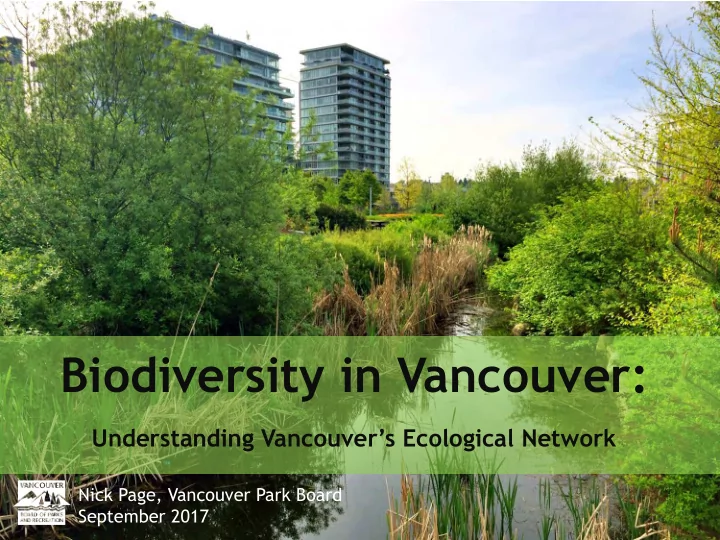
Biodiversity in Vancouver:

Understanding Vancouver’s Ecological Network

Nick Page, Vancouver Park Board September 2017
slide-2
SLIDE 2

Loss of Forest

slide-3
SLIDE 3
slide-4
SLIDE 4

False Creek 355 ha historically 92 ha at present 263 ha loss 26% remains

Historical habitat loss in False Creek

slide-5
SLIDE 5

Loss of many wildlife species

slide-6
SLIDE 6

Mapping Vancouver’s Ecological Network

slide-7
SLIDE 7

Regional Patterns of Natural Areas

slide-8
SLIDE 8

Metro Vancouver Sensitive Ecosystem Inventory (2013)

8

slide-9
SLIDE 9

Patterns of Vegetation

9

slide-10
SLIDE 10

Patterns of Naturalness

10

slide-11
SLIDE 11

Examples of Forest Naturalness

11 Mainly natural (naturalness 4) Altered vegetation (naturalness 2)

slide-12
SLIDE 12

Components of the Ecological Network

12

Hubs

  • Largest natural areas (>10 ha).
  • Core of the Ecological Network.
  • Capable of supporting entire and diverse populations of

animals and plants and associated ecological functions. Sites

  • Smaller (e.g., 0.25–10 ha) non-linear areas of natural

ecosystems

  • Support smaller or less diverse populations of animals

and plants. Corridors & Connections

  • Linear or non-linear zones of movement (dispersal)
slide-13
SLIDE 13

Vancouver’s Ecological Network

13

slide-14
SLIDE 14

Understanding Connectivity 1: Corridors

14

slide-15
SLIDE 15

Understanding Connectivity 2: Circuitscape Analysis

15

slide-16
SLIDE 16

16

Biodiversity Hotspots

slide-17
SLIDE 17

17

Patterns of Wildlife Use 1: Coast Moles

slide-18
SLIDE 18

Patterns of Wildlife Use 2: Pacific Tree Frogs

18

slide-19
SLIDE 19

Surrey’s Green Infrastructure Network

19

slide-20
SLIDE 20

Richmond’s Ecological Network

20

slide-21
SLIDE 21

Larger Patterns

slide-22
SLIDE 22

Chum salmon spawning in Still Creek

slide-23
SLIDE 23

Still Creek Chum Salmon

slide-24
SLIDE 24

Grey whale in English Bay

slide-25
SLIDE 25
slide-26
SLIDE 26

Overwintering seaducks in English Bay

slide-27
SLIDE 27
slide-28
SLIDE 28

Biodiversity Projects in the City of Vancouver

slide-29
SLIDE 29

Habitat Island in False Creek

slide-30
SLIDE 30

30

Jericho Park Shoreline

slide-31
SLIDE 31

31

slide-32
SLIDE 32

New Brighton Saltmarsh

slide-33
SLIDE 33

Pollinator Projects

slide-34
SLIDE 34

34

Supporting pollinators in parks

slide-35
SLIDE 35

35

Community involvement in park stewardship

slide-36
SLIDE 36

Rainwater management in Creekway Park

slide-37
SLIDE 37

Beavers colonizing Hinge Park wetland

slide-38
SLIDE 38

38

Still Creek Restoration (Nootka St)

slide-39
SLIDE 39

39

Tatlow Creek Daylighting

slide-40
SLIDE 40

40

Building the Ecological Network through Acquisition

slide-41
SLIDE 41

41

Forest Restoration in Everett Crowley Park Restoring Native Forests in Everett Crowley Park

slide-42
SLIDE 42

Replanting native forests in Everett Crowley Park

slide-43
SLIDE 43

43

Ceperley Meadows Wetland

slide-44
SLIDE 44

Contact: Nick Page, Biologist Vancouver Park Board nick.page@vancouver.ca

44