Module 5: CPU Scheduling Basic Concepts Scheduling Criteria - - PDF document

module 5 cpu scheduling
SMART_READER_LITE
LIVE PREVIEW

Module 5: CPU Scheduling Basic Concepts Scheduling Criteria - - PDF document

' $ Module 5: CPU Scheduling Basic Concepts Scheduling Criteria Scheduling Algorithms Multiple-Processor Scheduling Real-Time Scheduling Algorithm Evaluation & % Operating System Concepts 5.1 Silberschatz and


slide-1
SLIDE 1 ' & $ %

Module 5: CPU Scheduling

  • Basic Concepts
  • Scheduling Criteria
  • Scheduling Algorithms
  • Multiple-Processor Scheduling
  • Real-Time Scheduling
  • Algorithm Evaluation

Operating System Concepts 5.1 Silberschatz and Galvin c 1998

' & $ %

Basic Concepts

  • Maximum CPU utilization obtained with multiprogramming.
  • CPU–I/O Burst Cycle – Process execution consists of a cycle of

CPU execution and I/O wait.

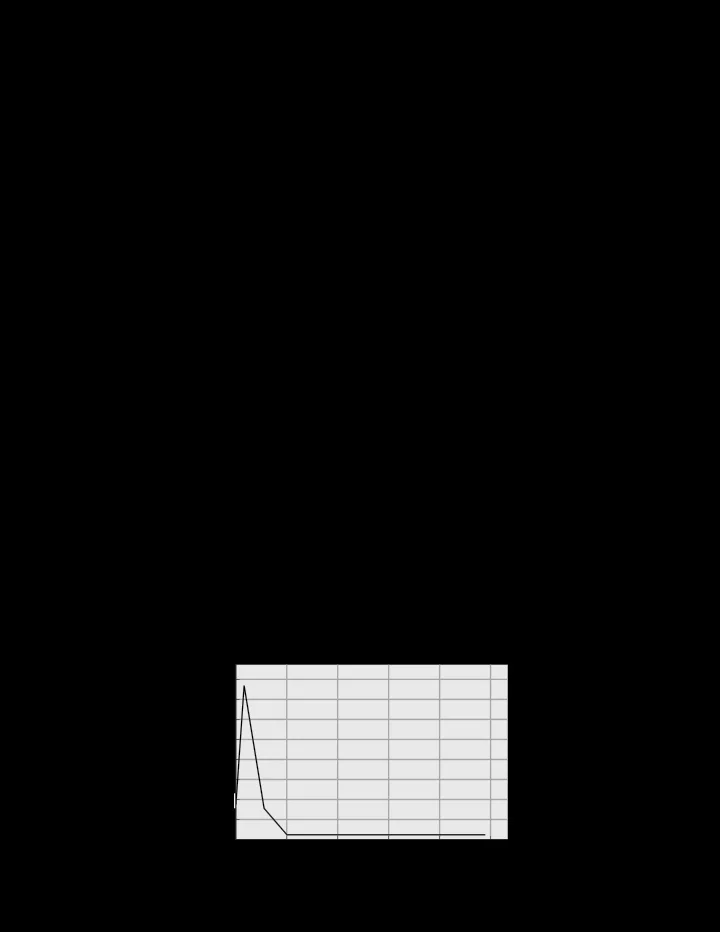
  • CPU burst distribution

burst duration (milliseconds) frequency 20 40 60 80 100 120 140 160 8 16 24 32 40 Operating System Concepts 5.2 Silberschatz and Galvin c 1998

slide-2
SLIDE 2 ' & $ %

CPU Scheduler

  • Selects from among the processes in memory that are ready to

execute, and allocates the CPU to one of them.

  • CPU scheduling decisions may take place when a process:
  • 1. switches from running to waiting state.
  • 2. switches from running to ready state.
  • 3. switches from waiting to ready.
  • 4. terminates.
  • Scheduling under 1 and 4 is nonpreemptive.
  • All other scheduling is preemptive.

Operating System Concepts 5.3 Silberschatz and Galvin c 1998

' & $ %

Dispatcher

  • Dispatcher module gives control of the CPU to the process

selected by the short-term scheduler; this involves: – switching context – switching to user mode – jumping to the proper location in the user program to restart that program

  • Dispatch latency – time it takes for the dispatcher to stop one

process and start another running.

Operating System Concepts 5.4 Silberschatz and Galvin c 1998

slide-3
SLIDE 3 ' & $ %

Scheduling Criteria

  • CPU utilization – keep the CPU as busy as possible
  • Throughput – # of processes that complete their execution per

time unit

  • Turnaround time – amount of time to execute a particular

process

  • Waiting time – amount of time a process has been waiting in

the ready queue

  • Response time – amount of time it takes from when a request

was submitted until the first response is produced, not output (for time-sharing environment)

Operating System Concepts 5.5 Silberschatz and Galvin c 1998

' & $ %

Optimization Criteria

  • Max CPU utilization
  • Max throughput
  • Min turnaround time
  • Min waiting time
  • Min response time

Operating System Concepts 5.6 Silberschatz and Galvin c 1998

slide-4
SLIDE 4 ' & $ %

First-Come, First-Served (FCFS) Scheduling

  • Example:

Process Burst Time P1 24 P2 3 P3 3

  • Suppose that the processes arrive in the order: P1, P2, P3

The Gantt chart for the schedule is:

P1 P

2

P

3

30 27 24

  • Waiting time for P1 = 0; P2 = 24; P3 = 27
  • Average waiting time:

(0 + 24 + 27)/3 = 17

Operating System Concepts 5.7 Silberschatz and Galvin c 1998

' & $ %

FCFS Scheduling (Cont.)

Suppose that the processes arrive in the order: P2, P3, P1.

  • The Gantt chart for the schedule is:

P1 P

2

P

3

3 6 30

  • Waiting time for P1 = 6; P2 = 0; P3 = 3
  • Average waiting time:

(6 + 0 + 3)/3 = 3

  • Much better than previous case.
  • Convoy effect: short process behind long process

Operating System Concepts 5.8 Silberschatz and Galvin c 1998

slide-5
SLIDE 5 ' & $ %

Shortest-Job-First (SJF) Scheduling

  • Associate with each process the length of its next CPU burst.

Use these lengths to schedule the process with the shortest time.

  • Two schemes:

– nonpreemptive – once CPU given to the process it cannot be preempted until it completes its CPU burst. – preemptive – if a new process arrives with CPU burst length less than remaining time of current executing process,

  • preempt. This scheme is known as the

Shortest-Remaining-Time-First (SRTF).

  • SJF is optimal – gives minimum average waiting time for a

given set of processes.

Operating System Concepts 5.9 Silberschatz and Galvin c 1998

' & $ %

Example of Non-Preemptive SJF

Process Arrival Time Burst Time P1 0.0 7 P2 0.2 4 P3 4.0 1 P4 5.0 4

  • SJF (non-preemptive)

P1 P

3

P

2

P

4

16 7 8 12

Average waiting time = (0 + 6 + 3 + 7)/4 = 4

Operating System Concepts 5.10 Silberschatz and Galvin c 1998

slide-6
SLIDE 6 ' & $ %

Example of Preemptive SJF

Process Arrival Time Burst Time P1 0.0 7 P2 0.2 4 P3 4.0 1 P4 5.0 4

  • SRTF (preemptive)

P

2

P

2

P

3

P1 P

4

P1 11 16 7 5 4 2

Average waiting time = (9 + 1 + 0 + 2)/4 = 3

Operating System Concepts 5.11 Silberschatz and Galvin c 1998

' & $ %

Determining Length of Next CPU Burst

  • Can only estimate the length.
  • Can be done by using the length of previous CPU bursts, using

exponential averaging.

  • 1. tn = actual length of nth CPU burst
  • 2. τn+1 = predicted value for the next CPU burst
  • 3. α, 0 ≤ α ≤ 1
  • 4. Define:

τn+1 = α tn + (1 − α)τn.

Operating System Concepts 5.12 Silberschatz and Galvin c 1998

slide-7
SLIDE 7 ' & $ %

Examples of Exponential Averaging

  • α = 0

– τn+1 = τn – Recent history does not count.

  • α = 1

– τn+1 = tn – Only the actual last CPU burst counts.

  • If we expand the formula, we get:

τn+1 = αtn + (1 − α)αtn−1 + ... +(1 − α)jαtn−j + ... +(1 − α)n+1τ0

  • Since both α and (1 − α) are less than or equal to 1, each

successive term has less weight than its predecessor.

Operating System Concepts 5.13 Silberschatz and Galvin c 1998

' & $ %

Priority Scheduling

  • A priority number (integer) is associated with each process.
  • The CPU is allocated to the process with the highest priority

(smallest integer ≡ highest priority). – preemptive – nonpreemptive

  • SJN is a priority scheduling where priority is the predicted next

CPU burst time.

  • Problem ≡ Starvation – low priority processes may never

execute.

  • Solution ≡ Aging – as time progresses increase the priority of

the process.

Operating System Concepts 5.14 Silberschatz and Galvin c 1998

slide-8
SLIDE 8 ' & $ %

Round Robin (RR)

  • Each process gets a small unit of CPU time (time quantum),

usually 10–100 milliseconds. After this time has elapsed, the process is preempted and added to the end of the ready queue.

  • If there are n processes in the ready queue and the time

quantum is q, then each process gets 1/n of the CPU time in chunks of at most q time units at once. No process waits more than (n − 1)q time units.

  • Performance

– q large ⇒ FIFO – q small ⇒ q must be large with respect to context switch,

  • therwise overhead is too high.

Operating System Concepts 5.15 Silberschatz and Galvin c 1998

' & $ %

Example: RR with Time Quantum = 20

Process Burst Time P1 53 P2 17 P3 68 P4 24

  • The Gantt chart is:

P

2

P1 P

3

P

4

P1 P

3

P

4

P1 P

3

P

3

162 154 134 121 117 97 77 57 37 20

  • Typically, higher average turnaround than SRTF, but better

response.

Operating System Concepts 5.16 Silberschatz and Galvin c 1998

slide-9
SLIDE 9 ' & $ %

Multilevel Queue

  • Ready queue is partitioned into separate queues;

foreground (interactive) background (batch)

  • Each queue has its own scheduling algorithm,

foreground – RR background – FCFS

  • Scheduling must be done between the queues.

– Fixed priority scheduling; i.e., serve all from foreground then from background. Possibility of starvation. – Time slice – each queue gets a certain amount of CPU time which it can schedule amongst its processes; i.e., 80% to foreground in RR 20% to background in FCFS

Operating System Concepts 5.17 Silberschatz and Galvin c 1998

' & $ %

Multilevel Feedback Queue

  • A process can move between the various queues; aging can

be implemented this way.

  • Multilevel-feedback-queue scheduler defined by the following

parameters: – number of queues – scheduling algorithm for each queue – method used to determine when to upgrade a process – method used to determine when to demote a process – method used to determine which queue a process will enter when that process needs service

Operating System Concepts 5.18 Silberschatz and Galvin c 1998

slide-10
SLIDE 10 ' & $ %

Example of Multilevel Feedback Queue

  • Three queues:

– Q0 – time quantum 8 milliseconds – Q1 – time quantum 16 milliseconds – Q2 – FCFS

  • Scheduling

– A new job enters queue Q0 which is served FCFS. When it gains CPU, job receives 8 milliseconds. If it does not finish in 8 milliseconds, job is moved to queue Q1. – At Q1, job is again served FCFS and receives 16 additional

  • milliseconds. If it still does not complete, it is preempted

and moved to queue Q2.

Operating System Concepts 5.19 Silberschatz and Galvin c 1998

' & $ %

Multiple-Processor Scheduling

  • CPU scheduling more complex when multiple CPUs are

available.

  • Homogeneous processors within a multiprocessor.
  • Load sharing
  • Asymmetric multiprocessing – only one processor accesses

the system data structures, alleviating the need for data sharing.

Operating System Concepts 5.20 Silberschatz and Galvin c 1998

slide-11
SLIDE 11 ' & $ %

Real-Time Scheduling

  • Hard real-time systems – required to complete a critical task

within a guaranteed amount of time.

  • Soft real-time computing – requires that critical processes

receive priority over less fortunate ones.

Operating System Concepts 5.21 Silberschatz and Galvin c 1998

' & $ %

Algorithm Evaluation

  • Deterministic modeling – takes a particular predetermined

workload and defines the performance of each algorithm for that workload.

  • Queueing models
  • Implementation

Operating System Concepts 5.22 Silberschatz and Galvin c 1998