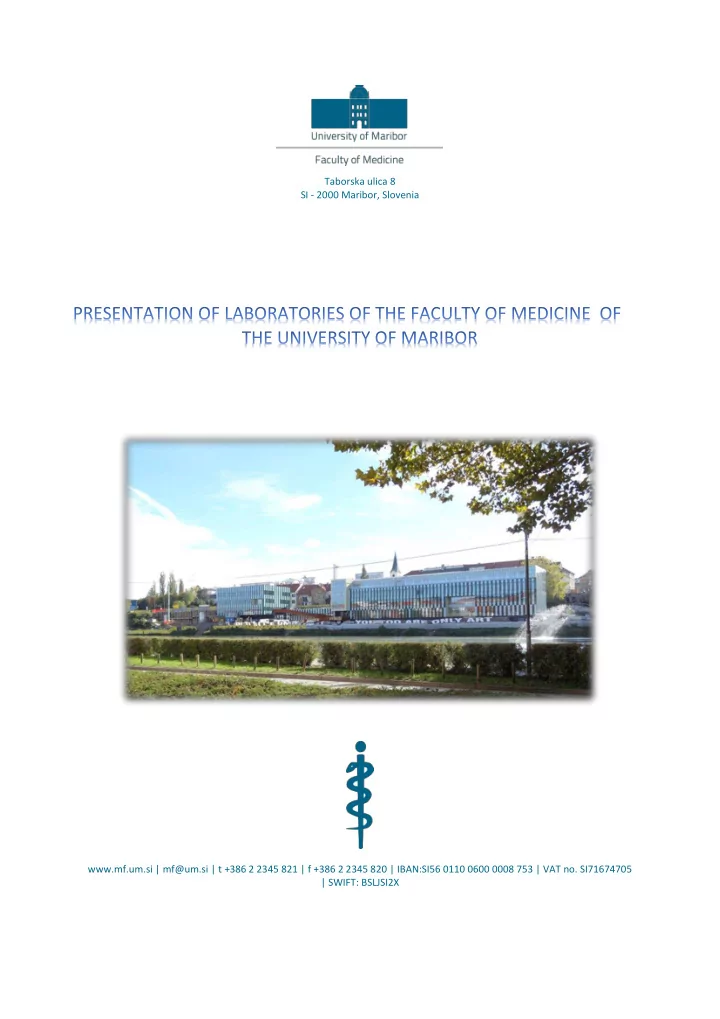
SLIDE 1
Taborska ulica 8 SI - 2000 Maribor, Slovenia www.mf.um.si | mf@um.si | t +386 2 2345 821 | f +386 2 2345 820 | IBAN:SI56 0110 0600 0008 753 | VAT no. SI71674705 | SWIFT: BSLJSI2X
SLIDE 2 CENTER FOR HUMAN MOLECULAR GENETICS AND PHARMACOGENOMICS & DEPARTMENT FOR BIOCHEMISTRY AND NUTRITION
HEAD OF DEPARTMENT Full Prof. Uroš Potočnik, PhD TEAM
- Asist. Prof. Katja Repnik, PhD
- Asist. Prof. Helena Čelešnik, PhD
- Asist. Mario Gorenjak, PhD
- Asist. Matjaž Deželak, PhD
- Asist. Prof. Vojko Berce, PhD
- Asist. Staša Jurgec, BSc
Carina Pinto Kozmus, MSc., PhD student Larisa Zemljič, BSc., PhD student Gregor Jezernik, MSc., PhD student Team and head of department LIST AND DESCRIPTION OF LABORATORY EQUIPMENT
- 1. Next generation sequencing system for DNA sequence analysis (Illumina MiSeq) enables genome-
wide analysis with a capacity of 15Gbp in one run. The system is capable of simultaneous in a single experiment diagnosis of most rare hereditary diseases and detection of novel rare DNA polymorphisms that act as genetic risk factors for chronic disease pathogenesis. It also enables the quantification of gene expression and detection of new RNA transcriptions.
SLIDE 3
- 2. Real-time PCR system and digital PCR (Life Technologies QuantStudio 12K Flex) is used for effective
genotyping of DNA single nucleotide polymorphisms (SNP) using the Taqman method (up to 110,000 genotypes per day) and detection of somatic mutations in cancer. The system is used for gene expression analysis and ncRNA profiling such as miRNA. REASEARCH INTERESTS AND POTENTIAL FOR COLLABORATION
- Genetic risk factors (susceptibility to complex diseases)
- Molecular mechanisms of disease pathogenesis
- Molecular targets for development of new generation of biological drugs
- Molecular diagnostics including diseases subtypes
- Prognostic factors for disease development
- Correlations between treatment response and genetic predisposition (pharmacogenetics and
pharmacogenomics) for personalized medicine to maximize treatment efficiency and avoid adverse drug reactions
- Identification of genetic susceptibility to complex disease and treatment response (ex.
inflammatory bowel diseases, asthma and aspirin intolerance, colon adenoma, rheumatoid arthritis, celiac disease, multiple sclerosis, osteoarthritis, uterine leiomyoma, breast cancer, chronic kidney disease etc.)
- Development of biobanks with integrated bioinformatic tools for discovery of
genotype/phenotype correlations
- Development of high throughput, reliable and cost effective genotyping including high
resolution melting curve analysis
- Development of applications for quantitative gene expression using Real time PCR and for
determination of global gene expression profiles using microarrays (biochips)
- Identification of genetic susceptibility to complex diseases and disease clinical features using
Single nucleotide polymorphisms (SNP) and haplotype analysis
- Discovery of most efficient genetic and gene expression profiles as disease prognostic and
diagnostic biomarkers
- Collaboration with clinical institutions for knowledge transfer into clinical practice for the
benefit of the patients
- Genetic analysis and functional cell models
ACHIEVEMENTS
- Prof. Uroš Potočnik and Mitja Mitrovič were coauthors of an article published in Nature, which
reported 163 gene loci associated with inflammatory bowel diseases (IBD). The study took part in an international consortium of IBD genetics and has identified the so far largest number of associated gene loci for any disease. This is unsurprising considering that the study is one of the largest genome- wide association studies conducted so far with enrolled more than 75000 patients and controls. The Nature paper received more than 1000 citations in just 3 years and is currently most cited paper at University of Maribor.
SLIDE 4 RESEARCH PROJECTS INTERNATIONAL COLLABORATION 1. SySPharmPhedia »“Systems pharmacology approach to difficult-to-treat pediatric asthma” call ERA-Net ERACoSysMed "Collaboration on systems medicine funding to promote the implementation of systems biology approaches in clinical research and medical practice, (U. Potočnik coordinator for Slovenian partner, Neatherland, Spain, Germany); 2016-2019; 2. SFRH/BD/79804/2011: The endocannabinoid system in asthma patients and the effect of cannabinoids in the modulation of inflammatory response: supported by Ministry of Science, Portugal, (head of project and mentor: U. Potočnik, PhD student Carina Pinto Kozmus, 2012-2016); 3. BI-US/15-16-061 SLO-USA, (head dr. Uroš Potočnik) “Genetics and pharmacogenomics of chronic immune diseases”, collaboration with New York Genome Center, USA (Dr. Tuuli Lappalainen), 2015-2016; 4. International Inflammatory bowel disease Genetics consortium (IIBDGC) (Slovene national consortium coordinator prof. Uroš Potočnik). NATIONAL PROJECTS
- J3-6785 “Genetics and pharmacogenomics of Inflammatory bowel diseases and genetically
related chronic immune diseases” (head dr. Uroš Potočnik), 2014-2017;
- J3-6789 “Pathogenic mechanism of the C9orf72 expanded hexanucleotide repeat mutation in
neurodegeneration; 2014-2017;
- IRP-2013: Genetics of self-injury behavior; (Collaboration with University Clinical Center
Maribor head UKC MB T. Bunderla; head of project at MF MB U. Potočnik); 2013-2016;
- IRP-2014/01-21: Nucleotide polymorphisms in genes SDF-1ɑ, MMP7, MMP9, TIMP2, RAD18
in MACC1 as prognostic factors for colorectal cancer (head of project at UKC MB M. Horvat; head of project at MF MB U. Potocnik); 2013-2016;
- IRP-2014/01-30: Identificaition of monogenic mutations and DNA polymorphisms associated
with risk for Parkinson disease in Slovenian patients (Collaboration with University Clinical Center Maribor head of project at UKC MB D. Flisar, head of project at MF MB U. Potocnik); 2014-2017;
- IRP-2014/01-29: Identification of mutations and DNA polymorphisms in gene SCN9 in
patients with complex regional pain syndrome (Collaboration with University Clinical Center Maribor head UKC MB D. Flisar; head of project at MF MB U. Potočnik); 2014-2017;
- IRP-2015: Genetics of chronic kidney disease; (Collaboration with University Clinical Center
Maribor head UKC MB S. Bevc; head of project at MF MB U. Potočnik); 2015-2017;
- IRP-2015: Molecular genetic biomarkers for recurrence of Head and neck cancer;
(Collaboration with University Clinical Center Maribor head UKC MB A. Čižmarević; head of project at MF MB U. Potočnik); 2015-2018;
- V3-1505 “Analysis and development of rare diseases field in Slovenia”, 2015-2017;
- P3-0067 “Pharmacology and pharmacogenomics” (head of project at MF UL Mojca Kržan;
- prof. U. Potočnik is authorized coordinator of Pharmacogenomics at MF MB, 2014-2017);
- J3-2175 “Genetic risk factors and pharmacogenomics of inflammatory bowel diseases”
financed by ARRS (head prof. U. Potočnik, 2009-2012);
SLIDE 5
- J3-7141-2334 “Genetic risk factors and pharmacogenomics of complex bowel diseases”
financed by ARRS (head prof. U. Potočnik, 2005-2008). SELECTED REFERENCES: (full bibiliography at http://splet02.izum.si/cobiss/bibliography?code=16340&langbib=eng )
- 1. JOSTINS, Luke, MITROVIČ, Mitja, POTOČNIK, Uroš, et al. Host-microbe interactions have shaped the
genetic architecture of inflammatorybowel disease. Nature, ISSN 0028-0836. [Print ed.], 2012, vol. 491,
- no. 7422, str. 119-124, doi: 10.1038/nature11582.
- 2. CLEYNEN, Isabelle, BOUCHER, Gabrielle, JOSTINS, Luke, SCHUMM, Philip L., ZEISSIG, Sebastian,
AHMAD, Tariq, ANDERSEN, Vibeke, ANDREWS, Jane M, ANNESE, Vito, BRAND, Stephan, et al., MITROVIČ, Mitja (sodelavec pri raziskavi), POTOČNIK, Uroš (sodelavec pri raziskavi), et al. Inherited determinants of Crohn's disease and ulcerative colitis phenotypes : a genetic association study. The Lancet, ISSN 1474-547X. [Online ed.], 2016, vol. 387, iss. 10014, str. 156-167. http://www.thelancet.com/journals/lancet/article/PIIS0140-6736(15)00465-1/abstract, doi: 10.1016/S0140-6736(15)00465-1.
- 3. KODER, Silvo, REPNIK, Katja, FERKOLJ, Ivan, PERNAT DROBEŽ, Cvetka, SKOK, Pavel, WEERSMA, Rinse
K., POTOČNIK, Uroš. Genetic polymorphism in ATG16L1 gene influences the response to adalimumab in Crohn's disease patients. Pharmacogenomics, ISSN 1462-2416, 2015, vol. 16, no. 3, str. 191-204, doi: 10.2217/pgs.14.172.
- 4. BERCE, Vojko, PINTO KOZMUS, Carina, POTOČNIK, Uroš. Association among ORMDL3 gene
expression, 17q21 polymorphism and response to treatment with inhaled corticosteroids in children with asthma. Pharmacogenomics journal, ISSN 1470-269X, Dec. 2013, vol. 13, issue 6, 523-529. http://www.nature.com/tpj/journal/vaop/ncurrent/full/tpj201236a.html, doi: 10.1038/tpj.2012.36.
- 5. GOYETTE, Philippe, et al., MITROVIČ, Mitja (sodelavec pri raziskavi), POTOČNIK, Uroš (sodelavec
pri raziskavi), et al. High-density mapping of the MHC identifies a shared role for HLA-DRB1*01:03 in inflammatory bowel diseases and heterozygous advantage in ulcerative colitis. Nature genetics, ISSN 1061-4036, 2015, vol. 47, no. 2, str. 172-179, ilustr. http://www.nature.com/ng/journal/vaop/ncurrent/full/ng.3176.html, doi: 10.1038/ng.3176.
- 6. LIU, Jimmy Z, VAN SOMMEREN, Suzanne, HUANG, Hailiang, NG, Siew C, ALBERTS, Rudi, TAKAHASHI,
Atsushi, RIPKE, Stephan, LEE, James C, JOSTINS, Luke, SHAH, Tejas, et al., MITROVIČ, Mitja (sodelavec pri raziskavi), POTOČNIK, Uroš (sodelavec pri raziskavi), et al. Association analyses identify 38 susceptibility loci for inflammatory bowel disease and highlight shared genetic risk across populations. Nature genetics, ISSN 1061-4036, 2015, vol. 47, no. 9, str. 979-986, ilustr, doi: 10.1038/ng.3359.
- 7. Cross-Disorder Group of the Psychiatric Genomics Consortium, et al., MITROVIČ, Mitja (sodelavec
pri raziskavi), POTOČNIK, Uroš (sodelavec pri raziskavi), et al. Genetic relationship between five psychiatric disorders estimated from genome-wide SNPs. Nature genetics, ISSN 1061-4036, 2013, vol. 45, no. 9, str. 984-994, ilustr., doi: 10.1038/ng.2711. [COBISS.SI-ID 512406840].
- 8. RIVAS, Manuel A, MITROVIČ, Mitja, POTOČNIK, Uroš, et al. Deep resequencing of GWAS loci
identifies independent rare variants associated with inflammatory bowel disease. Nature genetics, ISSN 1061-4036, 2011, vol. 43, no. 11, str. 1066-1073, doi: 10.1038/ng.952. [COBISS.SI-ID 15421974].
- 9. ZUPANČIČ, Katarina, SKOK, Kristijan, REPNIK, Katja, WEERSMA, Rinse K., POTOČNIK, Uroš, SKOK,
- Pavel. Multi-locus genetic risk score predicts risk for Crohn's disease in Slovenian population. World
journal of gastroenterology, ISSN 2219-2840, Apr. 2016, vol. 22, issue 14, str. 3777-3784, ilustr. http://www.wjgnet.com/1007-9327/full/v22/i14/3777.htm, doi: 10.3748/wjg.v22.i14.3777.
- 10. PERIN, Petra, POTOČNIK, Uroš. Polymorphisms in recent GWA identified asthma genes CA10,
SGK493, and CTNNA3 are associated with disease severity and treatment response in childhood
SLIDE 6
- asthma. Immunogenetics, ISSN 0093-7711, 2014, vol. 66, issue 3, str. 143-151, doi: 10.1007/s00251-
013-0755-0. PHOTODOCUMENTATION OF KEY INSTRUMENTS AND FACILITIES Figure 1: Next generation DNA nucleotide sequence analysis system - Illumina MiSeq Figure 2: Real-time PCR, digital PCR and genotyping system - Life Technologies QuantStudio 12K Flex
SLIDE 7 LABORATORY FOR CONFOCAL/TWO-PHOTON MICROSCOPY (UPRIGHT) AND CELL ELECTROPHYSIOLOGY:
PL9
GENERAL LABORATORY AND LABORATORY FOR CONFOCAL MICROSCOPY (INVERTED):
1NL4
CORE FACILITY LABORATORY ANIMAL HOUSE:
PL11 – storage PL12 – general washing room PL13 – laboratory mouse facility PL14 – laboratory rat facility 3NL1 – experimental surgery on rodents HEAD AND CONTACT PERSONS Head of Institute:
- Assist. Prof. Andraž Stožer, MD PhD
Animal facililty contact:
- Assist. Maša Skelin Klemen, PhD
- Prof. Marjan Slak Rupnik, PhD
STAFF
- Assist. Maša Skelin Klemen, DVM PhD
- Assist. Lidija Križančić Bombek, PhD
- Assist. Prof. Jurij Dolenšek, PhD
- Prof. Marjan Slak Rupnik, PhD
- Prof. Gregor Majdič, DVM PhD
- Prof. Dean Korošak, PhD
- Assist. Prof. Andraž Stožer, MD PhD
- Assist. Prof. Marko Gosak, PhD
- Assist. Prof. Andrej Duh, PhD
- Assist. Viljem Pohorec, MD
Rudi Mlakar, lab manager Ines Kavčič, technical assistant
SLIDE 8 EQUIPMENT LIST WITH SHORT DESCRIPTIONS Upright confocal microscope (Leica Microsystems TCS SP5 II) Top end confocal microscope to acquire prolonged time series of highly spatial and temporal resolved changes in intracellular calcium concentration, membrane potential, and exocytosis in human and animal model tissues using fresh tissue slices. Inverted confocal microscope (Leica Microsystems TCS SP5 II) Top end confocal microscope to acquire prolonged time series of highly spatial and temporal resolved changes in intracellular calcium concentration, membrane potential, and exocytosis in human and animal model tissues using fresh tissue slices and cell cultures. In addition, confocal analysis of material surfaces and classical analysis of (patho)histological slides. System for single cell electrophysiology A patch-clamp setup to study spontaneous and stimulated electrical activity of excitable cells, ion channels and capacitance based regulated exocytosis using depolarization protocols and slow caged photolysis. Core facility for laboratory animals The equipment to house and maintain laboratory mice and rats, both inbred and outbred strains of control, spontaneously mutated as well as transgenic strains to study physiology and pathophysiology
DESCRIPTION OF LABORATORY ACTIVITIES, REFRENCES AND POSSIBLE LINES OF COLLABORATION In the last decade we have developed and optimized the fresh pancreas tissue slice method (1) and use it for classical single cell electrophysiology and slow caged compound photolysis (2-6), acquisition
- f intracellular calcium concentration (7-12), and membrane potential (11) in pancreatic beta cells.
Our work continues to yield key knowledge to understand normal physiology of beta cells, the dysfunction of which plays a critical role in pathogenesis of diabetes mellitus. Our methods are applicable also to pancreatic acinar cells and other endocrine tissues (chromaffin cells, pituitary cells) and neurons (13, 14). The most compatible clinical departments are Pathology, Diabetology, and Endocrinology, as well as Abdominal surgery, Ophthalmology and Orthopedics.
SLIDE 9
PHOTODOCUMENTATION OF KEY INSTRUMENTS AND FACILITIES Figure 1: Upright confocal microscope and electrophysiology system (multiphoton microscope Leica TCS SP5-II) Figure 2: Inverted confocal microscope (single-photon inverted microscope Leica TCS SP5-II)
SLIDE 10 Figure 3: Core facility for laboratory animals REFERENCES 1. Speier S, Rupnik M. A novel approach to in situ characterization of pancreatic ß-cells. Pflügers Archiv European Journal of Physiology. 2003;446(5):553-8. 2. Speier S, Yang SB, Sroka K, Rose T, Rupnik M. KATP-channels in beta-cells in tissue slices are directly modulated by millimolar ATP. Molecular and Cellular Endocrinology. 2005;230(1–2):51-8. 3. Skelin M, Rupnik M. cAMP increases the sensitivity of exocytosis to Ca2+ primarily through protein kinase A in mouse pancreatic beta cells. Cell Calcium. 2011;49(2):89-99. 4. Mandic SA, Skelin M, Johansson JU, Rupnik MS, Berggren P-O, Bark C. Munc18-1 and Munc18- 2 Proteins Modulate β-Cell Ca2+ Sensitivity and Kinetics of Insulin Exocytosis Differently. Journal of Biological Chemistry. 2011;286(32):28026-40. 5. Dolensek J, Skelin M, Rupnik MS. Calcium Dependencies of Regulated Exocytosis in Different Endocrine Cells. Physiological Research. 2011;60:S29-S38. 6. Paulmann N, Grohmann M, Voigt J-P, Bert B, Vowinckel J, Bader M, et al. Intracellular Serotonin Modulates Insulin Secretion from Pancreatic β-Cells by Protein Serotonylation. PLoS Biol. 2009;7(10):e1000229. 7. Skelin Klemen M, Dolenšek J, Stožer A, Rupnik M. Measuring Exocytosis in Endocrine Tissue
- Slices. In: Thorn P, editor. Exocytosis Methods: Humana Press; 2014. p. 127-46.
8. Stožer A, Gosak M, Dolenšek J, Perc M, Marhl M, Rupnik MS, et al. Functional Connectivity in Islets of Langerhans from Mouse Pancreas Tissue Slices. PLoS Comput Biol. 2013;9(2):e1002923. 9. Stožer A, Dolenšek J, Skelin Klemen M, Slak Rupnik M. Cell physiology in tissue slices. Studying beta cells in the islets of Langerhans. Acta medico-biotechnica. 2013;6(1):20-32. 10. Stožer A, Dolenšek J, Rupnik MS. Glucose-Stimulated Calcium Dynamics in Islets of Langerhans in Acute Mouse Pancreas Tissue Slices. PLoS ONE. 2013;8(1):e54638. 11. Dolenšek J, Stožer A, Skelin Klemen M, Miller EW, Slak Rupnik M. The Relationship between Membrane Potential and Calcium Dynamics in Glucose-Stimulated Beta Cell Syncytium in Acute Mouse Pancreas Tissue Slices. PLoS ONE. 2013;8(12):e82374.
SLIDE 11
12. Marquard J, Otter S, Welters A, Stirban A, Fischer A, Eglinger J, et al. Characterization of pancreatic NMDA receptors as possible drug targets for diabetes treatment. Nat Med. 2015;21(4):363- 72. 13. Sedej S, Klemen MS, Schlüter OM, Rupnik MS. Rab3a Is Critical for Trapping Alpha-MSH Granules in the High Ca<sup>2+</sup>-Affinity Pool by Preventing Constitutive Exocytosis. PLoS ONE. 2013;8(10):e78883. 14. Marciniak A, Cohrs CM, Tsata V, Chouinard JA, Selck C, Stertmann J, et al. Using pancreas tissue slices for in situ studies of islet of Langerhans and acinar cell biology. Nat Protoc. 2014;9(12):2809-22. Epub 2014/11/14.
SLIDE 12 LABORATORY FOR MOLECULAR PHARMACOLOGY, EXPERIMENTAL TOXICOLOGY AND TRANSLATIONAL MEDICINE – FRLA
HEAD
- Assist. Prof. Polonca FERK, M.Pharm.
http://sicris.izum.si/search/rsr.aspx?lang=eng&id=15645&opt=1 RESEARCH FELLOWS
- Assist. Katja Jerenec, MD: http://sicris.izum.si/search/rsr.aspx?lang=eng&id=44310&opt=1
- Assist. Marjetka Korpar, PhD, MPharm:
http://sicris.izum.si/search/rsr.aspx?lang=eng&id=20231&opt=1
- Assist. Barbara Dariš, PhD, BSc (Biological Sciences):
http://sicris.izum.si/search/rsr.aspx?lang=eng&id=20011&opt=1
- Assist. Jan Schmidt, PhD, MPharm:
http://sicris.izum.si/search/rsr.aspx?lang=eng&id=43619&opt=1
- Assist. Luka Dobovišek, MD
undergraduate and postgraduate students from the University of Maribor, Faculty of Medicine (voluntary) LIST AND BRIEF DESCRIPTION OF THE LABORATORY EQUIPMENT BioAdvance II (Telstar): laminar flow cabinet for aseptic work MCO-19AIC, UV (Sanyo): CO2 incubator for growing cells GBox Chemi XL 1.4 (Syngene): detection system Nanodrop 2000c (Thermo Scientific): UV/VIS spectrophotometer for nucleic acid and protein qualification and quantification in 2 µL volume of samples LightCycler480, System II (Roche): real-time PCR equipment Veriti 96 Well Thermalcycler (Applied Biosystems): thermal cycler for gradient PCR Tproffesional Thermocycler (Biometra): thermal cycler for gradient PCR Infinite M200Pro (Tecan): microtiter plate reader DM6000 B+ BDFC365 FX (Leica): inverted research microscope with fluorescence detection camera iBlot (Invitrogen, Life Technologies): quick dry blotting system BenchPro 4100 (Invitrogen, Life Technologies): card processing station western blot autostainer
- ther equipment
- autoclave A-65 V (Kambič)
- Forma 900 Series (Thermo Scientific): laboratory freezer -86 ˚C
- laboratory refrigerator +4 ˚C do +8 ˚C (Kirsch)
- laboratory freezer -30 ˚C (Kirsch)
- liquid nitrogen container (Thermo Scientific)
- portable container with liquid nitrogen (Thermo Scientific)
- centrifuge 5430 R (Eppendorf)
- centrifuge LMC-3000 (Biosan)
- Thermomixer comfort (Eppendorf)
- Vibromix (Tehtnica)
- Minispin centrifuges (Starlab)
SLIDE 13
- gel electrophoresis equipment (Invitrogen)
DESCRIPTION OF THE LABORATORY ACTIVITIES AND POSSIBILITIES FOR COOPERATION Mission integration of preclinical basic knowledge with its usefulness in clinical practice, translational medicine improving effectiveness and safety of pharmacological treatment
- ptimization, rationalization and individualization of polypharmacotherapy, personalized
medicine awareness of the importance of applied clinical pharmacy and clinical pharmacology interdisciplinary work Research fields
- 1. Molecular pharmacology
growing of various primary cell cultures and cell lines testing: cell viability, metabolic activity, proliferation, cytotoxicity, apoptotic pathways, cell differentiation, biocompatibility preclinical in vitro testing of pharmacodynamic properties of new potential active substances, (dose) concentration - response relationship exploring molecular mechanisms of action of active substances, studying signaling pathways (detection of DNA polymorphisms, expression of RNA, miRNA, siRNA, proteins), identifying new drug target molecules exploring mutual interactions of active substances at the molecular level, intermolecular interactions; interpretation of additive, synergistic & antagonistic interactions evaluation of interactions between cannabinoids and oestrogens in primary human
evaluation of interactions between cannabinoids and oestrogens in melanoma cells evaluation of the effects of UV-filters and potential herbal new anti-cancer agents on melanoma cells evaluation of the effects of extracts of rosemary on melanoma cells biocompatibility testing of selected potentially clinically useful polymers, prepared using green technologies, in primary human osteoblasts
- 1. Pharmacogenetics/pharmacogenomics, human genetics & personalised medicine in
multifactorial diseases analysis of genetic, epigenetic and other (clinical, biochemical, environmental, ...) prognostic factors and biomarkers for the disease prognosis and for monitoring pharmacological treatment efficacy and safety in patients with polycystic ovary syndrome, with type 2 diabetes (endocrinopharmacology), in pediatric patients with persistent asthma or. with allergic rhinitis, patients with breast cancer, patients after liver transplantation evaluation of (pharmaco)genomic results and development of relevant prognostic biostatistical models (in collaboration)
SLIDE 14 identification of genetic, epigenetic and other risk factors for male and female infertility, polycystic ovary syndrome, premature ovarian failure, ovarian hyperstimulation syndrome, breast cancer isolation of DNA, RNA and proteins from different types of biological materials, (real- time) PCR, determination of genetic polymorphisms, DNA sequencing (NGS), western blot Pharmacoepidemiology analysis of trends in outpatient prescribing of drugs and drug consumption in Slovenia checking the adequacy of outpatient co-prescribed medication in order to ensure efficient and safe polypharmacotherapy analysis of suitability of prescribed drug combinations in conjunction with data
- btained under the project Quality of HealthCare in Slovenia
Interventional studies with dietary supplements, clinical studies, translational medicine
- planning and implementation of intervention studies with food supplements (in
cooperation)
- support in planning and implementing post-marketing clinical studies (in
collaboration)
- development of web-based clinical information system for standardized data
collection
- providing effective and secure IT support
- cooperation in biostatistical analyses
- interpreting the results from the pharmacological point of view
Toxicology cell culture studies of toxic effects of different pharmacologically active compounds, environmental pollutants and endocrine disrupting compounds, used in food industry in silico methods for toxicity prediction phase 1 and phase 2 metabolism of xenobiotics regulatory toxicology identification and determination of toxicological compounds Other modeling of pharmacological and toxicological parameters in simulation environment, simulation scenarios developing virtual patient cases with the integration of pharmacological knowledge and basic knowledge of clinical and research information systems telepharmacology academic doping Current research collaborations University of Maribor, Faculty of Chemistry and Chemical Engineering University Medical Centre Maribor University of Ljubljana, Faculty of Pharmacy Active collaboration in ELIXIR node Slovenia: https://www.elixir-europe.org/about/elixir- slovenia
SLIDE 15
University of Ljubljana, Faculty of Medicine: Institute for Pharmacology & Experimental Toxicology, Institute for Biostatistics & Medical Informatics, Department of Obstetrics & Gynaecology National Institute of Chemistry, Ljubljana University Medical Centre Ljubljana University of Belgrade, Faculty of Medicine, Institute for Pharmacology, Clinical Pharmacology & Toxicology Ars Pharmae d.o.o., Slovenia LABORATORY EQUIPMENT - PHOTOS Figure 1: Laminar flow cabinet in FRLA (own photo) Figure 2: CO2 incubator for growing cells, liquid nitrogen container, portable container with liquid nitrogen, all in FRLA (own photo)
SLIDE 16
Figure 3: Inverted research microscope in FRLA (own photo) Figure 4: UV/VIS spectrophotometer for using 2 µL volume of samples, in FRLA (own photo) Figure 5: Microtiter plate reader in FRLA (own photo)
SLIDE 17
Figure 6: Real-time PCR equipment in FRLA (own photo) Figure 7: Thermal cyclers for gradient PCR in FRLA (own photo) Figure 8: Card Processing Station Western Blot Autostainer in FRLA (own photo)
SLIDE 18 INSTITUTE OF BIOMEDICAL SCIENCES
HEAD
- Assist. prof. dr. Uroš Maver (uros.maver@um.si)
TEAM
- Assist. dr. Janja Stergar, postdoc
Lidija Gradišnik, researcher Eneko Madorran, researcher Boštjan Krajnc, technician IMPORTANT EQUIPMENT WITH SHORT DESCRIPTION Equipment Type and producer Short description Automatic Franz Diffusion Cell System Logan Sytem 912-6, Logan Instruments Corp., USA A standard system designed to simulate transdermal and topical administration routes, as well application on open wounds. It enables use in applications, where it is necessary to test in smaller volumes (5 to 15 mL) Infrared spectroscopy Cary 630 FTIR, Agilent Technologies, USA A system for evaluating the spectroscopic properties of matter, visible in the IR field (identification of the substance and real-time follow-up of structural changes) UV/VIS spectrophotometry Cary 60 UV/VIS, Agilent Technologies, USA A system for determination of the concentration
- f substances in solution, as well as the kinetics
- f processes taking place in the liquid state
Digital hydraulic press CrushIR, PIKE Technologies, UK Laboratory press for production of low batches
Spin-coating system SPIN-150i-NPP, S.P.S. Vertriebs GmbH, Germany Modern spin coater for precise thin film preparation, useful especially for preparation of all kinds of coatings (even multi-layer) for various applications, e.g. model wound dressings. Inverted optical microscope Axiovert 40, Zeiss, Germany Inverted optical microscope for cell culture applications. Microplate reader Varioskan, ThermoScientific Fast determination of fluorescence, luminiscence etc. of a large number of samples. Cell analyzer MUSE, EMD Millipore, USA Cell counter and analyser with a versatile applicability options. In can be used to develop
- wn methods or use commercial kits to test for
different cell related phenomena (e.g. phagocytosis, apoptosis, …)
SLIDE 19 Biochemical analysis Cobas c 111, Roche, Switzerland Compact solution for clinical chemistry testing in laboratories running up to 50 samples per day
- r a throughput up to 25,000 tests per year.
HPLC system Waters 1525, Waters Corp., USA Separation, identification and quantification of components in solution. Imaging flow cytometry Amnis Imagestream X mkII, EMD Millipore, USA Imaging flow cytometry, which combines regular flow cytometry with multi-channel cell visualization. LABORATORY FOCUS
- 1. Development of in vitro testing methods based on human derived cell cutlures:
- Cell isolation from human tissues
- Full cell characterization for test standardization
- Development of novel in vitro models for material testing in terms of safety and
pharmacotherapeutic efficiency (monolayers, co-cultures, in the future also 3D models)
- Biocompatibility and cytotoxicity assessment (based on different cell lines and
standard, as well newly developed assays)
- 2. Biomedical applications:
- Development of drug delivery systems (focus especially skin pharmacology – either
wounds and wound treatment or skin cancer)
- Development of novel solutions in wound healing applications (chronic and acute
wounds)
- Tissue engineering applications (new solution in relation to various tissues, ranging
from soft – e.g. skin brain/spine, intestines…, to hard – bone…)
- 3. In vitro toxicology
- Development of novel in vitro models for testing of potential toxic effects of various
substances (ranging from natural, to waste materials, as well as drugs)
- The focus is on physiological studies, rather than just defining potential toxicity
- The goal is to achieve a model that could close the gap between preclinical and
clinical studies. CURRENTLY RUNNING PROJECTS National level
- 1. Bio-responsive magneto-optically coupled nanomaterial-based systems for innovative skin cancer
treatments Project page: Link to the project Short description: This project addresses new concepts in skin cancer treatment. The proposed smart diagnostic, targeted drug delivery and stimuli-responsive release system is based on hybrid optically and magnetically active nanoparticles, which facilitate both, focused localization and extraction of hybrid nanoparticles by using an external magnetic field, and photothermally-responsive drug release and treatment.
SLIDE 20
- 2. Genetics and pharmacogenomics of inflammatory bowel diseases and genetically related chronic
immune diseases Project page: Link to the project Short description: The goal of this project is to improve eQTL analysis with measurement of gene expression in leukocytes, obtained from biopsy of intestinal tissues from patients suffering from inflammatory bowel disease.
- 3. Multifunctional electrospunned nanofibers development and dynamic interaction studies with
pathogen bacteria Project page: Link to the project Short description: This project address the development of advanced multifunctional electrospunned nanofibers, manufactured from biodegradable polymers and natural extracts, that would provide structural and chemical support for wound repair with simultaneous antimicrobial and antioxidant functions and will offer great pharmaceutical potentials as bioresorbable antimicrobial material for enhanced wound care.
- 4. Electrostatic immobilisation of bacterial cells and effects on their physiology
Project page: Link to the project Short description: The aims in this project are to: (i) develop an LBL immobilization strategy for bacterial cells, (ii) characterize physicochemically and microscopically such LBL immobilized bacteria, (iii) determine the effect of polyelectrolyte encapsulation on physiology and cell division and (iv) to evaluate the changes of mass balances of LBL immobilized cells in comparison to free-living cells. European level
Project page: http://blogs.helsinki.fi/aerowood-project/ Short description: development and study of novel porous and lightweight aerogels, based on isolated raw resources from wood components, for biomedical applications.
Project page: http://www.bioshapes.net/ Short description: development and preparation of novel materials and formulations thereof from polysaccharides for use in different value chains (health, food industry, packaging etc.) Clinical (in collaboration with University Medical Centre Maribor)
- 1. Vitamin D deficiency among pregnant women and newborns (together with Division of Gynecology
and Perinatology).
- 2. New approaches to transdermal treatment of nodular basal cell carcinoma through controlled
delivery of imiquimod together with Department of Dermatology and Venereal Diseases).
- 3. The impact of electromagnetic waves on the transformation of astrocytes (together with
Department of Neurosurgery).
- 4. Influence of local delivered insulin on healing of superficial dermal wounds (together with
Department of Plastic and Reconstructive Surgery).
SLIDE 21
- 5. Preparation of advanced medical materials with incorporated analgesic active ingredients for less
painful healing of superficial dermal wounds (together with Department of Plastic and Reconstructive Surgery).
- 6. Pharmacotherapeutic contact lenses for innovative approach in treating eye diseases (together
with Department of Ophthalmology). PhD theses At the moment we overview five PhD candidates (two almost finished, two only started), whose theses are related to the main topics of the Institute of Biomedical Sciences (wounds, tissue engineering and skin pharmacology). IMPORTANT PUBLICATIONS (2015-2016) FINŠGAR, Matjaž, PERVA-UZUNALIĆ, Amra, STERGAR, Janja, GRADIŠNIK, Lidija, MAVER, Uroš. Novel chitosan/diclofenac coatings on medical grade stainless steel for hip replacement
- applications. Scientific reports, ISSN 2045-2322, Published online:24 May 2016, vol. 6, art. no.
26653, str. 1-17, doi: 10.1038/srep26653. NARANĐA, Jakob, SUŠEC, Maja, MAVER, Uroš, GRADIŠNIK, Lidija, GORENJAK, Mario, VUKASOVIĆ, Andreja, IVKOVIĆ, Alan, RUPNIK, Marjan, VOGRIN, Matjaž, KRAJNC, Peter. Polyester type polyHIPE scaffolds with an interconnected porous structure for cartilage regeneration. Scientific reports, ISSN 2045-2322, Published online: 24 June 2016, vol. 6, art. no. 28695, str. 1-11, doi: 10.1038/srep28695. EHMANN, Heike M. A., BREITWIESER, Doris, WINTER, Sascha, GSPAN, Christian, KORAIMANN, Günther, MAVER, Uroš, ŠEGA, Marija, KÖSTLER, Stefan, STANA-KLEINSCHEK, Karin, SPIRK, Stefan, RIBITSCH, Volker. Gold nanoparticles in the engineering of antibacterial and anticoagulant
- surfaces. Carbohydrate polymers, ISSN 0144-8617. [Print ed.], 2015, vol. 117, str. 34-42, ilustr., doi:
10.1016/j.carbpol.2014.08.116. MAVER, Tina, MAVER, Uroš, MOSTEGEL, Florian, GRIEßER, Thomas, SPIRK, Stefan, SMRKE, Dragica, STANA-KLEINSCHEK, Karin. Cellulose based thin films as a platform for drug release studies to mimick wound dressing materials. Cellulose, ISSN 0969-0239, Feb. 2015, vol. 22, iss. 1, str. 749- 761, ilustr., doi: 10.1007/s10570-014-0515-9. MAVER, Tina, HRIBERNIK, Silvo, MOHAN, Tamilselvan, SMRKE, Dragica, MAVER, Uroš, STANA- KLEINSCHEK, Karin. Functional wound dressing materials with highly tunable drug release
- properties. RSC advances, ISSN 2046-2069, 2015, vol. 5, iss. 95, str. 77873-77884.
http://pubs.rsc.org/en/content/articlepdf/2015/ra/c5ra11972c, doi: 10.1039/C5RA11972C. NADRAH, Peter, MAVER, Uroš, JEMEC, Anita, TIŠLER, Tatjana, BELE, Marjan, DRAŽIĆ, Goran, BENČINA, Mojca, PINTAR, Albin, PLANINŠEK, Odon, GABERŠČEK, Miran. Hindered disulfide bonds to regulate release rate of model drug from mesoporous silica. ACS applied materials & interfaces, ISSN 1944-8244. [Print ed.], 2013, vol. 5, issue 9, str. 3908-3915, doi: 10.1021/am400604d. UKMAR GODEC, Tina, MAVER, Uroš, PLANINŠEK, Odon, KAUČIČ, Venčeslav, GABERŠČEK, Miran, GODEC, Aljaž. Understanding controlled drug release from mesoporous silicates : theory and
- experiment. Journal of controlled release, ISSN 0168-3659. [Print ed.], 2011, vol. 155, issue 3, str.
409-417, ilustr. STERGAR, Janja, MAVER, Uroš. Review of aerogel-based materials in biomedical applications. Journal of sol-gel science and technology, ISSN 1573-4846, 2016, vol. 77, iss. 3, str. 738-752.
SLIDE 22 MAVER, Uroš, VELNAR, Tomaž, GABERŠČEK, Miran, PLANINŠEK, Odon, FINŠGAR, Matjaž. Recent progressive use of atomic force microscopy in biomedical applications. TrAC, Trends in analytical chemistry, ISSN 0165-9936, Jun. 2016, vol. 80, str. 96-111, doi: 10.1016/j.trac.2016.03.014. MAVER, Tina, MAVER, Uroš, STANA-KLEINSCHEK, Karin, SMRKE, Dragica, KREFT, Samo. A review
- f herbal medicines in wound healing. International journal of dermatology, ISSN 0011-9059.
[Print ed.], Jul. 2015, vol. 54, iss. 7, str. 740-751. http://onlinelibrary.wiley.com/doi/10.1111/ijd.12766/abstract, doi: 10.1111/ijd.12766. EQUIPMENT IN PHOTOGRAPHS LABORATORY 1NL5 Photo Equipment Automatic Franz Diffusion Cell System Infrared spectroscopy UV/VIS spectrophotometry
SLIDE 23
Digital hydraulic press Spin-coating system LABORATORY PL3 Photo Equipment Microplate reader Inverted optical microscope
SLIDE 24
Cell analyzer LABORATORY 2NL9 Photo Equipment Biochemical analysis HPLC system Imaging flow cytometry
SLIDE 25 LABORATORY FOR MICROBIOLOGY
HEAD
RESEARCHERS
Sabina Žalig Tanja Rikanović Aleksander Kocuvan THE LIST OF AVAILABLE EQUIPMENT AND METHODS The equipment and methods available in Laboratory for microbiology include
- aerobic and anaerobic cultivation techniques (anaerobe workstation A35);
- preparation of biological samples (sonication; ultracentrifugation up to 5 ml at 150.000 rpm
- n table top ultracentrifuge Optima MAX-XP);
- molecular biology (preparation and analysis of nucleic acids, different amplification
approaches);
- sequencing of bacterial and phage genomes and complex microbial populations (MiSeq
platform). RESEARCH EXPERTISE AND COLLABORATION POSSIBILITIES Research is focused at two main topics: pathobiology and molecular epidemiology of bacterium Clostridium difficile and the role of gut microbiota in health and disease. Additional expertise on detection, identification and characterization of different microorganisms, molecular typing methods, host-pathogen interactions and characterization of complex microbial communities. Collaborative projects include detection of rare and unusual microorganisms, interaction of microorganisms with different biomedical materials, comparative studies of microbial communities in different patient groups (gut microbiota in inflammatory bowel disease; microbiota of chronic wounds) and comparative genomics of bacterial pathogens including detection of virulence and resistance genes.
SLIDE 26
SLIDE 27
PHOTODOCUMENTATION OF KEY INSTRUMENTS AND FACILITIES
SLIDE 28 LABORATORY OF CELL BIOLOGY, N2L8
THE HEAD OF THE LABORATORY
- Assoc. prof. dr. Saška Lipovšek
CO-WORKERS
- Assist. Dr. Barbara Dariš
tehnical assist. Marijana Knez THE LIST OF THE EQUIPMENT Stereomicroscope Nikon SMZ1000: allows up to 8x magnifications of the specimens. Microskope Nikon ECLIPSE Ci: allows 40x, 100x, 200x, 400x in 1000x magnifications of the structures. Knifemaker LEICA EM KMR3: enables the production of the glass knives for cutting semi-thin and ultra-thin tissue sections. Specimen trimming device LEICA EM TRIM2: for trimming of biological samples prior microtomy. Microtome LEICA RM 2265: for cutting semi-thin and ulta-thin sections of the tissue embedded into epoxy resins. Stretching table Medite OTS 40: for stretching, drying and staining of the tissue sections. ACTIVITIES OF THE LABORATORY In the laboratory of cell biology tissue samples are prepared. Tissue preparation for microscopy includes many steps. Common procedures include fixation of the material, embedding of the samples into epoxy resins, sectioning to produce thin, translucent tissue slices and staining of the tissue slices. Tissue samples are prepared using specimen trimming device LEICA EM TRIM2. Tissue slices are cut using glass knife mounted in the microtome. At the end tissue slices are dryed and stained using stretching table Medite OTS 40. The goal of these methods is tissue analysis by light microscopy and transmission electron microscopy.
SLIDE 29
FIGURES OF THE EQUIPMENT Stereomicroscope Nikon SMZ1000 Microscope Nikon ECLIPSE Ci
SLIDE 30
Knifemaker LEICA EM KMR3 Specimen trimming device LEICA EM TRIM2 Microtome LEICA RM 2265 Stretching table Medite OTS 40
SLIDE 31
SLIDE 32 LABORATORY OF BIOPHYSICS
HEAD OF LABORATORY Full Professor Dr. Milan Brumen, STAFF Full Professor Dr. Milan Brumen, head of laboratory Assistant Professor Dr. Andrej Dobovišek, teaching and research assistant Petra Rogan, MSc. in Medical Physics, teaching and research assistant Aleksander Kocuvan, BSs in Physics and Biology, professional co-worker PEDAGOGICAL WORK Laboratory of Biophysics possesses many of basic as well as high-tech didactic experimental equipment like: computer supported ultrasound measuring system, diagnostic ultrasound apparatus, computer supported X- ray measuring system, infra-red camera, computer supported didactic measuring system for biomechanics of motion, optical spectrometry, didactic membrane potential measuring system, many other basic physical experiments supporting studies in medical physics. RESEARCH WORK As researchers we do basic as well as applied research in the field of theoretical biophysics by using methods of mathematical physical simulations. We are involved in the following research problems: biophysics of red blood cells, biophysics of the cell membrane, mathematical physical simulations of intra and inter-cellular calcium oscillations and signalization pathways in airway smooth muscle contraction, mathematical physical simulations of eicosanoids production in inflammatory cells and simulations of the impact of NSAIDs on aspirin intolerance in asthmatic patients, research of maximum entropy production principle (MEPP) in enzyme reactions, modelling of colloidal systems and research
- f physical properties of polymeric membranes.
The results of our research work are published in international scientific journals as original and review papers as well as chapters in scientific monographs published by internationally established publishers. We collaborate with many foreign as well as domestic research institutions and scientists.
SLIDE 33
PHOTODOCUMENTATION OF KEY INSTRUMENTS AND FACILITIES Geometric optics experiment Computer supported merasurement by ultrasound measuring system
SLIDE 34 LABORATORY OF CHEMISTRY
HEAD of laboratory Full professor Željko KNEZ, Ph.D. RESEARCHERS
- Assist. Petra KOTNIK, Ph.D.
Staša JURGEC LIST OF APPARATUS AND BRIEF DESCRIPTION: Liquid chromatography – mass spectrometry (LC-MS/MS) - Agilent 1200 HPLC + Agilent 6460 MSD Liquid chromatography – mass spectrometry enables qualitative and quantitative analysis
- f analytes and their metabolites by detecting molar weight of ions and their fragments.
LC-MS/MS triple quadrupole (QQQ) with JetStream ionisation offers highly sensitive detection in molecule range between 15 – 3000 Da. The main application of LC-MS/MS is quantification of active compounds and their metabolites from “in vitro” and “in vivo” samples. Applications:
- Clinical and preclinical studies;
- Therapeutic monitoring of drugs;
- Identification of metabolites, impurities…
- Detection of pesticides in water, food products…
- Detection of macromolecules in medicine and pharmacy – proteins, amino acids,
biomarkers, monoclonal antibodies (known compounds);
- Detection of mononucleotides, vitamins, mycotoxins, metabolites, fatty acids, sterols,
- etc. in biological matrices;
- Forensic applications – the presence of prohibited substances in biological matrices;
- Toxicology – quantification of drugs and their half-products, metabolites in biological
and non-biological media. Headspace - gas chromatography with mass spectrometry (HS-GC-MS) – Shimadzu GCMS – QP2010 Ultra GC-MS is used in forensics, analyses of pesticides and food safety, pharmacy and clinical toxicology, medicine and in analyses of food and fragrances. The method provides rapid qualitative and quantitative analysis of volatile and less volatile organic compounds from complex samples; determination of molecular weight and composition of unknown
- rganic compounds from complex biological and non-biological samples. Identification of
sample components is enabled using mass spectra database (spectrum library). High performance thin layer chromatography (HPTLC) - Camag High performance thin layer chromatography (HPTLC) is an analytical method where separation of components is performed on a chromatographic plate. The separation is enabled due to differences in distribution coefficients of the analyte. HPTLC method is
SLIDE 35 used for determination of purity and identification of compounds, for verification of the performance after isolation and purification of compounds and for separation of mixtures which cannot be separated using other methods such as crystallization, distillation, sublimation and others. Total Organic Carbon analyser - TOC Shimadzu TOC – »Total Organic Carbon« analyser allows indirect measurement of total carbon from
- rganic molecules dissolved in liquids. Sensitivity is determined by detecting carbon after
catalytic oxidation. For determination of total carbon (TC), inorganic carbon (IC), total
- rganic carbon (TOC) and non-purgeable organic carbon (NPOC), different measuring
methods can be used depending on the sample. TOC is used for determination of organic molecules in drinking water, waste and industrial waters, pharmaceutical waters, in water reaction media, etc. Dissolution test after USP in EP standardization methods - Agilent 708-DS The apparatus is designed for the release of pharmaceutical substances (in different pharmaceutical forms) in different media under USP and EP standard methods. It allows carrying out eight experiments simultaneously with manual sampling. Using this apparatus, the dissolution rate of the substance and change of enthalpy at dissolution can be determined. Rotational viscometer - Anton Paar Rheolab QC Rotational viscometer Rheolab QC is an apparatus for measuring shear stress, shear rate, speed, viscosity at different temperatures, and for observing physical changes of materials, such as softening, melting, solidification, crystallization and elasticity. The apparatus is useful for determination of rheological properties of highly viscous samples (oils, polymers…) DESCRIPTION OF ACTIVITIES OF THE LABORATORY AND THE POSSIBILITY OF COOPERATION In the Laboratory for Chemistry at the Faculty of Medicine at UM the teaching and research activities are actively implemented. In the context of teaching activities, lectures and laboratory exercises in Chemistry for undergraduate study program “General Medicine” and “Membrane mass transport phenomena” for postgraduate study program “Biomedical Technology” are performed. Basic research efforts focus on separation processes, particularly the development of new separation and analytical methods and studies of antioxidativity and stability of pharmaceutical and natural
- ingredients. The research is focused on proteomics, especially development of analytical methods
using LC-MS/MS for determination of large molecules, such as proteins and peptides. Techniques such as liquid chromatography (LC), gas chromatography (GC), thin layer chromatography (TLC), mass spectrometry (MS), dissolution test of pharmaceutical substances under USP and EP standard methods, techniques of rheology (rotational viscometer) and determination of total organic carbon in liquids (TOC) have been successfully introduced. The laboratory successfully cooperates with the Laboratory of Separation Processes and Product Design at the Faculty of Chemistry and Chemical Engineering at UM, with other laboratories at the Faculty of Medicine (UM) and with the University Medical Centre Maribor in several projects within the Public Research Agency of the Republic of Slovenia and in the program group P2-0046. Participation includes basic and applied research and service activities. We see the opportunity for cooperation in the fields of chemistry, biochemistry, pharmacology, toxicology, proteomics, forensics, medical diagnostics, etc. PICTURES OF APPARATUS
SLIDE 36
Liquid chromatography - mass spectrometry (LC-MS/MS) – Agilent 1200 + 6460 JetStream Headspace - gas chromatography - mass spectrometry (HS-GC-MS) – Shimadzu QP2010 Ultra High performance thin layer chromatography (HPTLC) - Camag Total Organic Carbon analyser - TOC Shimadzu
SLIDE 37
Rotational viscometer - Rheolab QC Anton Paar Dissolution test after USP in EP standardization methods – Agilent 708 DS
SLIDE 38 LABORATORY FOR MACROSCOPIC AND SURGICAL ANATOMY
Institute for anatomy, Ljubljanska 5 HEAD Full Prof. dr. Božena Pejković STAFF
Asist dr. Mateja Zemljič Miroslav Karlo, tehn. sod. PHOTOS OF EQUIPMENT WITH SHORT SURVEY Dissection table for preparing the cadaver for embalming procedure with the tank for the cadavers
SLIDE 39
Refrigerators and injection system for the cadavers
SLIDE 40 Dissection and exercise room for macroscopic anatomy In this laboratory the cadavers are embalmed using embalming procedure after prof. Thiel and prof.
- Anderhuber. When the embalming is completed, the cadavers are embedded into the tank for six
months untill approximately one year to be prepared for anatomic dissection. Beside the dissecting courses for the medical students, in this laboratory are organized hands on workshops for the surgeons of all surgical specialities.
LABORATORY FOR THE FUNCTIONAL AND CLINICAL ANATOMY (3NL2)
HEAD Full Prof. dr. Božena Pejković STAFF
Asist dr. Mateja Zemljič
- Asist. Sašo Pjević
- Asist. Iztok Caglič
In this laboratory there is no permanently installed equipment. When necessary we bring it from
- elsewhere. In this laboratory we do the research in functional and clinical anatomy.
SLIDE 41 LABORATORY FOR VIRTUAL ANATOMY (P26)
In this laboratory the students do the exercises in virtual anatomy on virtual anatomic specimens and excercises in clinical anatomy on virtual clinical cases, that are based on real persons.
LABORATORY FOR FUNCTIONAL AND COMPARATIVE ANATOMY (3NL4)
HEAD Full Prof. dr. Božena Pejković STAFF
Asist dr. Mateja Zemljič
- Asist. dr. Miha Munda
- Asist. Sašo Pjević
- Asist. Iztok Caglič
In this laboratory there is no permanently installed equipment. When necessary we bring it from
- elsewhere. In this laboratory we do the research in functional and comparative anatomy.
SLIDE 42 LABORATORY FOR MICROSCOPIC ANATOMY AND HISTOLOGY(3NL6)
HEAD Full Prof. dr. Božena Pejković STAFF
- Asist. dr. Miha Munda
- Asist. dr. Lidija Kocbek
Asist dr. Mateja Zemljič Andreja Robič, tehn. sod. LIST OF EQUIPMENT WITH SHORT SURVEY Tissue processor, microtome, paraffin embedding station, stainers, diagnostic microscope with camera, 3D stereo magnifyer - microscope for 3D object observation with camera. In this laboratory we do the research in microscopic anatomy and histology: microanatomic and histologic preparations, the research in imunohistochemistry, analysis of photos. Tissue processor
SLIDE 43
Paraffin embedding station with thermostat Paraffin embedding station Water bath, microtome and cooling plate
SLIDE 44
Automatic stainer Automatic stainer for imunohistochemical research
SLIDE 45
Diagnostic microscope with camera
SLIDE 46
3D stereo magnifyer - microscope for 3D object observation with camera