
SLIDE 1
Mercats de Barcelona History and Future of
- ur City
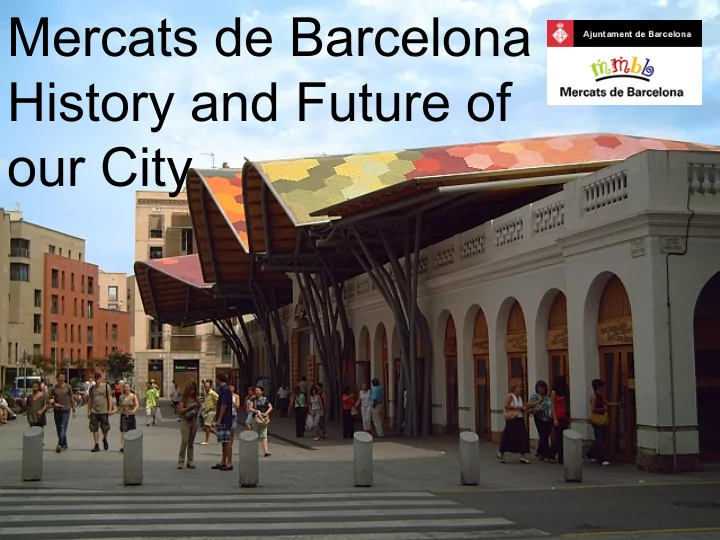
Mercats de Barcelona History and Future of our City The Markets of - - PowerPoint PPT Presentation
Mercats de Barcelona History and Future of our City The Markets of Barcelona Barcelona Market Facts Public network of 46 markets. City Hall owned and managed 40 Food markets and 6 non-food 206.769 Square metres of built surface.
managed
metres of commercial surface
2007)
colony dedicated to producing oil and wheat
date back to the end of the 10th century
which is presently in the square la Plaça de l‘Àngel
spread through out Catalonia, to assure wheat arrival to the city. Over the years these competences and activities naturally evolved into their own physical spaces in the form of municipal markets
Andreu (1923) and Galvany (1927) markets were built in similar modernistic processes
incorporate the original historical artistic elements in the renovation
being used for loading will be opened up for use as public space
parking complex
and clothing flea market
make Mercat del Guinardó part of a complex of public buildings including a primary health center, school, and library
National Award of Generalitat de Catalunya 2001 Spanish Ceramic Awards ASCER 2005 – Architectural Prize
Miralles and Benedetta Tagliabue
framework that incorporates the whole neighborhood
loading area
where customers can see the remains of the church that the market was built upon
eat from the market”
school students to teach them how to eat healthy with foods from the markets
foster a diet rich in nutrients despite a current trend towards fast and pre-packaged foods
health among the customers of the market through the consumption
products
markets and health care providers
nutritionists that give work shops in the markets based on individualistic health needs and concerns
week against cancer, IMMB collaborates with groups such as Catalan Federation of Entities Against the Cancer FECEC and AFANOC, Association of Children with Cancer to raise awareness and funds to support this important issue
markets inclusion of popular festivities and
backing the conservation
(Christmas, Carnival, etc.), the aim is to show the markets commitment to the social fabrics of the neigborhoods
to strengthen the Markets power as a whole and influence the European Union to recognize the markets importance in the social fabric of the cities
defending the traditional, high quality food system that is still alive and well in their markets, and supporting this
philosophy throughout Europe
Lisbon
Budapest