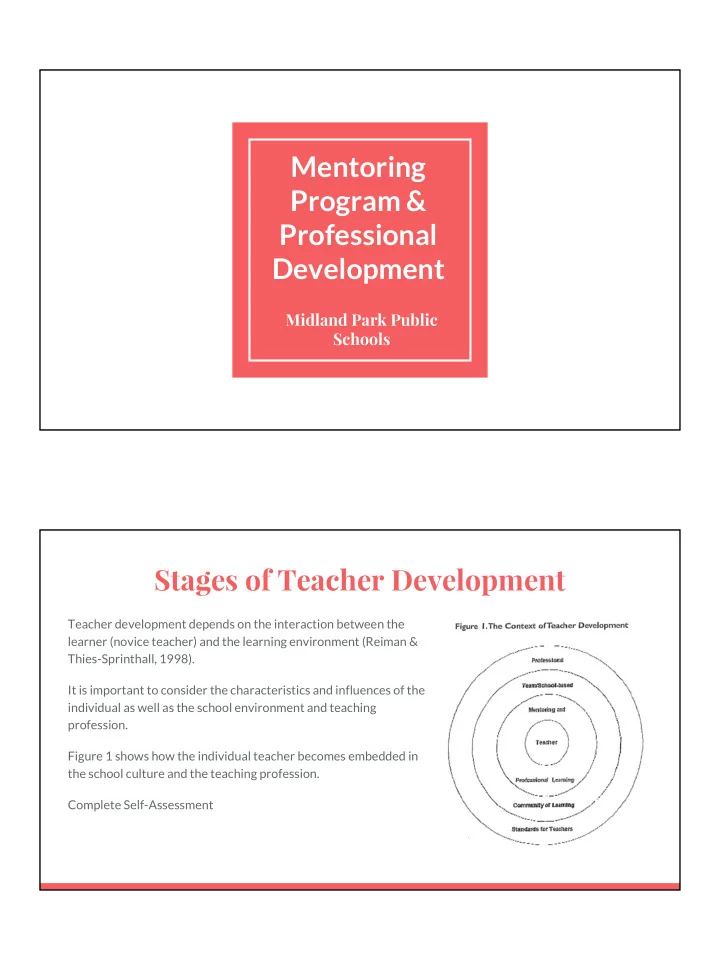
SLIDE 2 Stages of Teacher Development
As novice teachers encounter the complexities of beginning to teach in his/her own classroom, he/she experiences three phases of concern: 1. Survival of self; 2. Task; and 3. Impact (Fuller, 1969; Reiman & Thies-Sprinthall, 1998). The following describes the concerns of the novice teacher during each phase: 1. Focus on orienting him/herself to the school culture and learning the school policies and procedures, which include getting supplies, organizing the classroom, finding resources, and becoming an integral part of the school faculty 2. Focus on classroom management skills, setting short-term goals, and other issues related to teaching and learning 3. Engage in a deeper understanding of teaching practices through ongoing professional learning
- pportunities based on student needs
District Mentoring Program Overview
Supports non-tenured teachers in their first year of employment by providing a comprehensive induction to school and district policies and procedures (New Teacher Orientation Days), as well as providing individualized supports and activities with a one-on-one mentor. Mentor teachers hold a teacher certification, have at least three years teaching experience, and demonstrate a record of success in the classroom. Mentors do not serve as their mentee’s direct supervisor nor conduct evaluations of teachers. Mentors and Novice Teachers maintain confidentiality for all mentor-novice teacher activities.