KCPS Safe Routes to School Overview Kansas City, Missouri June 1, - - PowerPoint PPT Presentation

kcps safe routes to school overview
SMART_READER_LITE
LIVE PREVIEW

KCPS Safe Routes to School Overview Kansas City, Missouri June 1, - - PowerPoint PPT Presentation

KCPS Safe Routes to School Overview Kansas City, Missouri June 1, 2017 | BikeWalkKC | Kansas City Public Schools | Healthcare Foundation of Greater Kansas City About BikeWalkKC BikewalkKC is a 501(c)(3) non-profit with a mission to redefine our


slide-1
SLIDE 1

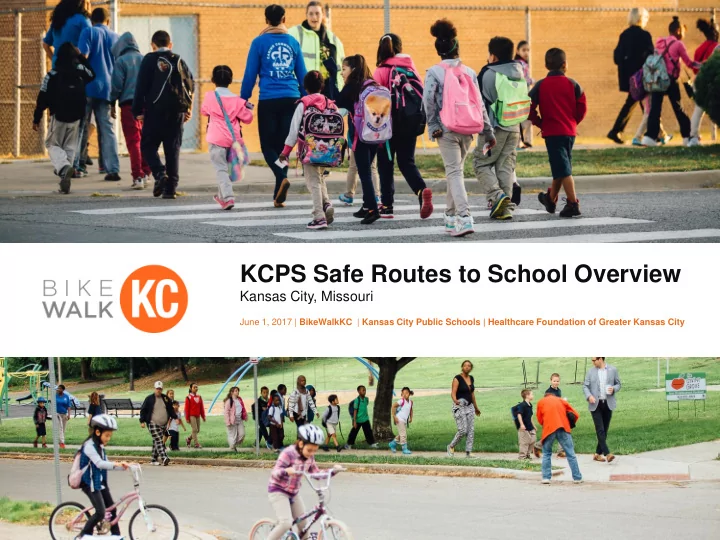
KCPS Safe Routes to School Overview

Kansas City, Missouri

June 1, 2017 | BikeWalkKC | Kansas City Public Schools | Healthcare Foundation of Greater Kansas City
slide-2
SLIDE 2

About BikeWalkKC

BikewalkKC is a 501(c)(3) non-profit with a mission to redefine our streets as places for people to build a culture of active living. We support regional partners in creating a community that is barrier free, has complete biking and walking access, and has a connected culture of active living. BikeWalkKC provides a wide range of services including:

  • Safe Routes to School Planning
  • Public Education Programs
  • Regional Encouragement Programs
  • Bike Share Planning
  • Complete Street Design
  • Bike and Trail System Planning
slide-3
SLIDE 3

About Safe Routes to School

Safe Routes to School is the national movement to get more kids walking and biking to school. Safe Routes to School focuses on providing incentives for students to walk or bike to school, and providing them a safe environment in which to travel. The six E’s define a proven, multi-pronged approach to get kids safely walking and biking to school:

  • Evaluation
  • Engineering
  • Education
  • Encouragement
  • Enforcement
  • Equity
slide-4
SLIDE 4

BikeWalkKC’s Safe Routes Work in the Region

  • North Kansas City
  • Shawnee Mission
  • Hickman Mills
  • Wyandotte County
  • Kansas City Public Schools
slide-5
SLIDE 5

SRTS in KCPS: Project Background

  • Two year grant from the Health Care

Foundation of Greater Kansas City to work with KCPS on long-term, policy focused, community planning SRTS project.

  • Equity-focused project putting ground-

level community engagement first and foremost.

  • Goal: Implement tangible engineering,

program, and policy recommendations, while building sustained engagement around active and safe transportation.

slide-6
SLIDE 6

From 2014-2016, BikeWalkKC worked with partner schools to support students walking and biking to school, and to develop a district- wide strategy to achieve those outcomes. Initial work focused on development of a data collection methodology, as well as a multi- pronged engagement effort, bringing together numerous and diverse partners from the school, neighborhood, City, and other

  • rganizations.

Project Components:

  • Arrival and Dismissal Observations
  • Built Environment Assessment
  • Direct Engagement & Surveys
  • Policy Review
  • Education Programming

SRTS in KCPS: Project Background

slide-7
SLIDE 7

District Needs

  • Access to physical activity
  • Alternatives to the automobile
  • Safe and comfortable built environment
  • Efficient use of scarce resources
slide-8
SLIDE 8

School Selection

Garcia Elementary Garfield Elementary Gladstone Elementary Crispus Attucks Elementary James Elementary Whittier Elementary

  • J. A. Rogers Elementary
slide-9
SLIDE 9

Arrival / Dismissal Observations

Observations Review of School Procedures Interviews School Site Analysis

slide-10
SLIDE 10

Built Environment Assessment

slide-11
SLIDE 11

Direct Engagement & Surveys

  • 2,477 students participated in

education & outreach programs

  • 100+ parent survey responses
  • 50+ community meetings
  • Dozens of parent & teacher interviews

during arrival/dismissal observations

  • Community-wide events (International

Walk and Bike to School Day)

  • Ongoing communication with

neighborhood groups, PTAs, and other

  • rganizations, to help inform and

shape policies and recommendations

slide-12
SLIDE 12

Policy Review

  • Local and Regional Planning
  • Hazard Busing
  • Attendance Boundaries
  • School Zones
  • Crossing Guards
  • Student Arrival and Dismissal
  • Bike Parking and Storage
  • School Siting and Design
slide-13
SLIDE 13

Education Programming Bicycle Lesson & Safety Training Earn-a-Bike Bike Club Walk to School Day

slide-14
SLIDE 14

Findings: Common Barriers to Walking and Biking Infrastructure Personal Safety Policy Access and Awareness

slide-15
SLIDE 15

Additional Findings

  • No schools had a significant number of students

who biked to school.

  • Operational challenges create safety issues, but

there are often simple changes to address concerns.

  • There is significant variation in the level of walking

and biking between schools.

  • Strong relationship between quality of pedestrian

infrastructure and % of students who walk or bike.

  • Schools with a high percentage of walkers have few

physical barriers.

  • Schools with a high percentage of walkers have

more complete sidewalk network.

  • Attendance boundaries have a major impact on how

many students walk to school.

slide-16
SLIDE 16

School Comparison

James Elementary:

  • No major barriers
  • Short distances
  • Sidewalk Improvements
  • 62% Walking
slide-17
SLIDE 17

School Comparison

Garcia Elementary:

  • Multiple Hwy Barriers
  • Long Distances
  • Safety Concerns
  • 3% Walking

Garcia Garcia Students

slide-18
SLIDE 18

Challenges

  • Consistent data collection
  • Limited district resources
  • Making the case for Safe Routes
  • Tailor approach to each school
  • Staffing changes
slide-19
SLIDE 19

The Big Opportunity

  • Framework exists for multilayered, multi-

partner strategy that benefits multiple groups and areas

  • Infrastructure, programming, education, and

engagement deployed together to be mutually supportive

  • This project has strengthened partnerships at

many levels, including individual schools, district admin, City, and neighborhood and community organizations

  • Everyone benefits from better infrastructure,

increased safety, active living, and local engagement – not just students

slide-20
SLIDE 20

Recommendations

  • Priority SRTS Corridors
  • Focus programming and outreach
  • Continued education and engagement
  • Strengthen mutual partnerships
slide-21
SLIDE 21

Next Steps

  • BikeWalkKC is working with
  • ther partner organizations to

analyze the collective impact of community engagement, and built environment and programming interventions at schools.

  • Partners include:
  • KCMO Health Department
  • Children's Mercy Hospital
  • Score 1 for Health
  • City of Kansas City, Missouri
  • Many others!