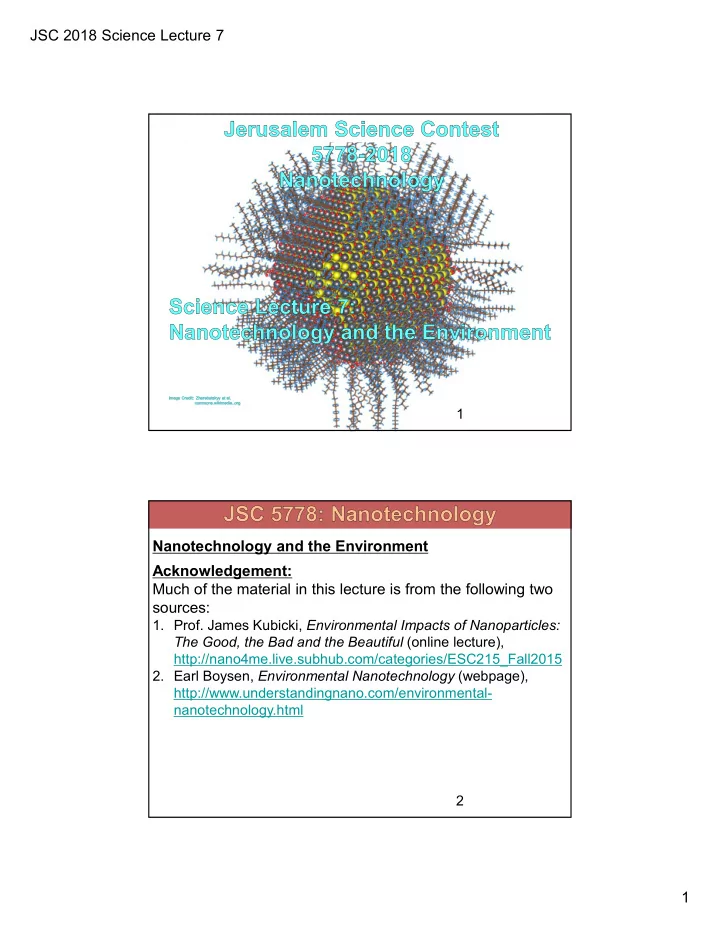
JSC 2018 Science Lecture 7 1 Nanotechnology and the Environment - - PDF document

jsc 2018 science lecture 7
SMART_READER_LITE
LIVE PREVIEW

JSC 2018 Science Lecture 7 1 Nanotechnology and the Environment - - PDF document

JSC 2018 Science Lecture 7 1 Nanotechnology and the Environment Acknowledgement: Much of the material in this lecture is from the following two sources: 1. Prof. James Kubicki, Environmental Impacts of Nanoparticles: The Good, the Bad and the


slide-1
SLIDE 1

JSC 2018 Science Lecture 7 1

1

Nanotechnology and the Environment Acknowledgement: Much of the material in this lecture is from the following two sources:

  • 1. Prof. James Kubicki, Environmental Impacts of Nanoparticles:

The Good, the Bad and the Beautiful (online lecture), http://nano4me.live.subhub.com/categories/ESC215_Fall2015

  • 2. Earl Boysen, Environmental Nanotechnology (webpage),

http://www.understandingnano.com/environmental- nanotechnology.html 2

slide-2
SLIDE 2

JSC 2018 Science Lecture 7 2 Nanotechnology and the Environment

  • As with many other areas, nanotechnology can potentially

improve our environmental impact.

  • However, nanotechnology also has several negative

environmental consequences (potential and real), which must be addressed

  • See optional reading, unit 7
  • For example, nanoparticles can “escape” and pollute the

environment 3

  • Titanium dioxide is added to a huge swath of products in nano

form including paints, paper and plastics but also lends white pigment to most toothpastes and many processed foods, 4

slide-3
SLIDE 3

JSC 2018 Science Lecture 7 3

5

Some Ways Nanotechnology Can Help The Environment:

  • 4. Creating and improving alternative energy sources (e.g. solar

cells)

  • 5. Making conventional energy generation cleaner and more

efficient

  • 1. Cleaning up the environment (remediation)
  • 2. Preventing pollution
  • 3. Providing clean drinking water and water recycling
  • (many of these applications have been covered in previous

units) 6

slide-4
SLIDE 4

JSC 2018 Science Lecture 7 4

  • 1. Cleaning Up The Environment:
  • Cleaning water
  • Ground water, rivers, lakes, oceans
  • Wastewater treatment
  • Cleaning air
  • Detection and analysis of pollutants
  • Cleaning soil
  • Removing greenhouse gases
  • Removing pollutants
  • Removing plastics and oil spills from the ocean

7

  • 2. Preventing Pollution:
  • Similar applications to previous section, except pollutants are

removed before being released in the environment

  • E.g. Polypropylene oxide:
  • Produced in industry in large amounts
  • Used to make plastics, paint, detergents brake fluids
  • Many toxic and harmful by-products of production
  • 2010, researchers at Argonne National Laboratory, Illinois used

silver nanoparticles as a catalyst to make this compound with a huge reduction in by-products 8

slide-5
SLIDE 5

JSC 2018 Science Lecture 7 5

  • 3. Providing Clean Drinking Water And Water Recycling:
  • Very similar to items 1 and 2.

9

Cleaning Water:

  • Enhances iron-reducing bacteria that

also reduce and immobilize uranium

  • Removes chromium and uranium.
  • Nanoparticles of iron oxides and iron metal break down

contaminants

  • Removes arsenic (As) in several

ways

  • Removes chlorine from toxic solvents

10

slide-6
SLIDE 6

JSC 2018 Science Lecture 7 6

  • 4. Creating and Improving Alternative Energy Sources:
  • Wind turbines
  • Fuel cells (mostly for electric cars)
  • Solar cells
  • Other sources
  • 5. Making conventional energy generation cleaner and

more efficient

11

Solar cells:

  • More sensitive to infra-red than other

solar cells

  • Also useful for better gas sensors, infrared lasers, infrared

LED’s and more.

  • E.g. light-sensitive nanoparticles (colloidal quantum dots)
  • Colloidal lead sulfide/selenide

quantum dot

  • Could lead to cheaper and more

flexible solar cells 12

slide-7
SLIDE 7

JSC 2018 Science Lecture 7 7 Some Ways Nanotechnology Can Help The Environment:

  • 4. Creating and improving alternative energy sources (e.g. solar

cells)

  • 5. Making conventional energy generation cleaner and more

efficient

  • 1. Cleaning up the environment (remediation)
  • 2. Preventing pollution
  • 3. Providing clean drinking water and water recycling

13

Thanks for participating in the contest!

Good luck on your presentations! Good luck on the final exam! 14