SLIDE 1
SLIDE 2 IO and Instructions
Original by Koen Claessen
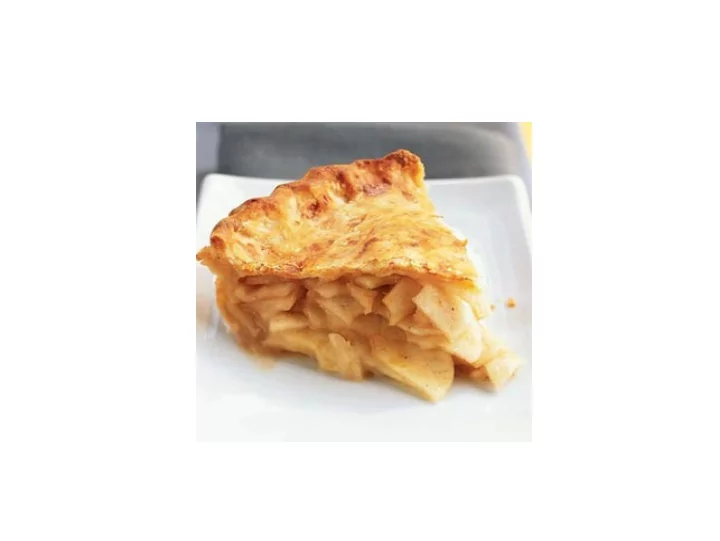
SLIDE 3 Apple Pie
Mumsig äppelpaj Värm upp ugnen till 225 grader, blanda ingredienserna nedan och se till att fatet är både ugnsäkert och insmort med margarin. Lägg på äpplena som du tärnar först och sen kanel och socker ovanpå. Häll på resten av smulpajen och låt stå i ugnen i ca 25 minuter. Servera med massor av vaniljsås! 2.5 dl mjöl 100 gram margarin 5-6 äpplen, gärna riktigt stora 1 dl socker 1 msk kanel Mycket vaniljsås, gärna Marzan
Difference?
SLIDE 4 Running a Program
What is the type
How do you write this as a function?
SLIDE 5 A Simple Example
- Writes the text “Anna+Kalle=sant” to the file
called “myfile.txt”
- No result displayed – why not?
Prelude> writeFile “myfile.txt” “Anna+Kalle=sant” Prelude>
SLIDE 6 What is the Type of writeFile?
Prelude> :i writeFile writeFile :: FilePath -> String -> IO ()
- When you give GHCi an expression of type IO, it
- beys the instructions (instead of printing the result)
- Note: The function writeFile does not write the file
- It only computes the instruction to write
Just a String INSTRUCTIONS to the
the file
SLIDE 7 The type ()
- The type () is called the unit type
- It only has one value, namely ()
- We can see () as the “empty tuple”
- It means that there is no interesting result
SLIDE 8 The type FilePath
- Is a type synonym...
- ...which is a way to give an additional name to a
type that already exists
- for convenience and/or documentation
- Remember: d
a t a creates a new type, which is different
type FilePath = String data Shape = Circle Float | ...
SLIDE 9
Instructions with a result value
Prelude> :i readFile readFile :: FilePath -> IO String INSTRUCTIONS for computing a String
SLIDE 10 Instructions vs. values – an analogy
- Instructions:
- Value:
- 1. Take this card
- 2. Put the card into the ATM
- 3. Enter the code “1437”
- 4. Select “500kr”
- 5. Take the money
Which would you rather have?
SLIDE 11 Instructions vs. values – an analogy
Mumsig äppelpaj Värm upp ugnen till 225 grader, blanda ingredienserna nedan och se till att fatet är både ugnsäkert och insmort med margarin. Lägg på äpplena som du tärnar först och sen kanel och socker ovanpå. Häll på resten av smulpajen och låt stå i ugnen i ca 25 minuter. Servera med massor av vaniljsås! 2.5 dl mjöl 100 gram margarin 5-6 äpplen, gärna riktigt stora 1 dl socker 1 msk kanel Mycket vaniljsås, gärna Marzan
Which would you rather have?
SLIDE 12 Instructions with a result value
Prelude> :i readFile readFile :: FilePath -> IO String
- readFile “myfile.txt” is not a String
- no String can be extracted from it...
- ...but we can combine it with other instructions
that use the result
INSTRUCTIONS for computing a String We cannot extract 500kr from the list of instructions either...
SLIDE 13 Putting Instructions Together
copyFile :: FilePath -> FilePath -> IO () copyFile file1 file2 = do s <- readFile file1 writeFile file2 s writeTwoFiles :: FilePath -> String -> IO () writeTwoFiles file s = do writeFile (file ++ “1”) s writeFile (file ++ ”2”) s Use do to combine instructions into larger
SLIDE 14 Putting Instructions Together
catFiles :: FilePath -> FilePath -> IO String catFiles file1 file2 = do s1 <- readFile file1 s2 <- readFile file2 return (s1++s2) Use do to combine instructions into larger
Use return to create an instruction with just a result return :: a -> IO a
SLIDE 15 Instructions vs. Functions
u n c t i
s always give the same result for the same arguments
n s t r u c t i
s can behave differently on different
- ccasions
- Confusing them is a major source of bugs
- Most programming languages do so...
- ...understanding the difference is important!
SLIDE 16 The IO type
data IO a -- a b u i l t
n t y p e putStr :: String -> IO () putStrLn :: String -> IO () readFile :: FilePath -> IO String writeFile :: FilePath -> String -> IO () ... Look in the standard modules: System.IO, System.*
SLIDE 17 Some Examples
- doTwice :: IO a -> IO (a,a)
- dont :: IO a -> IO ()
- second :: [IO a] -> IO a
- (see file ExampleIO.hs)
SLIDE 18 Evaluating & Executing
- IO actions of result type ()
- are just executed in GHCi
- IO actions of other result types
- are executed, and then the result is printed
Prelude> writeFile “emails.txt” “anna@gmail.com” Prelude> readFile “emails.txt” “anna@gmail.com”
SLIDE 19 Quiz
sortFile :: FilePath -> FilePath -> IO ()
- Define the following function:
- “sortFile file1 file2” reads the lines of file1, sorts
them, and writes the result to file2
- You may use the following standard functions:
sort :: Ord a => [a] -> [a] lines :: String -> [String] unlines :: [String] -> String
SLIDE 20
Answer
sortFile :: FilePath -> FilePath -> IO () sortFile file1 file2 = do s <- readFile file1 writeFile file2 (unlines (sort (lines s))) General guideline: Do as much as possible using pure functions. Only use IO when you have to.
SLIDE 21 Recursive instructions
getLine :: IO String
- Let's define the following function:
Prelude> getLine a p a “apa”
- We may use the following standard function:
getChar :: IO Char
SLIDE 22
Two useful functions
sequence_ :: [IO ()] -> IO () sequence :: [IO a] -> IO [a] Can be used to combine lists of instructions into one instruction
SLIDE 23
Analogy for sequence
sequence :: [IO a] -> IO [a] Book of recipes for cookies Instruction to bake all cookies in the book Cookie jar
SLIDE 24 An Example
writeFiles :: FilePath -> [String] -> IO ()
- Let's define the following function:
Prelude> writeFiles “file” [“apa”,”bepa”,”cepa”] Prelude> readFile “file1” “apa” Prelude> readFile “file3” “cepa”
- We may use the following standard functions:
show :: Show a => a -> String zip :: [a] -> [b] -> [(a,b)]
SLIDE 25
A possible definition
writeFiles :: FilePath -> [String] -> IO () writeFiles file xs = sequence_ [ writeFile (file++show i) x | (x,i) <- zip xs [1..length xs] ] We create complex instructions by combining simple instructions
SLIDE 26
Definitions?
sequence_ :: [IO ()] -> IO () sequence :: [IO a] -> IO [a]
SLIDE 27 Functions vs. Instructions
u n c t i
s always produce the same results for the same arguments
n s t r u c t i
s can have varying results for each time they are executed
putStrLn :: String -> IO () readFile :: FilePath -> IO String sequence :: [IO a] -> IO [a] YES! They deliver the same instructions for the same arguments (but executing these instructions can have different results)
SLIDE 28 What is the Type of doTwice?
Prelude> :i doTwice doTwice :: Monad m => m a -> m (a,a)
- We will see other kinds of instructions
(than IO) in the next lecture
Monad = Instructions There are several different kinds of instructions!
SLIDE 29
Reading
Chapter 9 of Learn You a Haskell:
http://learnyouahaskell.com/input-and-output (“Instructions” are called “actions”)
SLIDE 30 Do’s and Don’ts
isBig :: Integer → Bool isBig n | n > 9999 = True | otherwise = False isBig :: Integer → Bool isBig n = n > 9999
guards and boolean results
SLIDE 31 Do’s and Don’ts
resultIsSmall :: Integer → Bool resultIsSmall n = isSmall (f n) == True resultIsSmall :: Integer → Bool resultIsSmall n = isSmall (f n)
comparison with a boolean constant
SLIDE 32 Do’s and Don’ts
resultIsBig :: Integer → Bool resultIsBig n = isSmall (f n) == False resultIsBig :: Integer → Bool resultIsBig n = not (isSmall (f n))
comparison with a boolean constant
SLIDE 33 Do’s and Don’ts
fun1 :: [Integer] → Bool fun1 [] = False fun1 (x:xs) = length (x:xs) == 10 fun1 :: [Integer] → Bool fun1 xs = length xs == 10
repeated code necessary case distinction?
Do not make unnecessary case distinctions
SLIDE 34 Do’s and Don’ts
fun2 :: [Integer] → Integer fun2 [x] = calc x fun2 (x:xs) = calc x + fun2 xs fun2 :: [Integer] → Integer fun2 [] = 0 fun2 (x:xs) = calc x + fun2 xs
repeated code right base case ?
Make the base case as simple as possible