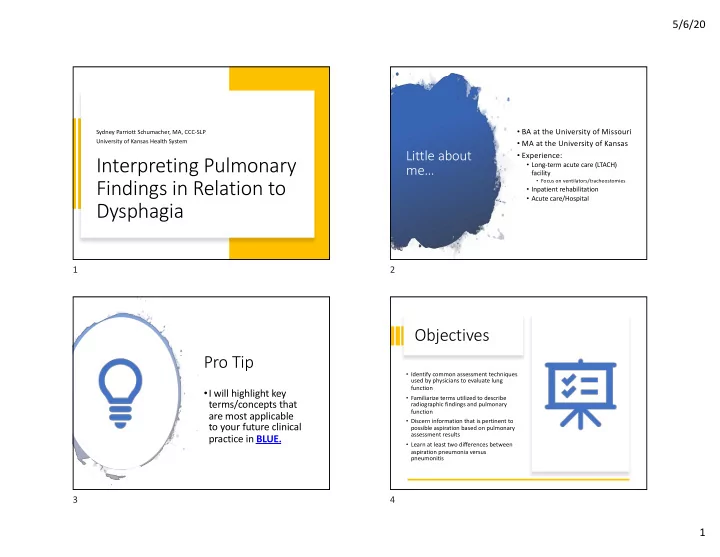
SLIDE 6 5/6/20 6 Pneumonia vs. Pneumonitis: Same or Different?
Aspiration Pneumonia Chemical Pneumonitis
Colonized oropharyngeal material Sterile gastric contents Acute inflammation Acute injury Tachypnea (rapid, shallow breathing), cough Asymptomatic, dyspnea (labored breathing), hypoxia, cough, low-grade fever Can progress quickly, gradually, or over weeks Progresses within 1-2 hours
May need to use your detective skills during your chart review! Did the patient have a recent emesis (vomiting) episode?
Pneumonia Pneumonitis
“Anaerobic pneumonitis” - ASPIRATION “Chemical pneumonitis” – EMESIS or VOMIT Colonized oropharyngeal material; bacterial Gastric contents, sterile due to low pH Acute inflammation Inflammatory injury Tachypnea (rapid, shallow breathing), cough Asymptomatic, dyspnea (labored breathing), hypoxia, cough, low-grade fever Can progress quickly, gradually,
Progresses within 1-2 hours, will clear after 24-36 hours
21
CARES
- Thorough and FREQUENT!
- At LEAST 3 times per day (after
meals)
- Education patient, family, staff!
- Will reduce the ability for oral
bacteria to colonize, thus reduce the risk of aspiration pneumonia
22
Clinical Application of CXR, CT-Chest
- Was your patient tolerating the diet they were on
at home vs since admission to the hospital?
- How compromised is their lung function prior to
completing your bedside assessment?
Current Level of Function
- Pulmonary status helps clinicians predict how well
a patient may tolerate aspiration
- Difference between being more liberal vs more
conservative with your recommendations
Assess for diet tolerance as part of clinical picture
- Does the person already have a pneumonia?
- Consider impact of conditions such as COPD,
emphysema, lung cancer, etc.
Determine pertinent pulmonary diagnoses
23
Case Study:
- 78-year old female
- Prior Medical History (PMH):
- Right hemisphere stroke (CVA)
- Gastroesophageal reflux disease (GERD)
- Pneumonia
- History of dysphagia from CVA
- On regular solid/thin liquid diet at home as recommended from
videoswallow completed ~3 months prior
- Small bites/sips, slow rate
- Daughter reports patient is very impulsive since the stroke and often doesn’t
follow swallow guidelines despite lots of encouragement
- Admitted to hospital for respiratory failure requiring intubation for 3
days
- Extubated and put on 3 liters of oxygen for bedside swallow
evaluation
24