
SLIDE 1
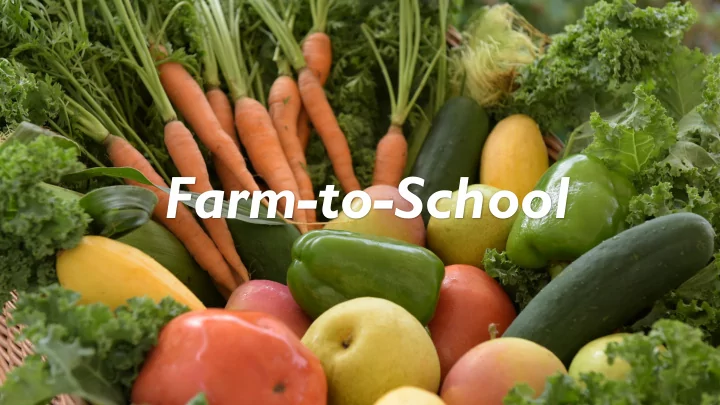
Farm-to-School 1 IN 13 CHILDREN DO NOT CONSUME ENOUGH FRUITS AND - - PowerPoint PPT Presentation
Farm-to-School 1 IN 13 CHILDREN DO NOT CONSUME ENOUGH FRUITS AND VEGETABLES How does Farm to School Work to Bridge that Gap When schools offer school gardens, 44.2 percent of students eat more fruits and vegetable When schools
1 IN 13 CHILDREN DO NOT CONSUME ENOUGH FRUITS AND VEGETABLES
¡ How does Farm to
School Work to Bridge that Gap…
¡
When schools offer school gardens, 44.2 percent of students eat more fruits and vegetable
¡
When schools serve local food, 33.1 percent
fruits and vegetables
INCLUDES ONE OR MORE OF THE FOLLOWING:
¡ Procurement: Local foods
are purchased, promoted, and served in the cafeteria.
¡ Education: Students
participate in the education activities related to agriculture, food, health and nutrition.
¡ School Gardens: Students
engage in hands-on learning through gardening.
STEPS IN FARM-TO-SCHOOL
¡ 1. Form a team and
collaborate
¡ 2. Establishing a vision ¡ 3.Define your definition
¡ 4. Defining your goals ¡ 5. Procurement ¡ 6. Promoting and
marketing your program
STEP 1: FORM A TEAM AND COLLABORATE
¡ School Food Service
Staff
¡ Educators ¡ Administrators ¡ Local Farmers and
producers
¡ Students ¡ Parents
¡ What is behind your decision to establish a
farm-to-school program? Why does your community value a community food systems approach?
¡ What benefits will a farm-to-school program
bring to your students, school district, and community?
¡ What is your long-term vision for a thriving
program?
New York New Jersey Pennsylvania
STEP 4: DEFINE YOUR GOALS
STEP 5: FOCUS ON PROCUREMENT CONTINUE TO DEFINE YOUR DISTRICT’S GOALS
steps in Farm-to- School, will be coordinated with food services.
How often does your District want to showcase local?
¡
Harvest of the month
¡
Ingredients Substitution
¡
Seasonal Cycle Menu
¡
Salad Bar
¡
Themed Menus for Special Events
STEP 6: INVESTIGATE WHAT YOU ARE ALREADY PURCHASING AND DETERMINE IF IT IS LOCAL ¡ Do not hesitate to reach
produce is available locally, distributors will typically purchase close to home. ¡ Bread ¡ Milk
USDA DEPARTMENT OF DEFENSE FRESH FRUIT AND VEGETABLE PROGRAM
¡ Allocate a portion of your
commodity dollars to the DOD program
¡ Their website will indicate if the
produce is local and as well provide farmer information
for Free and Reduced-Price Meals, that participate in the NSLP
¡ Established in 1984, by the New
Jersey Department of Agriculture, the Jersey Fresh logo was designated to inform consumers which fruits and vegetables were grown in the Garden State. So, if you see the logo
produce was grown in New Jersey!
New Jersey is a National Top Ten Producer of Fruits and Vegetables New Jersey is the Garden State
STEP 7: HOW TO SEARCH FOR LOCAL PRODUCE IN YOUR AREA
WWW.FIN DJERSEYFR ESH.COM
NJ Growing Season: April - December
DURING THE WINTER MONTHS
¡ Frozen – Frozen
Blueberries
¡ Canned – NJ
T
¡ Dehydrating
SELF-OPERATED FOOD SERVICE PROGRAMS-PURCHASING
¡ A) SFAs may apply a geographic preference when procuring
unprocessed locally grown or locally raised agricultural products
¡ Unprocessed means agricultural products retain their inherent
characteristics
¡ SFA has discretion to determine local area to which this option will be
applied
SELF-OPERATED FOOD SERVICE PROGRAMS-PURCHASING
¡ Solicitation must clearly outline how responses will be
evaluated and scored, including geographic preference
¡ Application of preference option must leave an appropriate
number of qualified firms, given the nature and size of procurement
If your contract includes language which allows your FSMC to procure on behalf of the Food Service Program, then your FSMC will handle purchasing for your Farm to School Program if food is used as a part of the Food Service Program.
GROW YOUR LOCAL PRODUCE
¡ Container Garden ¡ Fruit Tree ¡ Herb Gardens ¡ Greenhouses ¡ T
STEP 8: ESTABLISH A ROTATION OF WHEN YOU PLAN ON SHOWCASING YOUR LOCAL FRUITS AND VEGETABLE. ¡ Harvest of the Month ¡ Ingredient Substitution ¡ Season Cycle Menu ¡ Salad Bar ¡ Themed Menus for
special events
STEP 9: LET’S HAVE FUN WITH YOUR ROTATION DECIDE HOW TO MENU YOUR LOCAL PRODUCE!
STEP 10: NOW FOR THE EDUCATION!
¡ Once you have
established which local produce you will be purchasing, it is accessible to partner with the rest of your community.
STEP 11: MARKETING, MARKETING AND MORE MARKETING
¡
Send email blast home when you will be showcasing your local produce
¡
Include nutrition facts and farmer information
¡
A) Hang up flyers in the cafeteria
GO ABOVE AND BEYOND
¡ Taste testing with
students
¡ Give them a sticker for
trying the local fruit and vegetable
PARTNER WITH THE CLASSROOMS. TEACH THE STUDENTS THE HEALTH BENEFITS OF THE PRODUCE WHILE TASTING THEM
¡ Farm-to-School enriches the
connection communities have with fresh, healthy food and local food producers by enhancing food purchasing and education practices at schools and early care and education sites.
FARM-TO-SCHOOL WORKS TO CREATE POSITIVE SCHOOL AND COMMUNITY BENEFITS
FARM-TO-SCHOOL WORKS TO STIMULATE LOCAL AND REGIONAL ECONOMIES
Districts receive:
foods-10 points
Grants The USDA Farm-to-School Grant Program 1) December 13th 2019-2020 Sustainable Jersey for Schools Grants Program 1) Due October 31st
Salad Bars to Schools 1) No Due Date
¡ A) Schoolnutrition.org ¡ B) https://www.fns.usda.gov/cfs/farm-to-school-
resources-1
¡ C) FarmtoSchool.org ¡ D) Farmtoschool.nj.gov