Evalua&ng tumor exome sequencing in the oncology clinic: - - PowerPoint PPT Presentation

evalua amp ng tumor exome sequencing in the oncology
SMART_READER_LITE
LIVE PREVIEW

Evalua&ng tumor exome sequencing in the oncology clinic: - - PowerPoint PPT Presentation

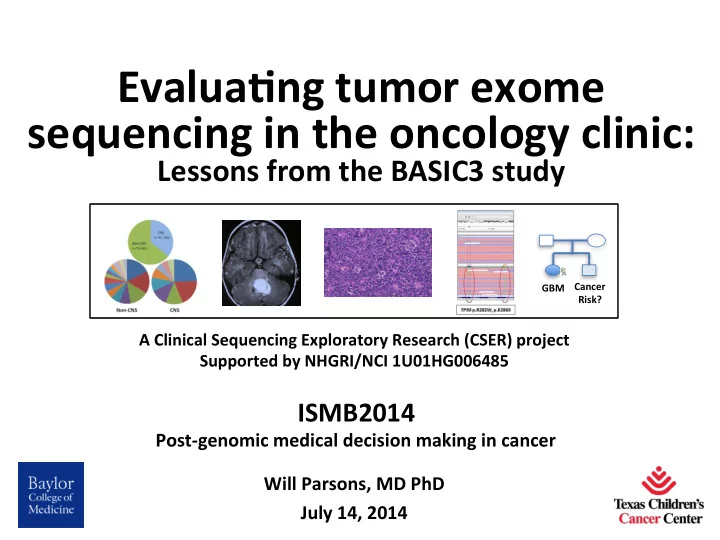
Evalua&ng tumor exome sequencing in the oncology clinic: Lessons from the BASIC3 study Cancer GBM Risk? A Clinical Sequencing Exploratory Research


slide-1
SLIDE 1

Evalua&ng ¡tumor ¡exome ¡ sequencing ¡in ¡the ¡oncology ¡clinic: ¡

Lessons ¡from ¡the ¡BASIC3 ¡study ¡

A ¡Clinical ¡Sequencing ¡Exploratory ¡Research ¡(CSER) ¡project ¡ Supported ¡by ¡NHGRI/NCI ¡1U01HG006485 ¡

Cancer ¡ ¡ Risk? ¡ GBM ¡

Will ¡Parsons, ¡MD ¡PhD ¡ July ¡14, ¡2014 ¡

ISMB2014 ¡

Post-­‑genomic ¡medical ¡decision ¡making ¡in ¡cancer ¡

slide-2
SLIDE 2

To ¡bring ¡genomic ¡sequencing ¡technologies ¡from ¡ the ¡laboratory ¡into ¡the ¡pediatric ¡oncology ¡clinic, ¡ providing ¡real-­‑:me ¡gene:c ¡informa:on ¡that ¡will ¡ guide ¡the ¡care ¡of ¡each ¡pa:ent ¡and ¡family. ¡

Objec:ve ¡– ¡precision ¡oncology ¡

slide-3
SLIDE 3
  • 1. Limited ¡understanding ¡of ¡the ¡biologically ¡and ¡

clinically-­‑relevant ¡gene:c ¡altera:ons ¡

  • 2. Limited ¡number ¡of ¡preclinical ¡models ¡
  • 3. Limited ¡number ¡of ¡available ¡drugs ¡
  • 4. Inexperience ¡with ¡clinical ¡applica:on ¡of ¡

genomic ¡technologies ¡

  • 5. Challenges ¡of ¡clinical ¡trial ¡design ¡
  • Small ¡numbers ¡of ¡pa:ents ¡with ¡each ¡tumor ¡subtype ¡
  • Biopsies ¡of ¡refractory ¡tumors ¡oKen ¡not ¡performed ¡

Challenges ¡(par:al ¡list) ¡

slide-4
SLIDE 4

BASIC3 ¡

280 ¡children ¡-­‑ ¡ newly ¡diagnosed ¡ CNS ¡and ¡non-­‑CNS ¡ ¡solid ¡tumors ¡ CLIA-­‑cer:fied ¡ whole ¡exome ¡ sequencing ¡ Blood ¡ Tumor ¡ SAMPLES ¡ MUTATION ¡ REPORTS ¡

PATIENTS ¡ SEQUENCING ¡ RETURN ¡OF ¡RESULTS ¡ FOLLOW-­‑UP ¡

Family ¡ MDs ¡ EMR ¡ No ¡relapse ¡ Relapse ¡ Germline ¡ Soma:c ¡ GCs ¡

  • To ¡integrate ¡informa:on ¡from ¡CLIA-­‑cer:fied ¡germline ¡

and ¡tumor ¡exome ¡sequencing ¡into ¡the ¡care ¡of ¡newly ¡ diagnosed ¡solid ¡and ¡brain ¡tumor ¡pa:ents ¡at ¡Texas ¡ Children’s ¡Cancer ¡Center ¡

  • To ¡perform ¡parallel ¡evalua:on ¡of ¡the ¡impact ¡of ¡tumor ¡

and ¡germline ¡exomes ¡ ¡on ¡families ¡and ¡physicians ¡ Study ¡objec:ves: ¡

Baylor ¡Advancing ¡Sequencing ¡Into ¡Childhood ¡Cancer ¡ Care ¡

Sharon ¡E. ¡Plon, ¡ ¡ MD ¡PhD ¡

slide-5
SLIDE 5
  • Children ¡less ¡than ¡18 ¡years ¡old ¡having ¡

surgery ¡for ¡CNS ¡or ¡non-­‑CNS ¡solid ¡tumors ¡ at ¡Texas ¡Children’s ¡Hospital ¡

– Study ¡enrollment ¡within ¡60 ¡days ¡of ¡final ¡ pathology ¡report ¡

  • Parents ¡of ¡these ¡children ¡
  • Primary ¡oncologists ¡of ¡these ¡children

¡ ¡

BASIC3 ¡inclusion ¡criteria ¡

slide-6
SLIDE 6

BASIC3 ¡

280 ¡children ¡-­‑ ¡ newly ¡diagnosed ¡ CNS ¡and ¡non-­‑CNS ¡ ¡solid ¡tumors ¡ CLIA-­‑cer:fied ¡ whole ¡exome ¡ sequencing ¡ Blood ¡ Tumor ¡ SAMPLES ¡ MUTATION ¡ REPORTS ¡

PATIENTS ¡ SEQUENCING ¡ RETURN ¡OF ¡RESULTS ¡ FOLLOW-­‑UP ¡

Family ¡ MDs ¡ EMR ¡ No ¡relapse ¡ Relapse ¡ Germline ¡ Soma:c ¡ GCs ¡

Baylor ¡Advancing ¡Sequencing ¡Into ¡Childhood ¡Cancer ¡ Care ¡

¡Iden&fy ¡and ¡ ¡consent ¡ ¡pa&ents ¡ ¡Provide ¡tumor ¡ ¡exome ¡results ¡ ¡to ¡clinicians ¡ ¡and ¡families ¡ Provide ¡germline ¡ ¡exome ¡results ¡ to ¡clinicians ¡ ¡and ¡families ¡

PROJECT ¡1 ¡ (CLINICAL) ¡

Measure ¡impact ¡on ¡ treatment ¡decisions ¡ ¡ at ¡relapse ¡(2 ¡yrs) ¡ Measure ¡frequency ¡of ¡ ¡ incidental ¡findings ¡ Measure ¡impact ¡on ¡ cancer ¡surveillance ¡ and ¡gene:c ¡tes:ng ¡of ¡ family ¡members ¡
slide-7
SLIDE 7

BASIC3 ¡

280 ¡children ¡-­‑ ¡ newly ¡diagnosed ¡ CNS ¡and ¡non-­‑CNS ¡ ¡solid ¡tumors ¡ CLIA-­‑cer:fied ¡ whole ¡exome ¡ sequencing ¡ Blood ¡ Tumor ¡ SAMPLES ¡ MUTATION ¡ REPORTS ¡

PATIENTS ¡ SEQUENCING ¡ RETURN ¡OF ¡RESULTS ¡ FOLLOW-­‑UP ¡

Family ¡ MDs ¡ EMR ¡ No ¡relapse ¡ Relapse ¡ Germline ¡ Soma:c ¡ GCs ¡

Baylor ¡Advancing ¡Sequencing ¡Into ¡Childhood ¡Cancer ¡ Care ¡

Complete ¡whole ¡ exome ¡sequencing ¡

  • f ¡tumor/blood ¡

PROJECT ¡2 ¡

Novel ¡repor:ng ¡pla^orm ¡ (iPAD ¡disclosure ¡app) ¡ Provide ¡annotated ¡ tumor ¡exome ¡results ¡ Provide ¡annotated ¡ germline ¡exome ¡results ¡

(SEQUENCING/REPORTING) ¡

slide-8
SLIDE 8

BASIC3 ¡

280 ¡children ¡-­‑ ¡ newly ¡diagnosed ¡ CNS ¡and ¡non-­‑CNS ¡ ¡solid ¡tumors ¡ CLIA-­‑cer:fied ¡ whole ¡exome ¡ sequencing ¡ Blood ¡ Tumor ¡ SAMPLES ¡ MUTATION ¡ REPORTS ¡

PATIENTS ¡ SEQUENCING ¡ RETURN ¡OF ¡RESULTS ¡ FOLLOW-­‑UP ¡

Family ¡ MDs ¡ EMR ¡ No ¡relapse ¡ Relapse ¡ Germline ¡ Soma:c ¡ GCs ¡

Baylor ¡Advancing ¡Sequencing ¡Into ¡Childhood ¡Cancer ¡ Care ¡

Describe ¡oncologist ¡preferences ¡and ¡values ¡for ¡ sharing ¡and ¡use ¡of ¡exome ¡data ¡ ¡ (through ¡longitudinal ¡interviews) ¡

PROJECT ¡3 ¡

Development ¡of ¡ ¡ ethical ¡framework ¡to ¡ guide ¡shared ¡ ¡decision-­‑making ¡for ¡ parents ¡and ¡pediatric ¡ specialists ¡ Study ¡physician-­‑parent ¡communica&on ¡of ¡exome ¡results ¡ ¡ (audio-­‑recording ¡of ¡disclosure ¡visits) ¡ Describe ¡family ¡preferences ¡and ¡values ¡for ¡receipt ¡ and ¡use ¡of ¡exome ¡data ¡ (through ¡surveys ¡& ¡longitudinal ¡interviews) ¡

(ELSI) ¡

slide-9
SLIDE 9

Enrollment ¡and ¡ ¡sample ¡status ¡

  • 150 ¡pa:ents, ¡223 ¡parents, ¡and ¡16 ¡oncologists ¡

Overwhelmed ¡(10%) ¡ Blood ¡draw ¡(2%) ¡ Gene:c ¡anxiety ¡(2.5%) ¡ Privacy ¡risks ¡(3%) ¡

No ¡(17%) ¡ Yes ¡ ¡ (83%) ¡

slide-10
SLIDE 10

Tumor ¡Diagnoses ¡of ¡100 ¡subjects ¡

Non-­‑CNS ¡(n=68) ¡ CNS ¡(n=32) ¡ Tumor ¡available ¡for ¡WES ¡ 22/32 ¡(69%) ¡ 59/68 ¡(87%) ¡

LOW ¡GRADE ¡ GLIOMA ¡ MEDULLO ¡ BLASTOMA ¡ EPENDYMOMA ¡ OTHER ¡CNS ¡ TUMORS ¡ CHOROID ¡ PLEXUS ¡TUMORS ¡ HIGH ¡GRADE ¡ GLIOMA ¡ MENINGIOMA ¡ ¡ PINEO ¡ BLASTOMA ¡ NEURO ¡ BLASTOMA ¡ WILMS ¡TUMOR ¡ OTHER ¡NON-­‑CNS ¡ SOLID ¡TUMORS ¡ RHABDOMYO ¡ SARCOMA ¡ EWING ¡ SARCOMA ¡ MIXED ¡ MALIGNANT ¡ GERM ¡CELL ¡ TUMOR ¡ OSTEOSARCOMA ¡ YOLK ¡SAC ¡ TUMOR ¡ ADRENAL ¡ CORTICAL ¡ CARCINOMA ¡ ALVEOLAR ¡SOFT ¡ PART ¡SARCOMA ¡ DYSGERMINOMA ¡ HEPATO ¡ BLASTOMA ¡ HCC ¡ PHEOCHROMO ¡ CYTOMA ¡

slide-11
SLIDE 11

BASIC3 ¡

280 ¡children ¡-­‑ ¡ newly ¡diagnosed ¡ CNS ¡and ¡non-­‑CNS ¡ ¡solid ¡tumors ¡ CLIA-­‑cer:fied ¡ whole ¡exome ¡ sequencing ¡ Blood ¡ Tumor ¡ SAMPLES ¡ MUTATION ¡ REPORTS ¡

PATIENTS ¡ SEQUENCING ¡ RETURN ¡OF ¡RESULTS ¡ FOLLOW-­‑UP ¡

Family ¡ MDs ¡ EMR ¡ No ¡relapse ¡ Relapse ¡ Germline ¡ Soma:c ¡ GCs ¡

Baylor ¡Advancing ¡Sequencing ¡Into ¡Childhood ¡Cancer ¡ Care ¡

¡Iden&fy ¡and ¡ ¡consent ¡ ¡pa&ents ¡ ¡Provide ¡tumor ¡ ¡exome ¡results ¡ ¡to ¡clinicians ¡ ¡and ¡families ¡ Provide ¡germline ¡ ¡exome ¡results ¡ to ¡clinicians ¡ ¡and ¡families ¡

PROJECT ¡1 ¡ (CLINICAL) ¡

Measure ¡impact ¡on ¡ treatment ¡decisions ¡ ¡ at ¡relapse ¡(2 ¡yrs) ¡ Measure ¡frequency ¡of ¡ ¡ incidental ¡findings ¡ Measure ¡impact ¡on ¡ cancer ¡surveillance ¡ and ¡gene:c ¡tes:ng ¡of ¡ family ¡members ¡

slide-12
SLIDE 12

Clinical ¡whole ¡exome ¡sequencing ¡

  • Using ¡1 ¡ug ¡of ¡DNA ¡isolated ¡from ¡frozen ¡:ssue ¡
  • Illumina ¡Sequencing ¡Pla^orm ¡

– Capture ¡exome ¡on ¡Roche-­‑Nimblegen ¡VCRome ¡2.1 ¡ from ¡BCM ¡HGSC ¡ – Paired ¡tumor/blood ¡samples ¡on ¡one ¡HiSeq ¡lane ¡

  • Analysis ¡using ¡pla^orm ¡developed ¡by ¡BCM-­‑HGSC ¡

informa:cs ¡team ¡

WES ¡sample ¡ Total ¡Gb ¡ per ¡sample ¡ Unique ¡ aligned ¡Gb ¡ ¡ Mean ¡ coverage ¡ Bases ¡20X ¡ coverage ¡ Bases ¡40X ¡ coverage ¡ Germline ¡ 18.8 ¡ 17.5 ¡ 272 ¡ 97.5% ¡ 95.7% ¡ Tumor ¡ 18.8 ¡ 17.6 ¡ 276 ¡ 97.3% ¡ 95.1% ¡

slide-13
SLIDE 13

BCM ¡Mercury ¡pipeline ¡

Variant ¡call ¡ format ¡ (.vcf) ¡ Reads ¡pile-­‑up ¡

  • ver ¡exons ¡
slide-14
SLIDE 14

Iden:fica:on ¡of ¡soma:c ¡muta:ons ¡

“tumor.vcf” ¡ Soma&c ¡ caller ¡ (T-­‑N) ¡ “normal.vcf” ¡ Soma:c ¡ Muta:on ¡ Repor:ng ¡ Rare ¡ Variants ¡ ¡ Germline ¡ Muta:on ¡ Repor:ng ¡

¡ ¡

Annota&on ¡

COSMIC: ¡

Var_ID ¡ Var_Gene ¡ Prim_Site ¡ Source ¡ PMID ¡ OMIM, ¡1000G, ¡ dbSNP, ¡HGMD ¡

slide-15
SLIDE 15

Tumor ¡type ¡ ¡ Total ¡variants ¡ ¡ Neuroblastoma ¡ 94 ¡ Medulloblastoma ¡ 125 ¡ Neuroblastoma ¡ 144 ¡ Wilms ¡tumor ¡ 118 ¡ Anaplas:c ¡ependymoma ¡ ¡ 75 ¡ Reported ¡ variants ¡ 4 ¡ 4 ¡ 20 ¡ 14 ¡ 2 ¡

“soma.vcf”: ¡

>20 ¡quality ¡metrics ¡ >50 ¡genotype ¡+ ¡ annota:on ¡features ¡

Apply ¡Filters ¡

  • Total ¡Cov ¡T ¡> ¡50X ¡
  • Q20 ¡Var ¡Cov ¡T ¡> ¡6X ¡
  • Exon ¡non-­‑synon ¡SNV ¡+ ¡Splicing ¡

+ ¡ ¡ ¡ ¡ ¡Remove ¡misaligned ¡ar:facts ¡

Confirma&on: ¡

Sanger ¡seq ¡

Interpret ¡and ¡Rank ¡ Report ¡ Interpret ¡and ¡Rank ¡ Report ¡

Molecular ¡Pathology ¡variant ¡ review ¡

slide-16
SLIDE 16
  • Category ¡I ¡muta:ons ¡

– Established ¡clinical ¡u&lity ¡for ¡the ¡tumor ¡type ¡tested ¡ ¡

  • Category ¡II ¡muta:ons ¡

– Poten&al ¡clinical ¡u&lity ¡ – Genes ¡that ¡are ¡members ¡of ¡cancer ¡pathways, ¡gene ¡families, ¡or ¡ func:onal ¡groups; ¡targets ¡of ¡approved ¡or ¡inves:ga:onal ¡ therapeu:c ¡agents ¡

  • Category ¡III ¡muta:ons ¡

– In ¡consensus ¡cancer ¡genes ¡(not ¡included ¡in ¡I ¡and ¡II)

¡ ¡

  • Category ¡IV ¡muta:ons ¡

– All ¡other ¡muta&ons ¡

ALK ¡-­‑ ¡neuroblastoma ¡ MET ¡-­‑ ¡neuroblastoma ¡ PHF6 ¡-­‑ ¡neuroblastoma ¡ XIAP ¡-­‑ ¡neuroblastoma ¡

  • A. ¡Roy ¡& ¡F. ¡Monzon ¡

Clinical ¡u:lity ¡of ¡tumor ¡WES ¡

slide-17
SLIDE 17
  • Recurrently-­‑mutated ¡genes ¡

– CTNNB1 ¡(8/80; ¡10%) ¡ – TP53 ¡(4/80, ¡5%) ¡ – BRAF ¡(3/80, ¡4%) ¡ – KIT ¡, ¡KRAS, ¡ARID1A, ¡TSC2 ¡(each ¡2/80, ¡2%) ¡

  • Genes ¡mutated ¡in ¡only ¡one ¡tumor: ¡

– ALK, ¡NRAS, ¡MET, ¡JAK2, ¡JAK3, ¡FGFR3, ¡NTRK2, ¡ FBXW7, ¡TSC2, ¡SMARCA4, ¡DDX3X, ¡NF2, ¡DICER1, ¡ NOTCH3, ¡BRCA1, ¡BRCA2, ¡WT1… ¡

n ¡= ¡81 ¡exomes ¡

Tumor ¡exome ¡results ¡

DOES ¡NOT ¡INCLUDE ¡ COPY ¡NUMBER ¡DATA ¡

slide-18
SLIDE 18

Tumor ¡exome ¡results ¡

Median ¡of ¡8 ¡soma&c ¡muta&ons ¡PER ¡PATIENT ¡

*Note: ¡Cat ¡4 ¡muta:ons ¡have ¡not ¡been ¡validated ¡

78 ¡ 10 ¡ 20 ¡ 5 ¡ 0 ¡

1st ¡67 ¡exomes ¡

slide-19
SLIDE 19

HIGHEST ¡category ¡of ¡muta:on ¡PER ¡PATIENT ¡

Tumor ¡exome ¡results ¡

Only ¡muta:ons ¡ in ¡“non-­‑cancer ¡ genes” ¡ Muta:ons ¡of ¡ ¡ poten:al ¡ ¡ clinical ¡u:lity ¡ Muta:ons ¡in ¡other ¡ “cancer ¡genes” ¡

n ¡= ¡81 ¡exomes ¡

Muta:ons ¡of ¡known ¡clinical ¡ ¡ u:lity ¡in ¡that ¡tumor ¡type ¡

  • Cat. ¡1 ¡

(2%) ¡

  • Cat. ¡3 ¡(23%) ¡ ¡
  • Cat. ¡2 ¡ ¡(26%) ¡
  • Cat. ¡4 ¡(49%) ¡
slide-20
SLIDE 20

14 ¡y/o ¡girl ¡with ¡metasta:c ¡OS ¡

  • Diagnosis: ¡metasta:c ¡osteosarcoma ¡
  • Prognosis: ¡poor ¡
  • Tumor ¡exome ¡result: ¡TSC2 ¡muta:on ¡
  • Clinical ¡considera:on: ¡use ¡of ¡mTOR ¡inhibitor? ¡

TSC2 ¡c.2764_2765del, ¡p.L922fs ¡

N T

Tumor ¡exome ¡sequencing ¡result: ¡ ¡frameshik ¡muta&on ¡in ¡TSC2 ¡(and ¡loss ¡of ¡other ¡allele) ¡ Courtesy ¡of ¡

  • A. ¡Roy ¡
slide-21
SLIDE 21

7 ¡y/o ¡boy ¡with ¡malignant ¡liver ¡tumor ¡

* ¡

NRAS ¡c.181C>A, ¡p.Q61K ¡

  • Diagnosis: ¡malignant ¡epithelial ¡hepa:c ¡neoplasm ¡
  • Prognosis: ¡poor ¡
  • Tumor ¡exome ¡result: ¡NRAS ¡muta:on ¡
  • Clinical ¡considera:on: ¡targe:ng ¡RAS ¡pathway? ¡
slide-22
SLIDE 22

14 ¡y/o ¡boy ¡with ¡medullobastoma ¡

CTNNB1 ¡ ¡ p.D32Y ¡ Tumor ¡exome ¡sequencing ¡results: ¡

β-­‑catenin: ¡subset ¡of ¡tumor ¡ ¡cells ¡with ¡nuclear ¡reac:vity ¡

N T

DDX3X ¡ ¡ p.V345L ¡ ARID1B ¡ ¡ c.3345+1G>A ¡ FOXO3 ¡ p.W233X ¡ TP53 ¡ p.R282W ¡ p.E286X ¡

N T

Courtesy ¡of ¡

  • A. ¡Roy ¡
slide-23
SLIDE 23

H3F3A ¡ ¡ p.G34R ¡ Tumor ¡exome ¡sequencing ¡results: ¡

N T

ATRX ¡ p.Q2192X ¡ BCOR ¡ p.S1261fs ¡ MED12 ¡ p.R1994W ¡ TP53 ¡ p.R273H ¡

N T

TP53

16 ¡year ¡old ¡girl ¡with ¡GBM ¡

slide-24
SLIDE 24

BASIC3 ¡

280 ¡children ¡-­‑ ¡ newly ¡diagnosed ¡ CNS ¡and ¡non-­‑CNS ¡ ¡solid ¡tumors ¡ CLIA-­‑cer:fied ¡ whole ¡exome ¡ sequencing ¡ Blood ¡ Tumor ¡ SAMPLES ¡ MUTATION ¡ REPORTS ¡

PATIENTS ¡ SEQUENCING ¡ RETURN ¡OF ¡RESULTS ¡ FOLLOW-­‑UP ¡

Family ¡ MDs ¡ EMR ¡ No ¡relapse ¡ Relapse ¡ Germline ¡ Soma:c ¡ GCs ¡

Baylor ¡Advancing ¡Sequencing ¡Into ¡Childhood ¡Cancer ¡ Care ¡

PARENTS ¡

  • ¡Addi:onal ¡pa:ent ¡blood ¡sample ¡
  • ¡Addi:onal ¡parental ¡blood ¡sample ¡
  • ¡Tumor ¡sample ¡from ¡first ¡surgery ¡
  • ¡Tumor ¡samples ¡from ¡addi:onal ¡surgeries ¡

CGH/SNP ¡arrays ¡ Whole ¡genome ¡sequencing ¡ RNA ¡sequencing ¡ Tumor ¡heterogeneity ¡ Treatment ¡response/resistance ¡ Other ¡research ¡studies ¡

COMPLEMENTARY ¡ GENOMIC ¡ ¡ ANALYSES ¡

slide-25
SLIDE 25

RNAseq ¡– ¡integra:on ¡with ¡WES ¡

Linghua ¡Wang ¡& ¡David ¡Wheeler, ¡ Baylor ¡College ¡of ¡Medicine ¡HGSC ¡ 0 ¡ 0.1 ¡ 0.2 ¡ 0.3 ¡ 0.4 ¡ 0.5 ¡ 0.6 ¡ 0.7 ¡ 0.8 ¡ 0.9 ¡

TVarRa:o ¡gDNA ¡ TVarRa:o ¡cDNA ¡

14/44 ¡(32%) ¡Category ¡4 ¡muta:ons ¡expressed ¡

slide-26
SLIDE 26

Preclinical ¡model ¡development ¡

  • Integrated ¡genomic ¡characteriza:on ¡

ü Primary ¡tumor, ¡blood ¡ ¡normal, ¡xenograK, ¡cell ¡line(s) ¡ ü WES, ¡RNA-­‑seq, ¡CGH/SNP ¡array, ¡WGS ¡

Xiao-­‑Nan ¡Li, ¡ ¡ MD ¡PhD ¡

slide-27
SLIDE 27

BASIC3 ¡

280 ¡children ¡-­‑ ¡ newly ¡diagnosed ¡ CNS ¡and ¡non-­‑CNS ¡ ¡solid ¡tumors ¡ CLIA-­‑cer:fied ¡ whole ¡exome ¡ sequencing ¡ Blood ¡ Tumor ¡ SAMPLES ¡ MUTATION ¡ REPORTS ¡

PATIENTS ¡ SEQUENCING ¡ RETURN ¡OF ¡RESULTS ¡ FOLLOW-­‑UP ¡

Family ¡ MDs ¡ EMR ¡ No ¡relapse ¡ Relapse ¡ Germline ¡ Soma:c ¡ GCs ¡

Baylor ¡Advancing ¡Sequencing ¡Into ¡Childhood ¡Cancer ¡ Care ¡

¡Iden&fy ¡and ¡ ¡consent ¡ ¡pa&ents ¡ ¡Provide ¡tumor ¡ ¡exome ¡results ¡ ¡to ¡clinicians ¡ ¡and ¡families ¡ Provide ¡germline ¡ ¡exome ¡results ¡ to ¡clinicians ¡ ¡and ¡families ¡

PROJECT ¡1 ¡ (CLINICAL) ¡

Measure ¡impact ¡on ¡ treatment ¡decisions ¡ ¡ at ¡relapse ¡(2 ¡yrs) ¡ Measure ¡frequency ¡of ¡ ¡ incidental ¡findings ¡ Measure ¡impact ¡on ¡ cancer ¡surveillance ¡ and ¡gene&c ¡tes&ng ¡of ¡ family ¡members ¡

slide-28
SLIDE 28

TUMOR ¡ REPORT ¡ GERMLINE ¡ REPORT ¡

VUS ¡ All ¡ DICER1 ¡ nonsense ¡ Rare ¡WT1 ¡ missense ¡ SCN5A ¡ mut ¡ All ¡ ¡ Soma:c ¡ BRAF ¡ V600E ¡ Cancer ¡or ¡Other ¡ Pa:ent ¡Phenotype ¡ Other ¡ Medically ¡ Ac:onable ¡ Recessive ¡ Carrier ¡ Genes ¡ CFTR ¡ DF508 ¡

Muta&on ¡ Gene ¡ Example ¡

FDA ¡ Indica:on ¡ CYP2A ¡ mut ¡ PCG ¡ Genes ¡ Pathogenic ¡ Pathogenic ¡ Pathogenic ¡

Opt-­‑In ¡

Diversity ¡of ¡germline ¡exome ¡results ¡

slide-29
SLIDE 29

¡

– Sequencing ¡revealed ¡c.1697delA ¡frameshik ¡muta&on ¡in ¡ MSH2 ¡transmited ¡from ¡her ¡mother. ¡ – MSH2 ¡muta:ons ¡are ¡associated ¡with ¡increased ¡risk ¡of ¡ mul:ple ¡cancers, ¡including ¡glioma. ¡ – Cancer ¡screening ¡recommenda&ons ¡made ¡for ¡pa:ent, ¡ mother ¡and ¡other ¡MSH2 ¡posi:ve ¡family ¡members ¡

14 ¡year ¡old ¡girl ¡with ¡GBM ¡

GBM ¡

slide-30
SLIDE 30

Muta:ons ¡related ¡to ¡phenotype ¡

Mechanism ¡ N ¡ Genes ¡ Autosomal ¡dominant ¡ 8 ¡ Suspected ¡clinically ¡and ¡

  • rdered ¡as ¡part ¡of ¡care ¡

4 DICER1, ¡VHL, ¡TP53 ¡x ¡2* ¡ Not ¡considered ¡by ¡ clinical ¡team ¡but ¡FH+ ¡ 3 MSH2, ¡BRCA1, ¡BRCA2 ¡ 1 WT1 ¡(mosaic) ¡ Autosomal ¡recessive; ¡ single ¡muta:on ¡ 4 ¡ FANCL ¡x ¡2, ¡FANCA, ¡MUTYH; ¡Oncologist ¡ discre:on ¡to ¡pursue ¡work-­‑up ¡further ¡ Diagnos:c ¡for ¡other ¡ medical ¡problems ¡ 3 ¡ TJP2 ¡-­‑ ¡Liver ¡disease/HCC; ¡CLCN5-­‑renal ¡ disease; ¡MNX1-­‑ ¡neurologic ¡disorders ¡

*One TP53 described as likely deleterious in text of report

slide-31
SLIDE 31
  • 3 ¡pa:ents ¡with ¡muta:ons ¡on ¡the ¡ACMG ¡list ¡

– SCN5A ¡(long ¡QT ¡syndrome) ¡ – DSP ¡(cardiomyopathy) ¡ ¡ – LDLR ¡(familial ¡hypercholesterolemia) ¡

  • 1 ¡pa:ent ¡withTNFRSF13B ¡immunodeficiency ¡muta:on ¡
  • 2 ¡pa:ents ¡with ¡mtDNA ¡muta:ons ¡including ¡MELAS ¡
  • Referrals ¡to ¡appropriate ¡TCH ¡clinics ¡made ¡and ¡

evalua:on ¡ini:ated ¡based ¡on ¡incidental ¡finding ¡ ¡

  • Larger ¡dataset ¡of ¡2000 ¡exomes ¡at ¡BCM-­‑WGL ¡found ¡

closer ¡to ¡4.5% ¡of ¡ac:onable ¡muta:ons ¡reported ¡

Muta:ons ¡unrelated ¡to ¡phenotype ¡

slide-32
SLIDE 32
  • Median ¡of ¡3 ¡VUS ¡in ¡genes ¡related ¡to ¡phenotype ¡

– 98% ¡carry ¡at ¡least ¡one ¡VUS ¡in ¡cancer ¡genes ¡ – Generally ¡no ¡further ¡follow-­‑up ¡of ¡these ¡variants ¡at ¡this ¡:me ¡

  • Median ¡of ¡2 ¡recessive ¡carrier ¡muta:ons ¡ ¡

– Majority ¡are ¡very ¡rare ¡syndromes ¡ ¡ ¡ – Only ¡2-­‑3% ¡carry ¡muta:on ¡in ¡a ¡gene ¡on ¡the ¡ACMG ¡popula:on ¡ screening ¡list ¡for ¡recessive ¡disorders ¡ – Can ¡iden:fy ¡X-­‑linked ¡carrier ¡status ¡as ¡well ¡

  • Median ¡of ¡2 ¡FDA ¡pharmacogene:c ¡variants ¡

Other ¡common ¡germline ¡findings ¡

slide-33
SLIDE 33

Yield ¡of ¡germline/tumor ¡WES ¡(n=100) ¡

¡ ¡ ¡ ¡ 1 ¡ 2 ¡ 3 ¡ 4 ¡ 5 ¡ 6 ¡ 7 ¡ 8 ¡ 9 ¡ 10 ¡11 ¡12 ¡13 ¡14 ¡15 ¡16 ¡17 ¡18 ¡19 ¡20 ¡21 ¡22 ¡23 ¡24 ¡25 ¡26 ¡27 ¡28 ¡29 ¡30 ¡31 ¡32 ¡33 ¡34 ¡ ¡Germline ¡ ¡Diagnos:c ¡-­‑ ¡cancer ¡ l l l l l l l l                           ¡Diagnos:c ¡-­‑ ¡other ¡         l l l                        ¡Incidental ¡ l           l l l l l l                  ¡Tumor ¡ ¡Category ¡I ¡                  l l                ¡Category ¡II ¡  l l l                l l l l l l l l l l l l l l l

Germline ¡ Diagnos:c ¡cancer ¡ suscep:bility ¡ 8 ¡ Diagnos:c ¡non-­‑cancer ¡ 3 ¡ Medically ¡ac:onable ¡ 7 ¡ Tumor ¡ Category ¡1 ¡ 2 ¡ Category ¡2 ¡ 18 ¡

40%

slide-34
SLIDE 34

Conclusions ¡

  • Pipeline ¡for ¡clinical ¡sequencing ¡of ¡pa:ent ¡tumor ¡and ¡blood ¡

samples ¡successfully ¡established ¡

  • Muta:ons ¡of ¡poten:al ¡clinical ¡u:lity ¡iden:fied ¡by ¡tumor/

germline ¡WES ¡in ¡~40% ¡of ¡pediatric ¡solid ¡tumors ¡

  • Diversity ¡of ¡muta:ons ¡iden:fied ¡suggests ¡that ¡genome-­‑

scale ¡(or ¡more ¡pediatric-­‑specific ¡targeted) ¡diagnos:c ¡ approaches ¡may ¡be ¡favored ¡

  • The ¡most ¡useful ¡genomic ¡“test” ¡(or ¡combina:on ¡of ¡tests, ¡

e.g ¡WES ¡and ¡RNAseq) ¡remains ¡to ¡be ¡proven ¡

  • Further ¡characteriza:on ¡of ¡both ¡temporal ¡and ¡intra-­‑

tumoral ¡heterogeneity ¡will ¡be ¡necessary ¡

slide-35
SLIDE 35
  • There ¡is ¡significant ¡pa:ent/family ¡interest ¡in ¡these ¡clinical ¡

genomic ¡“personalized” ¡approaches ¡

  • Specialized ¡exper:se/training ¡is ¡necessary ¡for ¡informed ¡

consent ¡and ¡result ¡repor:ng ¡for ¡clinical ¡genomics ¡

  • Major ¡interpre:ve ¡challenges ¡remain ¡(the ¡defini:on ¡of ¡

“ac:onable” ¡is ¡a ¡fairly ¡loose ¡one) ¡

  • It ¡will ¡be ¡cri:cal ¡to ¡understand ¡the ¡preferences ¡of ¡physicians ¡

and ¡families ¡for ¡repor:ng ¡of ¡genomic ¡data ¡

  • For ¡any ¡given ¡pa:ent ¡the ¡tumor ¡or ¡germline ¡report ¡may ¡be ¡

more ¡informa:ve ¡

  • Clinical ¡trials ¡are ¡needed ¡to ¡test ¡if ¡clinical ¡genomics ¡will ¡be ¡

beneficial ¡for ¡pediatric ¡ ¡oncology ¡pa:ents ¡

Looking ¡forward ¡

slide-36
SLIDE 36

BASIC3 ¡Project ¡1 ¡(clinical) ¡

  • Sharon ¡Plon, ¡MD, ¡PhD ¡(Project ¡PI) ¡
  • Will ¡Parsons, ¡MD, ¡PhD ¡(Project ¡PI) ¡
  • Murali ¡Chintagumpala, ¡MD ¡(co-­‑I) ¡
  • Stacey ¡Berg, ¡MD ¡(co-­‑I,) ¡
  • Susan ¡Hilsenbeck, ¡PhD ¡(co-­‑I) ¡
  • Tao ¡Wang, ¡PhD ¡(co-­‑I) ¡

A ¡Clinical ¡Sequencing ¡Exploratory ¡Research ¡(CSER) ¡project ¡ Supported ¡by ¡NHGRI/NCI ¡1U01HG006485 ¡

BCM/TCH ¡leadership ¡

  • David ¡Poplack, ¡MD ¡
  • Susan ¡Blaney, ¡MD ¡
  • Arthur ¡Beaudet, ¡MD ¡
  • James ¡Versalovic, ¡MD, ¡PhD ¡
  • Jed ¡Nuchtern, ¡MD ¡

TCH/BCM ¡Pathology ¡

  • Angshumoy ¡Roy, ¡MD, ¡PhD ¡
  • Dolores ¡López-­‑Terrada, ¡MD, ¡

PhD ¡

  • Adekunle ¡Adesina, ¡MD, ¡PhD ¡

TCH ¡Surgery ¡and ¡Neurosurgery ¡ BASIC3 ¡Clinical ¡Project ¡Team ¡

  • TXCCC ¡pediatric ¡oncologists ¡
  • Robin ¡Kerstein, ¡MT, ¡CCRA ¡
  • Sarah ¡Scollon, ¡MS, ¡CGC ¡
  • Ka:e ¡Bergstrom, ¡MS, ¡CGC ¡
  • Stephanie ¡Gu:errez ¡(Data ¡manager) ¡
  • Ryan ¡Zabriskie ¡(Laboratory ¡manager) ¡

BASIC3 ¡Project ¡2 ¡(sequencing ¡and ¡repor&ng) ¡

  • Richard ¡Gibbs, ¡PhD ¡(co-­‑PI) ¡
  • Chris:ne ¡Eng, ¡MD ¡(co-­‑PI) ¡
  • Yaping ¡Yang, ¡PhD ¡(co-­‑I) ¡
  • Angshumoy ¡Roy, ¡MD, ¡PhD ¡(co-­‑I) ¡
  • Federico ¡Monzon, ¡MD ¡(co-­‑I) ¡
  • David ¡Wheeler, ¡PhD ¡(Co-­‑I) ¡
  • Donna ¡Muzny, ¡MS ¡

BASIC3 ¡Project ¡3 ¡(ELSI) ¡

  • Laurence ¡McCullough, ¡PhD ¡(co-­‑PI) ¡
  • Richard ¡Street, ¡Jr., ¡PhD ¡(co-­‑PI) ¡
  • Amy ¡McGuire, ¡JD, ¡PhD ¡(co-­‑I) ¡
  • Melody ¡Slashinski, ¡PhD ¡(co-­‑I) ¡