
SLIDE 1
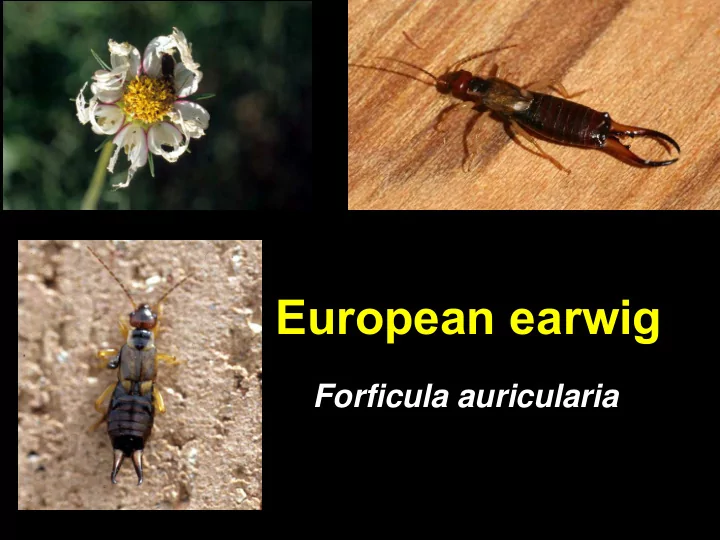
European earwig Forficula auricularia Filament antennae, Prominent - - PowerPoint PPT Presentation
European earwig Forficula auricularia Filament antennae, Prominent cerci chewing mouthparts (pincers) Short wing covers (elytra) Earwig unfolding wings. Despite the presence of a large hind wing, this species does not fly. The cerci
Earwig unfolding wings. Despite the presence of a large hind wing, this species does not fly.
Photograph courtesy of Jim Kalisch, University of Nebraska
Mother tending eggs and young Mass of eggs Newly hatched nymphs
Flower petals and soft plant parts are also eaten by earwigs. Earwigs feed at night.
Thigmotaxis – “a predilection for pressure”
Recommendations for insecticides are included in Extension Fact Sheets