Soil biodiversity in dairy pastures: a pilot study in 2005 Maria - - PDF document

soil biodiversity in dairy pastures a pilot study in 2005
SMART_READER_LITE
LIVE PREVIEW

Soil biodiversity in dairy pastures: a pilot study in 2005 Maria - - PDF document

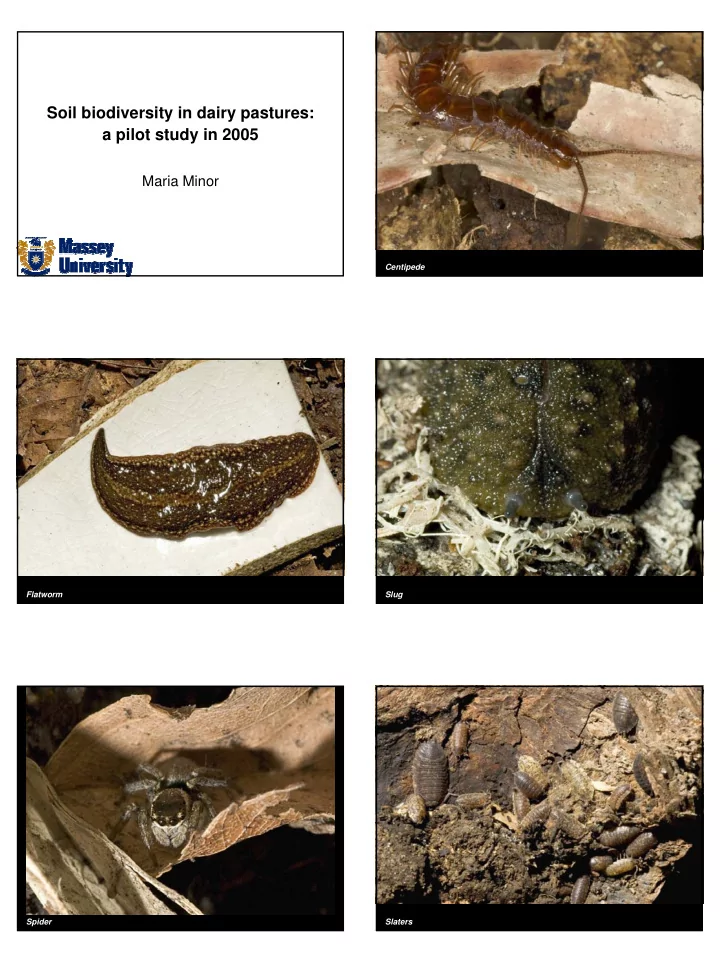
Soil biodiversity in dairy pastures: a pilot study in 2005 Maria Minor Centipede Flatworm Slug Spider Slaters Millipede Snail Harvestman Predatory Ground beetle Ground beetle head Earwig Why soil animals? Soil health is critical

slide-1
SLIDE 1

Soil biodiversity in dairy pastures: a pilot study in 2005

Maria Minor

Centipede Flatworm Slug Spider Slaters

slide-2
SLIDE 2

Millipede Snail Harvestman Predatory Ground beetle Ground beetle head Earwig

slide-3
SLIDE 3

Earthworms

Why soil animals?

  • Soil health is critical for ensuring the long-

term sustainability of agricultural production systems

  • Management practices, which positively or

negatively impact soil biota, similarly impact soil structure and fertility

Pilot Study

  • The diversity of soil micro arthropods in dairy

pasture soils

  • Comparison of soil biodiversity in two dairy

farmlets with conventional and organic management

Soil mites:

Feed on soil fungi and bacteria

400 µ

Soil mites:

Predators

Soil mites in organic and

conventional farmlets

  • Sampling

– 2 dairy farmlets (organic + conventional), 5 paddocks, 1 sample/paddock

  • Objectives:

– what are population density and biodiversity of soil mites – is sampling size sufficient? – are the two farmlets different?

slide-4
SLIDE 4

Sampling

5 cm

  • 10 samples
  • 129 mites
  • 38 species

Data summary

Average species richness of soil mites in

  • rganic and conventional dairy farmlets.

0.0 2.0 4.0 6.0 8.0 10.0 Organic Conventional Average no. species/ sample Average density of soil mites in organic and conventional dairy farmlets. 4000 8000 12000 16000 20000 Organic Conventional Mite Density (ind. / m2)

slide-5
SLIDE 5

Average density of soil mites Oribatida in

  • rganic and conventional dairy farmlets.

4000 8000 12000 16000 20000 Organic Conventional Mite Density (ind. / m2)

Conclusions

  • Soil biodiversity was different in two farmlets
  • Soil biodiversity was higher in organic farmlet
  • Observed differences may be attributed to

differences in management

  • need more than 1 pair of sites to be sure
  • One group – soil mites Oribatida – are particularly

promising as indicators

Funding: Massey University Organic-Conventional Dairy Systems Trial