SLIDE 1
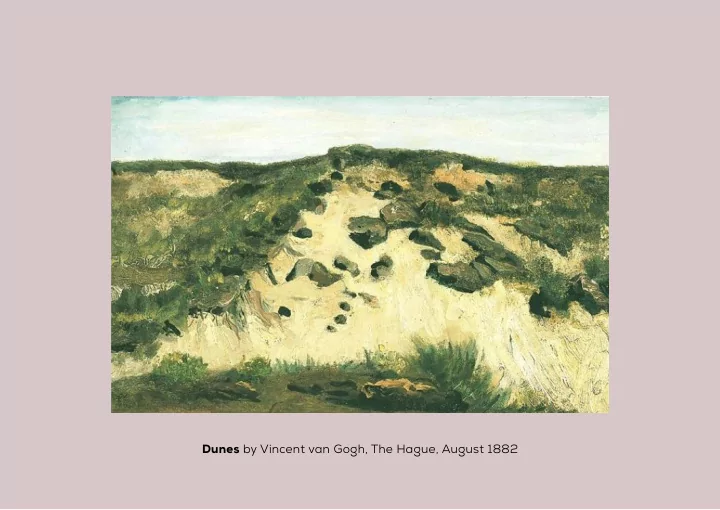
Dunes by Vincent van Gogh, The Hague, August 1882
SLIDE 2
Diverse biotopes Internal mobility network Tourism Gentrification
S W O T
SWOT Analysis
Identity based on local economic activity Transit to the city center Attractive beach Disconnected ecologies Lack of green public space Lack of connection between both sides of the harbour Harbours outside coastal defense boundary Dune landscape as identity Westduinweg streetscape Open space for public use Land-water relationship Climate change Rising sea levels
SLIDE 3
SWOT Map
SLIDE 4 ecology as a stakeholder
building with nature
coexistence (confluence & interchange) dune, water, and port identity
integrated ecologies everyday activities
densification experimental (data) adaptation (flexibility & traditional knowldge)
ever- changing landscaoes water resilience shared space
public space
diversity
participation SDG 11: Sustainable cities & communities SDG 13: Climate action
SDG 15: Life
Values & Key Ideas
SLIDE 5
Strategic Questions
As the area densifies and develops, how can we give voice to ecological stakeholders? How can we encourage new development while protecting existing local businesses and identity? How can we make this district water-resilient without being against natural processes?
SLIDE 6
Standing alongside dunes that have long mediated land and sea, by 2040, Scheveningen will be a vibrant district known for varied landscapes that co-exist with active public life and a strong local economy.
une istrict
SLIDE 7 future generations private investors Ministry of Infrastructure and Water Management shipment & logistics industries property developers businesses (dining, tourism, retail, construction) insurance companies tourists fishermen residents ecology NGOs Municipality
Hague academic institutions HTM sailing clubs fishing clubs convince inform key players empower
Stakeholder Analysis
power interests civil society private sector public sector
SLIDE 8 Toolbox: Ecotopes
sandy beach dune private garden urban forest canal harbour fish farm
SLIDE 9 Toolbox: Defining Ecological Units
Diversity of biotope Combination of ecotopes Capacity to coexist with water Capacity to form microclimates Nature of the ecotopes in terms of human contact
Faculty of life chances
Ma’s Criteria to Evaluate Life chances
SLIDE 10
Coexistence of ecologies
SLIDE 11
Coexistence of development & repair
SLIDE 12
Landscape of Transactions Through Ecological Units
SLIDE 13 Projects
- 1. Seafood market
- 3. Westduinweg
redesign
- 2. Dune theatre
- 2. Harbour
business development
SLIDE 14
PARTICIPATORY PLANNING 2020 2030 2040 POLICY SPATIAL INTERVENTIONS/ PROJECTS Collecting & processing ecological data Development plan (transactions) Transaction (development-repair) Blue-green infrastructure network Westduinweg redesign Dune theatre Harbour business development Seafood market Water adaptation Building social consensus Serious games – data collection Development plan (seafood market) Masterplan of coexistence
CO-EXISTENCE Timeline
SLIDE 15
Project 1: Seafood Market
seafood market along Visafslagweg
SLIDE 16
Project 2: Dune Theatre
SLIDE 17
Project 3: Westduinweg Redesign
SLIDE 18
Framework
SLIDE 19
SLIDE 20