* close to the optimum ratio of carbon to nitrogen of 30:1 for - - PowerPoint PPT Presentation

close to the optimum ratio of carbon to nitrogen of 30 1
SMART_READER_LITE
LIVE PREVIEW

* close to the optimum ratio of carbon to nitrogen of 30:1 for - - PowerPoint PPT Presentation

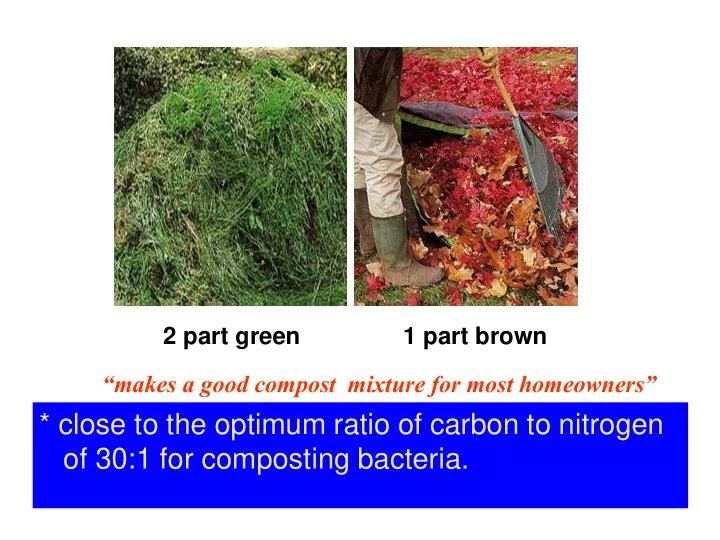
2 part green 1 part brown makes a good compost mixture for most homeowners * close to the optimum ratio of carbon to nitrogen of 30:1 for composting bacteria. IMPORTANT NOTE: An optimal C:N (carbon:nitrogen) balance is not critical to


slide-1
SLIDE 1

2 part green 1 part brown “makes a good compost mixture for most homeowners”

* close to the optimum ratio of carbon to nitrogen

  • f 30:1 for composting bacteria.
slide-2
SLIDE 2

IMPORTANT NOTE:

An optimal C:N (carbon:nitrogen) balance is not critical to successful passive composting.

slide-3
SLIDE 3

 foods with oils or fats –peanut butter –salad dressing –margarine –vegetable oils –mayonnaise

DO NOT COMPOST

 dairy & meat products

– butter – bones – cheese – chicken – fish scraps – lard – meat scraps – milk – sour peels – yogurt

Uof WI, PUBL-SW-182 93

slide-4
SLIDE 4

Uof WI, PUBL-SW-182 93

NO pet wastes!

  • meat eating animals (cats, dog) & birds
  • manure contain pathogens (disease
  • rganisms) which can be transmitted to humans
  • grass-eating mammals (cows, horses, sheep, etc.)
  • stabilized, commercially processed manure does

not have pathogens which can be transmitted to humans

  • can be used in compost.
slide-5
SLIDE 5

–grapefruit –lettuce

–onion peels –orange peels –pears –pineapple –melon rinds –potatoes –pumpkin shells –squash –tea leaves –tomatoes –turnip leaves

DO COMPOST

Uof WI, PUBL-SW-182 93

fruits and vegetables:

–apples (peels and core) –cabbage –carrots –celery –coffee grounds –egg shells?

slide-6
SLIDE 6

WEEDS Another nitrogen-rich material is fresh weeds.

EXCEPTIONS:

  • remove seed heads
  • don’t add perennials until

their roots are fully dried out

slide-7
SLIDE 7

MAIN CONCERNS WHEN HOT COMPOSTING:

  • volume
  • surface area
  • moisture
  • aeration
  • temperature
slide-8
SLIDE 8

INCREASE SURFACE AREA

  • chopping materials increases the surface area for

bacteria to feed on

  • greatly speeds the composting process
slide-9
SLIDE 9

MOISTURE CONTENT

To Dry To Wet

slide-10
SLIDE 10

Maintain moisture to level similar to a damp sponge

slide-11
SLIDE 11

Pile aeration

Getting air to your work force

  • Turning the pile mixes

fresh air into the pile

  • Turning tools can make the

job easier

slide-12
SLIDE 12

Turn the compost pile when:

  • the temperature cools down
  • there is a bad odor
  • rotten egg smell
slide-13
SLIDE 13

Pile aeration

Getting air to your work force

  • Turning the pile mixes

fresh air into the pile

  • Turning tools can make the

job easier

slide-14
SLIDE 14

Turn the compost pile when:

  • the temperature cools down
  • there is a bad odor
  • rotten egg smell
slide-15
SLIDE 15

Aerobic composting and temperature

  • A thermometer is a nice tool but is not essential for good composting
  • Active composting occurs in the temperature range of 55oF to 160oF

55 140 160