SLIDE 1
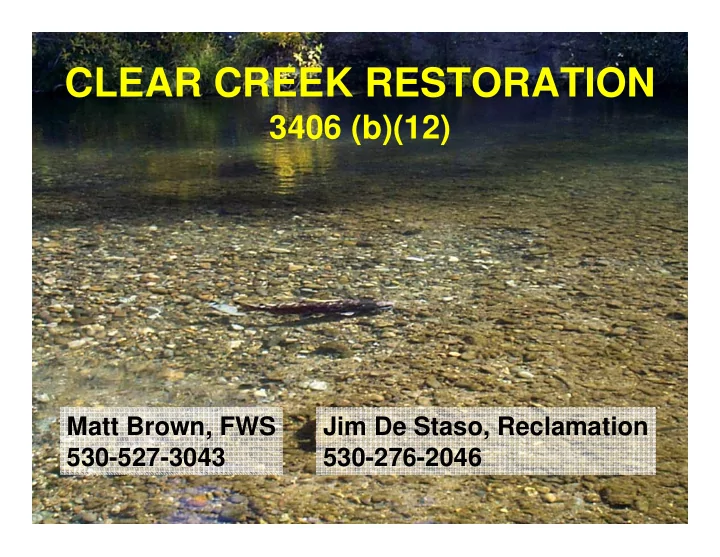
CLEAR CREEK RESTORATION
3406 (b)(12)
Matt Brown, FWS 530-527-3043 Jim De Staso, Reclamation 530-276-2046
SLIDE 2 Keswick Reservoir
Whiskeytown Lake
Redding
Clear Creek
Sacramento River
18 miles
Spring-run and steelhead (ESA threatened) Fall-run and late-fall-run
SLIDE 3
Clear Creek Funding Sources
CVPIA Local Other Federal CALFED 9.7 0.2 1.7 9.4 8 46 45 1 Program Expenditures (mil) Percent
Total expenditures $21.0 million since 1995
SLIDE 4
Program Goals
Flows Gravel Channel restoration Erosion Passage Adaptive management / monitoring
Clear Creek Fish Restoration mandates habitat restoration projects
SLIDE 5
Passage at Saeltzer Dam
SLIDE 6
Completed in October 2000
SLIDE 7
Erosion Control Completed
SLIDE 8
Channel Restoration Project
2 mile reach Rebuild floodplains / realign channel
SLIDE 9
Channel Restoration Project
3A
Completed Phases 1-3A
2A 2B 1 2B
SLIDE 10
Complete Phase 3A Summer 2002 Channel Restoration Project
Old alignment
SLIDE 11
Sept 2002 May 2004 Phase 3A
Channel Restoration Project
342 % increase in use of spawning habitat Highest densities of juvenile rearing
SLIDE 12
Spawning Gravel Additions 82,700 tons - $1.2 million
SLIDE 13 Monitoring
juvenile counts, stranding
- Spawning gravel
- Geomorphic characteristics
- Riparian revegetation
- Birds
SLIDE 14 Program Goals (1996 to present)
Flows – IFIM started in FY 2004 Gravel – in perpetuity Channel – 4 phases completed
- ne or two phases to complete
Erosion - Completed Passage - Completed
Monitoring – Ongoing
SLIDE 15
Fiscal Year 2005 Budget
Reclamation WRR: $0 Restoration Fund: $800,000
SLIDE 16
Channel Restoration Project
Phase 3B Phase 3C
Fiscal Year 2005
SLIDE 17
Fiscal Year 2005
Channel Restoration Phase 3B
Currently being designed ($97,000 CVPIA) CALFED considers 3B a Directed Action
SLIDE 18
Oct 1995 Oct 2000
Fiscal Year 2005
Channel Restoration Phase 3B Severe headcutting is occurring
SLIDE 19
Fiscal Year 2005
Inject at Whiskeytown Dam, Dog Gulch, and NEED Camp ($140,000) Continue Gravel Management Plan ($24,000) Fund ESSA for gravel transport model ($42,000) Monitoring continues
Spawning gravel management / addition: CVPIA $206,000
SLIDE 20 Fiscal Year 2005
October - June: 200 cfs July - September: ~ 75 cfs
(temperature control at Igo)
Interim Base Flows:
SLIDE 21
IFIM
Red Bluff field support of $69,000
Fiscal Year 2005
Conducted by the FWS Sacramento
Determine long-term flow requirements
SLIDE 22
CALFED Environmental Water Program Clear Creek Geomorphic Flow Project
Reactivate geomorphic processes to re-create and maintain the diverse habitats in Clear Creek
Fiscal Year 2005
Large scale adaptive management flow experiment 4,000-6,000 cfs, for 2 to 3 days, 3 times over ten years
SLIDE 23
Preparation of a full proposal, expected to take 18 months
Fiscal Year 2005
CALFED Environmental Water Program Clear Creek Geomorphic Flow Project
Reclamation & ESSA analyzing dam safety and flood risks. Conceptual proposal reviewed by 3 panels: ERP, related water management program staff, and independent scientists. Re-operate Whiskeytown Dam to produce a glory hole spill
SLIDE 24
Fiscal Year 2005
Geomorphic, fish, vegetation and bird monitoring funded by CALFED
Monitoring
Fish and geomorphic monitoring $339,000 funded by CVPIA
SLIDE 25 FWS CVPIA Monitoring
- Adult Spring Chinook and steelhead
- Habitat use by juvenile fish
- Spawning area mapping
- Fish stranding on floodplains
- Procure and operate barrier weir
- Chinook genetics
- Sediment evaluation
- Stream channel morphology
SLIDE 26
3,000 6,000 9,000 12,000 15,000 18,000
1 9 6 7 1 9 7 1 9 7 3 1 9 7 6 1 9 7 9 1 9 8 2 1 9 8 5 1 9 8 8 1 9 9 1 1 9 9 4 1 9 9 7 2 2 3
Fall-Run Chinook Salmon Escapement
1967-1991: 1,689 1992-2004: 8,551 Number of Fish
SLIDE 27
10 20 30 40 50 60 70 80 90 100 1999 2000 2001 2002 2003 2004
Spring-Run Chinook Counted in August
Fish Counted
SLIDE 28
50 100 150 200 250 300 2001 2002 2003 2004
Steelhead Redds Counted
Redds
SLIDE 29
Flows - in perpetuity, IFIM through 2009, EWP Gravel - in perpetuity, ~$500k until 2015, then ~$200k Channel restoration - Implement 3B in summer 2006 Assess need for 3C Monitoring - $1.0 mil until 2010, then $500 k
What’s Left To Be Done