
SLIDE 1
City of Yorkton’s Compost Program
JeanAnne Teliske CITY OF YORKTON - ENVIRONMENTAL SERVICES
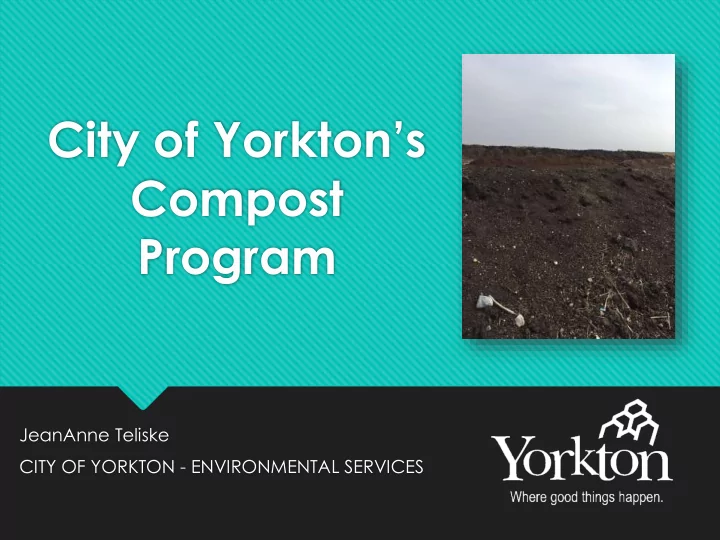
City of Yorktons Compost Program JeanAnne Teliske CITY OF YORKTON - - PowerPoint PPT Presentation
City of Yorktons Compost Program JeanAnne Teliske CITY OF YORKTON - ENVIRONMENTAL SERVICES Outline Current Site History Programs Whats Working/Challenges Future Steps Our Site Located at the City of Yorkton
JeanAnne Teliske CITY OF YORKTON - ENVIRONMENTAL SERVICES
○ In 2007, Environmental Services Department assumed the City’s role in operations of Landfill/Recycling/Garbage Collection ○ Canadian Federation of University Women, Saskatchewan Abilities Centre, Prairie Harvest formed a Committee ○ January 2008, Saskatchewan Waste Reduction Council approached City for a 2 year “mentorship” in establishing or improving Compost Programs
○ Site selection ○ The Recipe “Greens” – Nitrogen, “Browns”- Carbon - keep moist ○ Material for the program? ○ Contact landscapers, Heartland Livestock? ○ Flax straw and grass was received from Deer Park Golf Course and made into a windrow ○ The windrow was moistened by applying bio-solids on a regular basis from the wastewater treatment facility ○ The windrow was turned weekly using a pay-loader and temperatures were monitored daily
materials including: Spoiled Grain/Fertilizer Spills/Gypsum spills
○ Dedicate area for receiving compost materials
○ Away from homes/subdivisions ○ Estimate size ○ Access
○ Identify manpower and equipment to handle input materials and monitoring of compost
○ Time/dedication to operate and monitor project and input material ○ Proper equipment, possibly screening of material
○ Work with local business and industries with input source materials
○ Meet with your clients
○ Prepare rate structure for municipal bylaw for acceptance of input materials ($150/hr payloader, $100/hr for a truck/stockpiling material ) ○ Establish end use for compost product (added cost for screening) ○ Contacts!
○ Final capping of the Landfill ○ Compost Tea ○ Public Works will use it for backfilling curbs/sidewalks; Soccer Fields at Logan Green ○ Leisure Services – Planters ○ Other markets
○ 1st Year ○ 2nd Year ○ 3rd Year Year Cubic Yards Tonnes 2013 23,000 43,000 2014 15,500 29,000 2015 17,000 31,000 2016 9,000 17,000 2017 8,400 15,500
○ Product ○ Helping Commercial/Industrial Sector ○ Landfill Diversion ○ Meeting the Committees mandate ○ Creating an end cycle for some material ○ Options for experimentation: Gyproc, Shredded paper ○ Bio-solids disposal
○ Balanced mixture ○ Site size/accessibility ○ Contaminated loads/Monitoring ○ End use of Product ○ Odors ○ Possibly rodents ○ No residential program
○ Material preparation i.e. screening ○ Ministry of Environment & Ag Canada ○ Flammable material ○ Manpower