
SLIDE 1
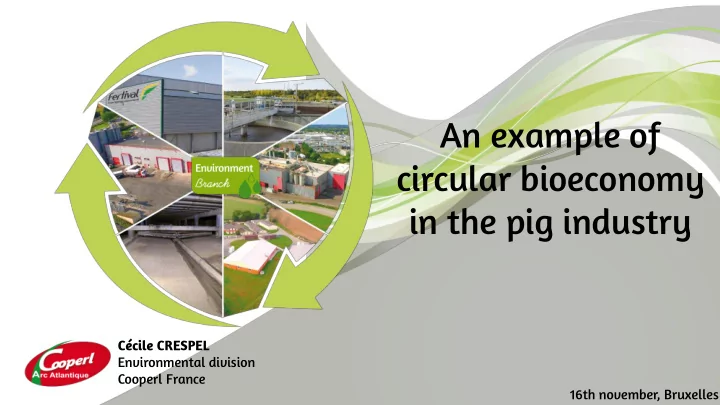
An example of circular bioeconomy in the pig industry
Cécile CRESPEL Environmental division Cooperl France 16th november, Bruxelles
circular bioeconomy in the pig industry Ccile CRESPEL - - PowerPoint PPT Presentation
An example of circular bioeconomy in the pig industry Ccile CRESPEL Environmental division Cooperl France 16th november, Bruxelles Cooperl Arc Atlantique is a leading french pig production cooperative 5,300 employees 2,700 members
Cécile CRESPEL Environmental division Cooperl France 16th november, Bruxelles
Farmer Consumer
Building Equipment Technical Construction Health Efficiency Genetics Piglets Feed Procurement Slaughter Cutting Pre-packed Shoulder Belly Ham Dénitral CEDEV Fertival STEP Combioval Coproducts Défi Viandes
High concentration In Brittany :
Cooperl production area is in the north-west of France 65% of Cooperl pig production in Brittany 35% of Cooperl pig production in Cooperl industrial site area
275 000 t of organic fertilizer from pig production to manage. Many actions implemented for sustainable fertilization, that has given encouraging results.
Manure Crops Waste water
Manre
Producing high standard fertilizers:
per years
60 000 tonnes of pig manure by-produtcs dryed
40 000 tonnes of slaugterhouse slurries dryed
50 000 tonnes of natural fertilizers sold in France and abroad
Producing renewable energy and added value products:
external use and non-food industry
biomass and intern biofuel
environment industry
food industry fatty waste
Manure Crops Waste water
Biogas s injecti ection
mballe alle City
Liquid part Solid part
Cooperl develop technologies to improve the value of the manure transfered to the industry.
Multiples benefits for farmers
Reduce the spraying surface (export of solid part) Participate to recover the P , N and OM
Available for existing builings Increase the animal wellfare
Decrease 50% of NH3 emissions
Main advantages:
Cooperl can created added-value thanks to its centralized position and industrial management. To be sustainable, the system has to be build between farms and industries. All by-products from the pig industry are valorized as added-value products or as energy.
Cecile CRESPEL ccrespel@cooperl.com