
SLIDE 1
1 ¡
CHIOGGIA ¡ ¡
Venice’s ¡Seventh ¡District ¡ and ¡gateway ¡to ¡italian ¡history ¡
Presenta7on ¡by ¡Hugo ¡Trumpy ¡& ¡Trumpy ¡Tours ¡
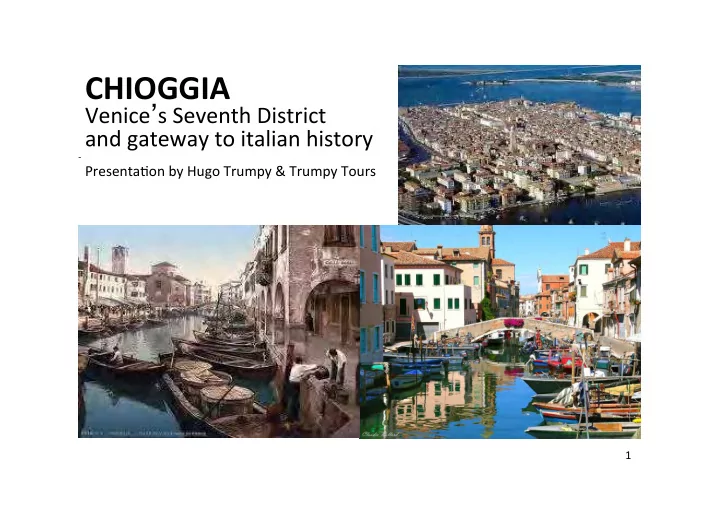
CHIOGGIA Venice s Seventh District and gateway to italian - - PowerPoint PPT Presentation
CHIOGGIA Venice s Seventh District and gateway to italian history Presenta7on by Hugo Trumpy & Trumpy Tours 1 Contents Chioggia The port
1 ¡
Presenta7on ¡by ¡Hugo ¡Trumpy ¡& ¡Trumpy ¡Tours ¡
2 ¡
¡ ¡ ¡ ¡ ¡ ¡ ¡ ¡ ¡-‑ ¡Local ¡and ¡Connec7ons ¡ ¡ ¡ ¡ ¡ ¡ ¡ ¡ ¡ ¡ ¡ ¡ ¡ ¡ ¡ ¡ ¡ ¡ ¡ ¡ ¡ ¡ ¡ ¡ ¡ ¡ ¡ ¡page ¡ ¡ ¡3 ¡ ¡ ¡ ¡ ¡ ¡ ¡ ¡ ¡ ¡-‑ ¡Venice ¡Chioggia: ¡The ¡Distance ¡ ¡ ¡ ¡ ¡ ¡ ¡ ¡ ¡ ¡ ¡ ¡ ¡ ¡ ¡ ¡ ¡ ¡ ¡ ¡ ¡ ¡ ¡ ¡ ¡ ¡ ¡ ¡ ¡ ¡ ¡ ¡ ¡ ¡ ¡ ¡ ¡ ¡ ¡ ¡ ¡4 ¡ ¡ ¡ ¡ ¡ ¡ ¡ ¡ ¡ ¡ ¡-‑ ¡The ¡Entrance ¡ ¡ ¡ ¡ ¡ ¡ ¡ ¡ ¡ ¡ ¡ ¡ ¡ ¡ ¡ ¡ ¡ ¡ ¡ ¡ ¡ ¡ ¡ ¡ ¡ ¡ ¡ ¡ ¡ ¡ ¡ ¡ ¡ ¡ ¡ ¡ ¡ ¡ ¡ ¡ ¡ ¡ ¡ ¡ ¡ ¡ ¡ ¡ ¡ ¡ ¡ ¡ ¡ ¡5 ¡ ¡ ¡ ¡ ¡ ¡ ¡ ¡ ¡ ¡ ¡ ¡ ¡ ¡ ¡ ¡ ¡ ¡ ¡-‑ ¡Isola ¡Saloni ¡ ¡ ¡ ¡ ¡ ¡ ¡ ¡ ¡ ¡ ¡ ¡ ¡ ¡ ¡ ¡ ¡ ¡ ¡ ¡ ¡ ¡ ¡ ¡ ¡ ¡ ¡ ¡ ¡6 ¡ ¡ ¡ ¡ ¡ ¡ ¡ ¡ ¡ ¡-‑ ¡Isola ¡Saloni ¡ ¡ ¡ ¡ ¡ ¡ ¡ ¡ ¡ ¡ ¡ ¡ ¡ ¡ ¡ ¡ ¡ ¡ ¡ ¡ ¡ ¡ ¡ ¡ ¡ ¡ ¡ ¡ ¡ ¡ ¡ ¡ ¡ ¡ ¡ ¡ ¡ ¡ ¡ ¡ ¡ ¡ ¡ ¡ ¡ ¡ ¡ ¡ ¡ ¡ ¡ ¡ ¡7 ¡ ¡ ¡ ¡ ¡ ¡ ¡ ¡ ¡ ¡ ¡ ¡ ¡ ¡ ¡ ¡ ¡ ¡ ¡ ¡-‑ ¡Terminal ¡Grand ¡Opening ¡ ¡ ¡ ¡ ¡ ¡ ¡ ¡ ¡ ¡ ¡ ¡ ¡ ¡ ¡ ¡ ¡ ¡ ¡ ¡ ¡ ¡ ¡ ¡ ¡ ¡ ¡ ¡ ¡ ¡ ¡ ¡ ¡ ¡ ¡ ¡ ¡ ¡ ¡ ¡ ¡ ¡ ¡ ¡ ¡ ¡ ¡ ¡ ¡ ¡8 ¡ ¡ ¡ ¡ ¡ ¡ ¡ ¡ ¡ ¡ ¡
¡ ¡ ¡ ¡ ¡ ¡ ¡ ¡ ¡-‑ ¡History ¡ ¡ ¡ ¡ ¡ ¡ ¡ ¡ ¡ ¡ ¡ ¡ ¡ ¡ ¡ ¡ ¡ ¡ ¡ ¡ ¡ ¡ ¡ ¡ ¡ ¡ ¡ ¡ ¡ ¡ ¡ ¡ ¡ ¡ ¡ ¡ ¡ ¡ ¡ ¡ ¡ ¡ ¡ ¡ ¡ ¡ ¡ ¡ ¡ ¡ ¡ ¡ ¡ ¡ ¡ ¡ ¡ ¡ ¡ ¡ ¡ ¡ ¡ ¡9 ¡ ¡ ¡ ¡ ¡ ¡ ¡ ¡ ¡ ¡-‑ ¡Ar7s7c ¡Tour ¡ ¡ ¡ ¡ ¡ ¡ ¡ ¡ ¡ ¡ ¡ ¡ ¡ ¡ ¡ ¡ ¡ ¡ ¡ ¡ ¡ ¡ ¡ ¡ ¡ ¡ ¡ ¡ ¡ ¡ ¡ ¡ ¡ ¡ ¡ ¡ ¡ ¡ ¡ ¡ ¡ ¡ ¡ ¡ ¡ ¡ ¡ ¡ ¡ ¡ ¡ ¡ ¡ ¡ ¡ ¡10 ¡ ¡ ¡ ¡ ¡ ¡ ¡ ¡ ¡ ¡-‑ ¡Ac7vi7es, ¡excursions ¡and ¡beaches ¡ ¡ ¡ ¡ ¡ ¡ ¡ ¡ ¡ ¡ ¡ ¡ ¡ ¡ ¡ ¡ ¡ ¡ ¡ ¡ ¡11 ¡
¡12 ¡ ¡ ¡ ¡ ¡ ¡ ¡ ¡
– Mantova ¡ ¡ ¡13 ¡ – Ferrara ¡ ¡ ¡15 ¡ – Ravenna ¡ ¡ ¡17 ¡ – Verona ¡ ¡ ¡19 ¡ – Padova ¡ ¡ ¡ ¡21 ¡
¡ ¡ ¡ ¡ ¡ ¡ ¡ ¡ ¡-‑ ¡Food ¡and ¡Wine ¡ ¡ ¡ ¡ ¡ ¡ ¡ ¡ ¡ ¡ ¡ ¡ ¡ ¡ ¡ ¡ ¡ ¡ ¡ ¡ ¡ ¡ ¡ ¡ ¡ ¡ ¡ ¡ ¡ ¡ ¡ ¡ ¡ ¡ ¡ ¡ ¡ ¡ ¡ ¡ ¡ ¡ ¡ ¡ ¡ ¡ ¡ ¡ ¡ ¡24 ¡
¡25 ¡
3 ¡
about ¡25 ¡km ¡south ¡of ¡Venice ¡(50 ¡km ¡by ¡road). ¡
Chioggia ¡from ¡the ¡So`omarina ¡beaches ¡on ¡the ¡ Adria7c ¡sea. ¡ ¡
transalpine ¡na7onal ¡and ¡interna7onal ¡highway’s ¡ net, ¡this ¡allows ¡the ¡goods ¡to ¡reach ¡easily ¡ ¡the ¡ areas ¡of ¡North ¡Italy ¡and ¡Central ¡Europe. ¡
4 ¡
Venice ¡and ¡Chioggia ¡are ¡very ¡close, ¡the ¡distance ¡between ¡the ¡two ¡ports ¡is ¡only ¡12 ¡Miles ¡
5 ¡
¡ ¡ ¡ ¡ ¡ ¡ ¡ ¡ ¡ ¡Port ¡of ¡Chioggia ¡ ¡ ¡ ¡ ¡ ¡ ¡ ¡-‑ ¡Lat. ¡: ¡ ¡ ¡ ¡45° ¡13' ¡31" ¡N ¡ ¡ ¡ ¡ ¡ ¡ ¡ ¡-‑ ¡Long. ¡: ¡12° ¡17' ¡23" ¡E ¡ ¡ ¡ ¡ ¡ ¡ ¡ ¡-‑ ¡UN/LOCODE ¡: ¡ITCHI ¡ ¡ ¡ ¡ ¡ ¡ ¡ ¡-‑ ¡Port ¡Type ¡: ¡Harbor ¡ ¡
6 ¡
embarking ¡and ¡disembarking ¡passengers ¡in ¡ total ¡comfort, ¡thanks ¡to ¡different ¡areas ¡for ¡ check ¡in ¡and ¡security ¡procedures, ¡a ¡spacious ¡ wai7ng ¡room ¡and ¡a ¡very ¡large ¡hall, ¡where ¡ baggage ¡claim ¡is ¡efficiently ¡arranged ¡
the ¡city, ¡has ¡a ¡draught ¡of ¡8 ¡metres ¡and ¡takes ¡a ¡ surface ¡of ¡about ¡ ¡100.000 ¡mq, ¡with ¡over ¡1500 ¡ mq ¡of ¡covered ¡surface ¡developed ¡on ¡three ¡
7 ¡
8 ¡
9 ¡
seagoing ¡and ¡defensive ¡purposes. ¡Etruscans ¡se`led ¡ here, ¡and ¡in ¡Romans ¡7mes ¡the ¡town ¡was ¡called ¡Clodia. ¡ Chioggia ¡grew ¡in ¡importance ¡at ¡the ¡same ¡7me ¡as ¡the ¡
dwellers ¡were ¡seeking ¡ ¡safer ¡homes. ¡ ¡
part ¡of ¡the ¡Vene7an ¡Republic, ¡and ¡Venice ¡finally ¡ defeated ¡Genoa ¡here ¡in ¡the ¡Ba`le ¡of ¡Chioggia. ¡The ¡ town ¡then ¡subsided ¡into ¡a ¡quiet ¡fishing ¡port, ¡which ¡is ¡ s7ll ¡pre`y ¡much ¡its ¡status ¡today, ¡although ¡the ¡seaside ¡ So`omarina ¡area ¡has ¡reinvented ¡itself ¡as ¡a ¡modern ¡ beach ¡resort. ¡Apart ¡from ¡the ¡great ¡sea-‑ba`le, ¡one ¡
around ¡town ¡is ¡a ¡local ¡appari7on ¡of ¡the ¡Virgin ¡Mary. ¡ ¡
10 ¡
not ¡on ¡the ¡main ¡street. ¡The ¡church ¡sits ¡on ¡its ¡own ¡li`le ¡ island, ¡and ¡contains ¡one ¡of ¡Chioggia's ¡greatest ¡treasures: ¡ Vi`ore ¡Carpaccio's ¡St. ¡Paul, ¡his ¡last ¡recorded ¡pain7ng. ¡ There ¡are ¡also ¡works ¡by ¡Tintore`o ¡and ¡Bassano, ¡and ¡a ¡ venerated ¡wooden ¡crucifix. ¡
decora7on ¡are ¡fruits ¡of ¡an ¡eighteenth-‑century ¡redesign. ¡ Inside, ¡the ¡main ¡altar ¡contains ¡an ¡icon ¡commemora7ng ¡ the ¡appearance ¡of ¡the ¡Virgin ¡Mary ¡to ¡a ¡local ¡peasant ¡in ¡ 1508, ¡first ¡on ¡a ¡log ¡washed ¡up ¡on ¡the ¡shore, ¡then ¡aboard ¡ a ¡small ¡boat ¡with ¡Jesus ¡in ¡her ¡arms; ¡the ¡log ¡is ¡preserved ¡
Corso; ¡a ¡grand ¡building ¡designed ¡by ¡Baldassare ¡Longhena, ¡ architect ¡of ¡the ¡Salute ¡church ¡in ¡Venice. ¡The ¡interior ¡is ¡ painted ¡white, ¡with ¡solid-‑looking ¡columns ¡and ¡coloured ¡ marble ¡altars. ¡ ¡
the ¡right, ¡aoer ¡the ¡Duomo. ¡In ¡a ¡smart ¡new ¡building, ¡the ¡ museum ¡collects ¡together ¡treasures ¡and ¡oddments ¡from ¡ Chioggia's ¡churches. ¡The ¡highlights ¡are ¡two ¡polyptychs ¡ a`ributed ¡to ¡Paolo ¡Veneziano. ¡ ¡
11 ¡
reach ¡the ¡hearth ¡of ¡Venice ¡and ¡its ¡wonders. ¡ ¡ ¡ ¡ ¡ ¡ ¡ ¡
¡ ¡ ¡ ¡ ¡ ¡ ¡ ¡-‑ ¡Venice’s ¡secret ¡corners ¡ ¡ ¡ ¡ ¡ ¡ ¡ ¡ ¡-‑ ¡Venice ¡on ¡your ¡own ¡ ¡ ¡ ¡ ¡ ¡ ¡ ¡ ¡-‑ ¡Island ¡of ¡Murano, ¡Burano ¡& ¡St.Mark’s ¡ ¡ ¡ ¡ ¡ ¡ ¡ ¡ ¡-‑ ¡Gondola ¡and ¡explores ¡St.Mark’s ¡ ¡ ¡ ¡ ¡ ¡ ¡ ¡ ¡-‑ ¡Padova, ¡city ¡tour ¡and ¡wine ¡tas7ng ¡
¡ ¡ ¡ ¡ ¡ ¡ ¡ ¡ ¡ ¡So`omarina ¡now ¡enjoys ¡a ¡wonderful ¡beach, ¡renowned ¡for ¡its ¡ sandy ¡terrain ¡which ¡is ¡par7cularly ¡well-‑suited ¡for ¡vegeta7on ¡ and ¡is ¡today ¡a ¡well-‑known ¡tourist ¡centre, ¡endowed ¡with ¡ modern ¡infrastructure, ¡surrounded ¡by ¡natural ¡greenery. ¡ ¡
12 ¡
13 ¡
Mantua ¡is ¡a ¡very ¡ancient ¡town: ¡it ¡has ¡got ¡Etruscan ¡origins, ¡but ¡it ¡flourished ¡in ¡ the ¡age ¡of ¡the ¡Communes ¡and, ¡above ¡all, ¡during ¡the ¡long ¡Gonzaga ¡seigniory ¡ (1328-‑1707). ¡ ¡ The ¡ Commune ¡ and ¡ the ¡ short ¡ seigniory ¡ of ¡ Bonacolsi ¡ family ¡ leo ¡ important ¡ buildings, ¡ such ¡ as ¡ Palazzo ¡ Bonacolsi, ¡ Palazzo ¡ del ¡ Podestà, ¡ Palazzo ¡ della ¡ Ragione, ¡ and ¡ churches ¡ such ¡ as ¡ San ¡ Lorenzo ¡ rotunda ¡ and ¡ Santa ¡ Maria ¡ del ¡
¡ Palazzo ¡Ducale ¡– ¡the ¡Ducal ¡Palace ¡-‑ ¡is ¡the ¡main ¡sign ¡of ¡the ¡Gonzaga ¡seigniory: ¡ it ¡is ¡one ¡of ¡the ¡largest ¡ ¡Italian ¡palaces, ¡coun7ng ¡about ¡500 ¡rooms ¡and ¡several ¡ internal ¡squares, ¡courtyards ¡and ¡gardens. ¡ ¡ ¡ Here ¡you ¡can ¡admire ¡architectures, ¡such ¡as ¡San ¡Giorgio ¡castle, ¡Domus ¡Nova ¡ ¡
¡ also ¡magnificent ¡frescoes ¡series, ¡such ¡as ¡in ¡the ¡Camera ¡degli ¡Sposi ¡-‑ ¡which ¡is ¡ the ¡masterpiece ¡of ¡Andrea ¡Mantegna ¡-‑, ¡in ¡the ¡Old ¡Court ¡– ¡by ¡Pisanello ¡– ¡and ¡ in ¡the ¡Appartamento ¡di ¡Troia ¡ ¡-‑ ¡by ¡Giulio ¡Romano. ¡Not ¡to ¡miss ¡the ¡famous ¡ tapestries, ¡whose ¡cartoons ¡were ¡made ¡by ¡Raphael. ¡ ¡
14 ¡
The ¡ other ¡ magnificent ¡ building ¡ leo ¡ by ¡ the ¡ Gonzaga ¡ family ¡ in ¡ Mantua ¡ is ¡ Palazzo ¡Te, ¡which ¡was ¡built ¡and ¡frescoed ¡by ¡Giulio ¡Romano ¡(1525 ¡ ¡to ¡1535): ¡ you ¡ will ¡ surely ¡ admire ¡ Sala ¡ dei ¡ Gigan7, ¡ Amore ¡ e ¡ Psiche ¡ and ¡ Cavalli ¡ – ¡ the ¡ rooms ¡illustra7ng ¡the ¡Fall ¡of ¡the ¡Giants, ¡the ¡Tale ¡of ¡Love ¡and ¡Psyche ¡and ¡ Gonzaga's ¡horses. ¡ ¡ Before ¡ ¡ gerng ¡ to ¡ Palazzo ¡ Te, ¡ you ¡ should ¡ not ¡ miss ¡ visi7ng ¡ the ¡ house ¡ of ¡ Andrea ¡Mantegna, ¡a ¡cube ¡with ¡an ¡inner ¡round ¡courtyard. ¡Along ¡the ¡way, ¡ you ¡may ¡also ¡stop ¡at ¡Palazzo ¡di ¡San ¡Sebas7ano, ¡that ¡was ¡recently ¡restored ¡ and ¡today ¡hosts ¡the ¡City ¡Museum. ¡ ¡ About ¡ churches, ¡ in ¡ late ¡ XV ¡ century ¡ Leon ¡ Barsta ¡ Alber7 ¡ designed ¡ the ¡ impressive ¡ Sant’Andrea ¡ basilica ¡ and ¡ San ¡ Sebas7ano ¡ -‑ ¡ which ¡ is ¡ today ¡ a ¡ monument ¡ to ¡ the ¡ dead ¡ -‑; ¡ s7ll, ¡ the ¡ different ¡ architectural ¡ styles ¡ and ¡ the ¡ inner ¡renova7ons ¡by ¡Giulio ¡Romano ¡make ¡the ¡cathedral ¡very ¡interes7ng. ¡ ¡ Under ¡the ¡rule ¡of ¡Empress ¡Maria ¡Theresa ¡new ¡buildings ¡enriched ¡Mantua: ¡ the ¡Episcopal ¡Palace, ¡Palazzo ¡d'Arco ¡and, ¡above ¡all, ¡the ¡Academy ¡Theatre ¡by ¡
¡ If ¡ you ¡ like ¡ modern ¡ architecture, ¡ you ¡ can ¡ appreciate ¡ the ¡ profile ¡ of ¡ Burgo ¡ paper ¡factory ¡– ¡designed ¡by ¡P. ¡L. ¡Nervi ¡– ¡from ¡the ¡lakebanks ¡just ¡out ¡of ¡city ¡
You ¡can ¡comfortably ¡visit ¡Mantua ¡on ¡foot ¡or ¡by ¡bike: ¡several ¡bikelanes ¡and ¡ cycle ¡tracks ¡let ¡you ¡easily ¡move ¡in ¡town ¡and ¡reach ¡neighbouring ¡places. ¡
15 ¡
Lying ¡in ¡the ¡middle ¡of ¡the ¡Po ¡Valley, ¡Ferrara ¡s7ll ¡has ¡the ¡atmosphere ¡of ¡the ¡ past, ¡ which ¡ blends ¡ in ¡ harmoniously ¡ with ¡ the ¡ lively ¡ atmosphere ¡ of ¡ the ¡
Ferrara's ¡most ¡famous ¡image ¡is ¡certainly ¡that ¡of ¡its ¡grand ¡Renaissance, ¡the ¡ age ¡ of ¡ splendour ¡ of ¡ the ¡ Estense ¡ court, ¡ which ¡ has ¡ leo ¡ indelible ¡ signs ¡ everywhere: ¡ in ¡ the ¡ colossal ¡ Addizione ¡ Erculea ¡ project, ¡ in ¡ the ¡ impressive ¡ pictorial ¡cycles ¡belonging ¡to ¡the ¡Qua`rocento ¡and ¡Cinquecento ¡and ¡in ¡the ¡ Last ¡Judgement ¡by ¡Bas7anino. ¡ ¡ ¡ From ¡1995 ¡on, ¡UNESCO ¡has ¡included ¡the ¡historical ¡centre ¡of ¡Ferrara ¡in ¡the ¡ list ¡of ¡World ¡Cultural ¡Heritage ¡as ¡a ¡wonderful ¡example ¡of ¡a ¡town ¡planned ¡in ¡ the ¡ Renaissance ¡ and ¡ s>ll ¡ keeping ¡ its ¡ historical ¡ centre ¡ intact. ¡ The ¡ town ¡ planning ¡criteria ¡expressed ¡in ¡Ferrara ¡had ¡a ¡deep ¡influence ¡on ¡the ¡progress ¡
From ¡the ¡Middle ¡Ages ¡to ¡today, ¡the ¡area ¡around ¡the ¡Cathedral ¡has ¡always ¡ been ¡the ¡focus ¡of ¡the ¡city ¡life. ¡ The ¡seat ¡of ¡the ¡various ¡rulers ¡over ¡the ¡years ¡and ¡a ¡commercial ¡and ¡historical ¡ area ¡of ¡great ¡importance, ¡the ¡centre ¡is ¡s7ll ¡the ¡favourite ¡mee7ng ¡place ¡of ¡ residents ¡and ¡visitors ¡alike. ¡ The ¡original ¡layout ¡of ¡the ¡ancient ¡city, ¡which ¡has ¡been ¡developing ¡along ¡the ¡ banks ¡of ¡the ¡river ¡Po, ¡is ¡s7ll ¡clearly ¡recognizable ¡in ¡the ¡famous ¡area ¡of ¡Via ¡ delle ¡Volte. ¡
16 ¡
The ¡Estense ¡Castle ¡
In ¡Ferrara ¡in ¡1385, ¡a ¡dangerous ¡revolt ¡convinced ¡Niccolò ¡II ¡d’Este ¡of ¡the ¡ need ¡to ¡erect ¡mighty ¡defences ¡for ¡himself ¡and ¡his ¡family ¡thus ¡the ¡Castello ¡ di ¡San ¡Michele ¡was ¡built, ¡a ¡fortress ¡erected ¡against ¡the ¡people. ¡ An ¡ elevated ¡ covered ¡ passageway, ¡ which ¡ s7ll ¡ exists, ¡ joined ¡ the ¡ military ¡ building ¡to ¡the ¡marquises’ ¡Palace, ¡today ¡Palazzo ¡Municipale. ¡Later ¡on, ¡the ¡ castle ¡became ¡the ¡magnificent ¡residence ¡of ¡the ¡court ¡and ¡was ¡embellished ¡ with ¡ roof ¡ terraces ¡ at ¡ the ¡ top ¡ of ¡ the ¡ towers, ¡ marble ¡ balconies, ¡ the ¡ Renaissance ¡style ¡courtyard ¡and ¡apartments. ¡The ¡imposing ¡towers ¡stand ¡
¡ Este ¡Family: ¡the ¡Torre ¡di ¡Santa ¡Caterina; ¡the ¡splendid ¡Torre ¡dei ¡Leoni, ¡from ¡ which ¡ it ¡ is ¡ possible ¡ to ¡ admire ¡ the ¡ panorama ¡ of ¡ Ferrara; ¡ the ¡ Torre ¡ Marchesana; ¡the ¡Torre ¡di ¡San ¡Paolo. ¡ ¡
The ¡Palazzo ¡dei ¡DiamanR ¡
The ¡ magnificent ¡ Palazzo ¡ dei ¡ Diaman7, ¡ at ¡ the ¡ centre ¡ of ¡ the ¡ Addizione ¡ Erculea, ¡on ¡the ¡important ¡crossroads ¡known ¡as ¡the ¡Quadrivio ¡degli ¡Angeli ¡ belonged ¡to ¡the ¡duke’s ¡brother ¡Sigismondo ¡d’Este. ¡ Its ¡name ¡derives ¡from ¡over ¡8000 ¡pink ¡and ¡white ¡marble ¡ashlars ¡in ¡the ¡form ¡
¡ Rosser ¡ rendered ¡ it ¡ a ¡ townplanning ¡ masterpiece ¡ by ¡ placing ¡ the ¡ most ¡ important ¡ decora7on ¡ on ¡ the ¡ corner: ¡ a ¡ contrivance ¡ des7ned ¡ to ¡ highlight ¡ the ¡ importance ¡ of ¡ the ¡ crossroads ¡ and ¡ make ¡ the ¡ building ¡ an ¡ en7rely ¡
¡ from ¡in ¡front ¡of ¡the ¡façade. ¡ ¡
17 ¡
Ravenna ¡is ¡a ¡treasure ¡chest ¡of ¡art, ¡history ¡and ¡culture, ¡a ¡city ¡with ¡ ancient ¡origins ¡and ¡a ¡glorious ¡past. ¡It ¡became ¡capital ¡three ¡7mes: ¡it ¡ was ¡capital ¡of ¡the ¡Western ¡Roman ¡Empire, ¡of ¡Theodoric ¡King ¡of ¡the ¡ Goths ¡and ¡of ¡the ¡Byzan7ne ¡Empire ¡in ¡Europe. ¡ The ¡ basilicas ¡ and ¡ bap7steries ¡ of ¡ the ¡ city ¡ preserve ¡ the ¡ richest ¡ heritage ¡ of ¡ mosaics ¡ in ¡ the ¡ world, ¡ da7ng ¡ back ¡ to ¡ the ¡ 5th ¡ and ¡ 6th ¡ centuries, ¡ and ¡ eight ¡ historic ¡ buildings ¡ are ¡ included ¡ in ¡ the ¡ World ¡ Heritage ¡List ¡of ¡UNESCO. ¡ ¡ It ¡is ¡the ¡city ¡that ¡guards ¡the ¡remains ¡of ¡Dante ¡and ¡keeps ¡alive ¡the ¡ memory ¡ of ¡ the ¡ great ¡ poet ¡ with ¡ important ¡ cultural ¡ events. ¡ The ¡ winding ¡streets ¡s7ll ¡reveal ¡the ¡past ¡of ¡a ¡city ¡built ¡on ¡a ¡lagoon ¡and ¡ the ¡presence ¡of ¡water ¡in ¡the ¡canals ¡that ¡crossed ¡it. ¡The ¡canals ¡were ¡ closed ¡ during ¡ the ¡ Vene7an ¡ domina7on ¡ period, ¡ at ¡ the ¡ end ¡ of ¡ the ¡ Fioeenth ¡ Century, ¡ so ¡ that ¡ the ¡ elegant ¡ space ¡ of ¡ Piazza ¡ Maggiore, ¡ now ¡named ¡Piazza ¡del ¡Popolo, ¡was ¡opened. ¡ ¡ In ¡the ¡Eighteenth ¡Century ¡the ¡city ¡was ¡connected ¡to ¡the ¡sea ¡by ¡a ¡ new ¡navigable ¡canal, ¡the ¡current ¡port, ¡which ¡the ¡people ¡of ¡Ravenna ¡ call ¡ Candiano. ¡ The ¡ Corsini ¡ Canal ¡ opened ¡ up ¡ new ¡ perspec7ves ¡ for ¡ resuming ¡the ¡ancient ¡voca7on ¡as ¡a ¡port. ¡
18 ¡
Ravenna ¡is ¡a ¡living ¡mosaic. ¡The ¡cultural ¡offer ¡of ¡Ravenna ¡is ¡abundant ¡ and ¡varied: ¡ ¡
exhibi7ons ¡of ¡high ¡profile ¡and ¡is ¡home ¡to ¡a ¡number ¡of ¡ permanent ¡collec7ons; ¡ ¡
findings ¡from ¡excava7ons ¡of ¡Roman ¡and ¡Byzan7ne ¡remains; ¡ ¡
mul7media ¡exhibi7on ¡dedicated ¡to ¡the ¡art ¡of ¡mosaic ¡in ¡all ¡its ¡ aspects, ¡from ¡an7quity ¡up ¡to ¡contemporary ¡7mes; ¡ ¡
(Unesco); ¡
and ¡fame ¡of ¡the ¡poet ¡
passions ¡of ¡Mazzini ¡and ¡Garibaldi ¡who ¡s7rred ¡up ¡the ¡people ¡of ¡ Ravenna ¡in ¡a ¡more ¡recent ¡past. ¡ ¡ ¡
19 ¡
Verona ¡is ¡ ¡a ¡splendid ¡city ¡of ¡art, ¡surrounded ¡by ¡the ¡traces ¡of ¡its ¡ancient ¡ history, ¡ splendid ¡ in ¡ its ¡ mythical ¡ dimension ¡ bestowed ¡ upon ¡ it ¡ by ¡ the ¡ Shakespearean ¡tragedy ¡of ¡Romeo ¡and ¡Juliet. ¡ ¡ ¡ Roman ¡ruins, ¡medieval ¡ves7ges, ¡Vene7an ¡and ¡Austrian ¡traces ¡can ¡be ¡ seen ¡all ¡across ¡the ¡city, ¡as ¡well ¡as ¡an7que ¡palaces, ¡squares, ¡bridges ¡and ¡ wonderful ¡churches. ¡In ¡the ¡historical ¡centre, ¡Piazza ¡Bra ¡and ¡the ¡Arena, ¡ Piazza ¡ Erbe ¡ and ¡ Piazza ¡ dei ¡ Signori, ¡ Via ¡ Cappello ¡ and ¡ Corso ¡ Porta ¡ Borsari ¡lead ¡to ¡the ¡Teatro ¡Romano, ¡Ponte ¡Pietra, ¡Castelvecchio, ¡the ¡ Ponte ¡ Scaligero ¡ and ¡ the ¡ ancient ¡ churches ¡ of ¡ San ¡ Fermo ¡ and ¡ Sant’Anastasia, ¡the ¡Cathedral ¡(Duomo) ¡and ¡San ¡Zeno. ¡ ¡ Verona ¡ is ¡a ¡man-‑sized ¡city ¡ which ¡fascinates ¡ visitors ¡with ¡ its ¡elegance ¡ and ¡ its ¡ welcoming ¡ atmosphere, ¡ in ¡ which ¡ ancient ¡ and ¡ modern ¡ 7mes ¡
The ¡city’s ¡past ¡centuries ¡of ¡history ¡and ¡its ¡past ¡splendour ¡are ¡witnessed ¡ by ¡its ¡architectural ¡and ¡ar7s7c ¡masterpieces; ¡its ¡culture ¡and ¡art ¡are ¡well ¡ renowned ¡on ¡a ¡na7onal ¡and ¡interna7onal ¡level. ¡For ¡this ¡reason, ¡in ¡the ¡ year ¡2000 ¡Verona ¡was ¡recognized ¡as ¡a ¡UNESCO ¡World ¡Heritage ¡Site. ¡ The ¡ Arena, ¡ is ¡ ¡ Verona’s ¡ most ¡ famous ¡ monument, ¡ visited ¡ by ¡ tourists ¡ world-‑wide. ¡ ¡ Its ¡ellip7cal ¡shape ¡produces ¡perfect ¡acous7cs ¡from ¡every ¡physical ¡stand ¡ point ¡in ¡the ¡arena ¡and ¡enhances ¡its ¡capacity ¡to ¡accommodate ¡a ¡great ¡ number ¡of ¡people. ¡
20 ¡
"There ¡is ¡no ¡world ¡without ¡Verona ¡walls": ¡the ¡pen ¡of ¡William ¡Shakespeare ¡ has ¡ lent ¡ Verona ¡ fame ¡ and ¡ immortality ¡ with ¡ his ¡ tale ¡ of ¡ two ¡ star-‑crossed ¡ lovers, ¡ Romeo ¡ Montecchi ¡ (Montagu) ¡ and ¡ Juliet ¡ Capule7 ¡ (Capulet). ¡ The ¡ story ¡of ¡their ¡tragic ¡love ¡is ¡set ¡in ¡two ¡precise ¡loca7ons ¡-‑ ¡Juliet's ¡house ¡and ¡ the ¡tomb. ¡ ¡ The ¡ Capulet ¡ House, ¡ best ¡ known ¡ as ¡ "Juliet's ¡ House", ¡ dates ¡ back ¡ to ¡ the ¡ thirteenth ¡century. ¡It ¡is ¡tower-‑shaped ¡and ¡belonged ¡to ¡the ¡Dal ¡Cappello ¡ family, ¡ whose ¡ coat-‑of-‑arms ¡ is ¡ visible ¡ above ¡ the ¡ inner ¡ arch-‑way ¡ of ¡ the ¡ court-‑yard. ¡ The ¡ brick ¡ façade ¡ is ¡ decorated ¡ by ¡ elegant ¡ gothic ¡ windows ¡ standing ¡on ¡either ¡side ¡of ¡the ¡famous ¡balcony ¡on ¡which ¡Juliet ¡is ¡said ¡to ¡ have ¡spoken ¡to ¡Romeo. ¡ ¡ At ¡the ¡far ¡end ¡of ¡the ¡courtyard ¡stands ¡Nereo ¡Costan7ni's ¡bronze ¡statue ¡of ¡ Juliet ¡visited ¡by ¡thousands ¡of ¡tourists ¡every ¡year ¡from ¡all ¡over ¡the ¡world. ¡ ¡ Romeo's ¡ house ¡ is ¡ situated ¡ in ¡ "Via ¡ Arche ¡ Scaligere". ¡ It ¡ is ¡ an ¡ authen7c ¡ medieval ¡ house ¡ which ¡ belonged ¡ to ¡ the ¡ 13th ¡ century ¡ Counts ¡ of ¡ Cagnolo ¡
¡ Romeo, ¡Romeo! ¡Wherefore ¡art ¡thou ¡Romeo?..." ¡"Tut! ¡I ¡have ¡lost ¡myself; ¡I ¡ am ¡not ¡here: ¡This ¡is ¡not ¡Romeo, ¡he's ¡some ¡other ¡where." ¡(Act ¡1, ¡scene ¡1) ¡ ¡
21 ¡
Probably ¡ be`er ¡ known ¡ as ¡ the ¡ city ¡ of ¡ St. ¡ Anthony, ¡ Padua ¡ is ¡ one ¡ of ¡ the ¡ most ¡important ¡Art ¡Ci7es ¡in ¡Italy. ¡The ¡classic ¡i7nerary ¡includes ¡the ¡visit ¡to ¡ the ¡ most ¡ important ¡ monuments ¡ of ¡ the ¡ town, ¡ especially ¡ those ¡ realized ¡ between ¡the ¡13th ¡century ¡and ¡the ¡15th ¡century, ¡the ¡most ¡extraordinary ¡ economic ¡and ¡cultural ¡period, ¡that ¡leo ¡an ¡indelible ¡mark ¡on ¡the ¡town: ¡the ¡ Medioeval ¡ City ¡ Walls, ¡ the ¡ great ¡ civil ¡ and ¡ religious ¡ buildings, ¡ the ¡ University, ¡ the ¡ wonderful ¡ frescoe-‑cycles ¡ realized ¡ by ¡ GioGo ¡ and ¡ his ¡ followers, ¡and ¡later ¡the ¡works ¡by ¡Andrea ¡Mantegna ¡and ¡Donatello. ¡ The ¡i7nerary ¡can ¡start ¡from ¡the ¡ancient ¡Roman ¡Amphitheatre ¡(the ¡Arena) ¡ which ¡surrounds ¡the ¡Scrovegni ¡Chapel, ¡which ¡holds, ¡en7rely ¡preserved, ¡ the ¡most ¡complete ¡cycle ¡of ¡frescoes ¡produced ¡by ¡GioGo ¡(1303-‑1305). ¡In ¡ the ¡ nearby ¡ Eremitani ¡ Town ¡ Museum, ¡ you ¡ can ¡ admire ¡ precious ¡ archeological ¡finds ¡da7ng ¡back ¡to ¡the ¡paleovene7an, ¡roman, ¡etruscan ¡and ¡ paleochris7an ¡periods. ¡The ¡adjacent ¡Eremitani ¡Church, ¡built ¡at ¡the ¡turn ¡of ¡ 13th ¡century, ¡has ¡a ¡wonderful ¡wooden ¡ceiling, ¡due ¡to ¡Fra' ¡Giovanni, ¡and ¡ many ¡monumental ¡tombs. ¡ Not ¡ far ¡ away, ¡ separa7ng ¡ Piazza ¡ delle ¡ Erbe ¡ from ¡ Piazza ¡ della ¡ FruGa, ¡ stands ¡ Palazzo ¡ della ¡ Ragione, ¡ commonly ¡ called ¡ Il ¡ Salone, ¡ a ¡ building ¡ of ¡ 1218, ¡ rebuilt ¡ in ¡ 1306 ¡ by ¡ Fra' ¡ Giovanni ¡ degli ¡ Eremitani. ¡ A ¡ busy ¡ market ¡
¡ Piazza ¡ dei ¡ Signori ¡ is ¡ a`rac7vely ¡ enclosed ¡ by ¡ buildings. ¡ On ¡ the ¡ W ¡ side, ¡ Palazzo ¡ del ¡ Capitanio ¡ (1599-‑1605) ¡ incorporates ¡ the ¡ Torre ¡ dell'Orologio ¡ with ¡its ¡astronomical ¡clock ¡da7ng ¡from ¡1344 ¡ The ¡city ¡centre ¡includes ¡also ¡the ¡Cathedral. ¡Michelangelo ¡took ¡part ¡in ¡the ¡ design ¡of ¡the ¡present ¡building ¡which ¡was ¡erected ¡between ¡the ¡16th ¡and ¡ the ¡18th ¡century ¡ ¡
22 ¡
St.Anthony ¡Basilica ¡was ¡started ¡immediately ¡aoer ¡the ¡death ¡of ¡the ¡Santo ¡ (1231) ¡and ¡completed ¡at ¡the ¡beginning ¡of ¡the ¡following ¡century, ¡it ¡is ¡an ¡ imposing ¡construc7on ¡in ¡Romanesque ¡Gothic ¡style, ¡with ¡eight ¡domes ¡and ¡ spires ¡of ¡eastern ¡inspira7on. ¡It ¡holds ¡the ¡body ¡of ¡St. ¡Anthony ¡and ¡is ¡the ¡
¡ Near ¡the ¡Basilica ¡rise ¡St.George ¡Oratory, ¡holding ¡a ¡great ¡cycle ¡of ¡frescoes ¡ by ¡Al7chiero ¡(1379-‑1384), ¡the ¡School ¡of ¡the ¡Saint, ¡that ¡keeps ¡three ¡famous ¡ frescoes ¡ by ¡ TiRan ¡ (1511), ¡ the ¡ Antoniani ¡ Museums, ¡ which ¡ keep ¡ a ¡ rare ¡ collec7on ¡ of ¡ sacred ¡ objects. ¡ In ¡ the ¡ square ¡ stands ¡ the ¡ bronze ¡ equestrian ¡ monument ¡ to ¡ the ¡ GaGamelata, ¡ Donatello's ¡ masterpiece, ¡ completed ¡ in ¡
¡ Not ¡far ¡from ¡the ¡Basilica ¡is ¡the ¡Botanical ¡Garden, ¡which ¡was ¡founded ¡in ¡ 1545 ¡with ¡the ¡name ¡of ¡"Simples ¡Garden" ¡(medicinal ¡plants) ¡by ¡the ¡Faculty ¡
¡ extremely ¡important ¡collec7on ¡of ¡rare ¡plants.It ¡houses ¡the ¡old ¡library ¡and ¡ botany ¡collec7ons ¡of ¡the ¡University. ¡ ¡ Prato ¡della ¡Valle, ¡once ¡a ¡Roman ¡theatre, ¡has ¡become ¡the ¡tradi7onal ¡site ¡ for ¡ fairs ¡ and ¡ amusements. ¡ The ¡ square ¡ is ¡ surrounded ¡ by ¡ historical ¡ monuments ¡and ¡palaces ¡such ¡as ¡the ¡Basilica ¡of ¡St. ¡JusRna ¡and ¡the ¡Palazzo ¡ Angeli ¡which ¡houses ¡the ¡Museum ¡of ¡the ¡magic ¡lantern ¡(pre-‑cinema ¡ ¡
23 ¡
24 ¡
¡ ¡ ¡ ¡ ¡ ¡ ¡ ¡Food ¡
¡ ¡ ¡ ¡ ¡ ¡ ¡ ¡Chioggia ¡is ¡famous ¡for ¡its ¡fishing ¡boats ¡or ¡'bragozzi' ¡ as ¡well ¡as ¡the ¡fine ¡typical ¡restaurants ¡which ¡cook ¡ the ¡freshest ¡of ¡sea ¡food ¡dishes. ¡ ¡
¡ ¡ ¡ ¡ ¡ ¡ ¡ ¡-‑ ¡Boboli ¡de ¡vida: ¡snails ¡in ¡olive ¡oil ¡and ¡parsley ¡ ¡ ¡ ¡ ¡ ¡ ¡ ¡ ¡-‑ ¡RisoCo ¡de ¡sepe: ¡rico ¡with ¡fried ¡or ¡boiled ¡squid. ¡ ¡ ¡ ¡ ¡ ¡ ¡ ¡ ¡-‑ ¡Broeto: ¡fish ¡or ¡molluscs ¡cooked ¡in ¡a ¡sauce ¡of ¡ ¡ ¡olive ¡
¡ ¡ ¡ ¡ ¡ ¡ ¡ ¡-‑ ¡Radicchio ¡rosso ¡-‑ ¡served ¡in ¡olive ¡oil ¡and ¡salt, ¡ ¡ ¡ ¡ ¡ ¡ ¡ ¡ ¡ ¡ ¡ ¡ ¡roasted ¡or ¡fried. ¡ ¡
¡ ¡ ¡ ¡ ¡ ¡ ¡
Wine ¡
Chioggia ¡is ¡situated ¡in ¡Veneto, ¡a ¡wine ¡region ¡in ¡north-‑eastern ¡Italy, ¡one ¡of ¡ a ¡group ¡of ¡three ¡highly ¡produc7ve ¡Italian ¡regions ¡known ¡collec7vely ¡as ¡the ¡ “Venezie”. ¡ The ¡region ¡is ¡protected ¡from ¡the ¡harsh ¡northern ¡European ¡ ¡ ¡ ¡ ¡ ¡ ¡ ¡ ¡climate ¡by ¡ the ¡Alps. ¡These ¡cooler ¡climes ¡are ¡well-‑suited ¡to ¡white ¡varie7es ¡like ¡ Garganega ¡(the ¡main ¡grape ¡for ¡Soave ¡wines) ¡while ¡the ¡warmer ¡Adria7c ¡ coastal ¡plains ¡and ¡river ¡valleys ¡are ¡where ¡the ¡renowned ¡Valpolicella, ¡ Amarone ¡and ¡Bardolino ¡DOC ¡reds ¡are ¡produced. ¡ ¡ ¡
25 ¡
¡ ¡ ¡ ¡ ¡ ¡ ¡ ¡Via ¡San ¡Siro ¡10 ¡– ¡1622 ¡Genova, ¡Italy ¡ ¡ ¡ ¡ ¡ ¡ ¡ ¡ ¡Tel. ¡+39 ¡010 ¡2494.1 ¡ ¡ ¡ ¡ ¡ ¡ ¡ ¡ ¡gruppoagency@hugotrumpy.it ¡ ¡
¡ ¡ ¡ ¡ ¡ ¡ ¡ ¡Giorgio ¡Grillo ¡– ¡Opera7on ¡Manager ¡ ¡ ¡ ¡ ¡ ¡ ¡ ¡ ¡gg.agency@hugotrumpy.it ¡ ¡
¡ ¡ ¡ ¡ ¡ ¡ ¡ ¡Piazza ¡Dante, ¡6/ ¡-‑ ¡16121 ¡Genova, ¡Italy ¡ ¡ ¡ ¡ ¡ ¡ ¡ ¡ ¡Tel. ¡+39 ¡010 ¡587615 ¡ ¡ ¡ ¡ ¡ ¡ ¡ ¡ ¡info@trumpytours.it ¡ ¡
¡ ¡ ¡ ¡ ¡ ¡ ¡ ¡Cinzia ¡Burlando ¡– ¡Shorex ¡Manager ¡ ¡ ¡ ¡ ¡ ¡ ¡ ¡ ¡info@trumpytours.it ¡ ¡