
SLIDE 1
Child Protection in the COVID-19 Emergency Response (COVER) Bill - - PowerPoint PPT Presentation
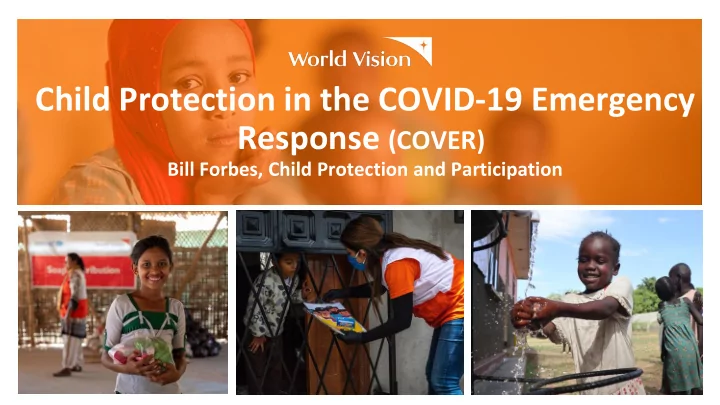
Child Protection in the COVID-19 Emergency Response (COVER) Bill Forbes, Child Protection and Participation Observations From the Field 1. Violence against children in the home is going up 2. Remote access is a huge challenge 3.
1. Violence against children in the home is going up 2. Remote access is a huge challenge 3. Inconsistent acknowledgement of CP and social services as essential service 4. Challenges to already stretched or inadequate child protection systems 5. Dealing with pre-existing poverty & injustice, and emerging new disasters
4
Multi- Sectoral Systems Approach
.
CASH
Targeting of MV Households and monitoring of most vulnerable children
LIVELIHOODS
Integrating Reporting mechanisms& positive parenting
HEALTH
Equipping Community Health Workers to recognize and respond to abuse, child labour and child marriage
SPONSORSHIP
Child Monitoring and promoting
F&D
Faith actors supporting families in distress with Psychological First Aid
EDUCATION
Joint learning & psychosocial resource packs
CP Four Priority Focal Areas