Biology 210A Presentation Guidelines Introduction All biological - - PDF document

biology 210a presentation guidelines
SMART_READER_LITE
LIVE PREVIEW

Biology 210A Presentation Guidelines Introduction All biological - - PDF document

Biology 210A Presentation Guidelines Introduction All biological processes that take place within a multi-cellular organism start at the molecular/biochemical and cellular levels. These include health and disease states and impact if substances


slide-1
SLIDE 1

Introduction

Biology 210A Presentation Guidelines

All biological processes that take place within a multi-cellular organism start at the molecular/biochemical and cellular levels. These include health and disease states and impact if substances on the body.

Purpose

To give you opportunities to:

  • Extend what you learned to a biological topic.
  • Collaborate with the instructor on the choice of your topic.
  • Communicate your independently acquired knowledge to other classmates.

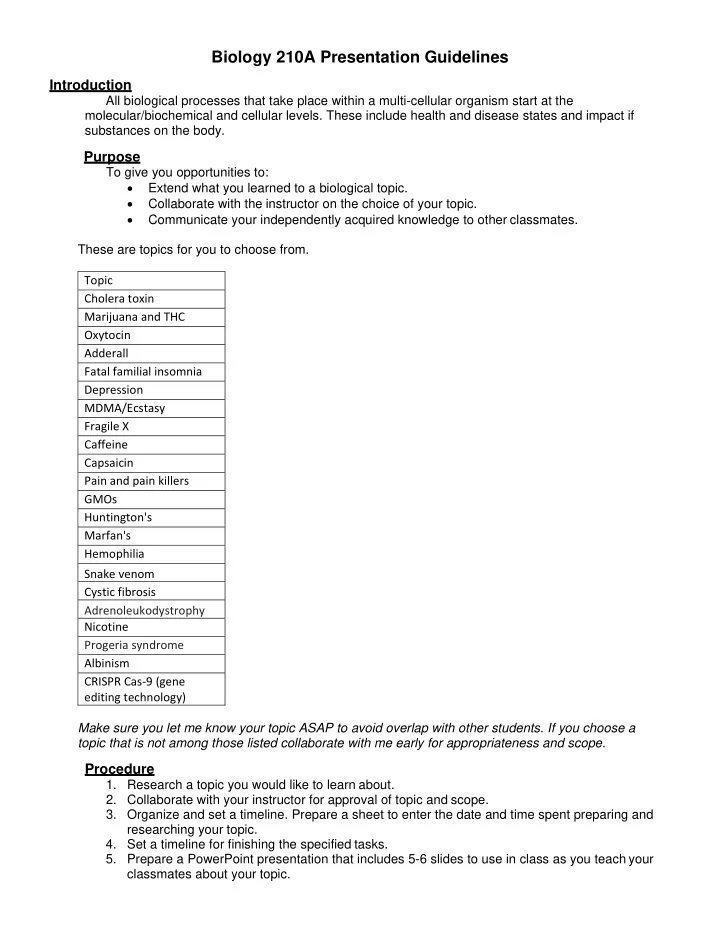
These are topics for you to choose from. Topic Cholera toxin Marijuana and THC Oxytocin Adderall Fatal familial insomnia Depression MDMA/Ecstasy Fragile X Caffeine Capsaicin Pain and pain killers GMOs Huntington's Marfan's Hemophilia Snake venom Cystic fibrosis Adrenoleukodystrophy Nicotine Progeria syndrome Albinism CRISPR Cas-9 (gene editing technology) Make sure you let me know your topic ASAP to avoid overlap with other students. If you choose a topic that is not among those listed collaborate with me early for appropriateness and scope.

Procedure

  • 1. Research a topic you would like to learn about.
  • 2. Collaborate with your instructor for approval of topic and scope.
  • 3. Organize and set a timeline. Prepare a sheet to enter the date and time spent preparing and

researching your topic.

  • 4. Set a timeline for finishing the specified tasks.
  • 5. Prepare a PowerPoint presentation that includes 5-6 slides to use in class as you teach your

classmates about your topic.

slide-2
SLIDE 2

Please save your PowerPoint presentation ion a USB flash drive or in your email to download before the beginning of the presentations.

Instructions

I. Presentation time is limited to 8 minutes per person. PowerPoint presentations are limited to a maximum of 6 slides. Time yourself by practicing your own presentation before coming to class. Limit the scope of your presentations to the following:

  • 1. Introduce your topic through the title.
  • 2. Include an outline or list of objectives you plan to cover in your presentation.
  • 3. Brief description of the condition or topic. If your presentation is about a disease, don’t

provide too many clinical symptoms.

  • 4. You can include a reference for others who are interested in learning more.
  • 5. Use appropriate figures to explain the cellular and molecular/biochemical basis and the

impact at the tissue, organ, or organs system. This should be the focus of your presentation.

  • 6. Include a final slide of the references you used as your sources of information.
  • II. Prepare an assessment tool (question or activity) to check if your classmates learned the major

point you want them to take from your presentation.

slide-3
SLIDE 3

Tentative Rubric for Student & Instructor Evaluations

Possible points 3 2 1 Originality

Creativity and originality engages audience Creative and original Lacks creative and/or

  • riginal effort

Preparedness & Content Coverage

All aspects of the subject were covered and the presentation was well prepared and presenter understood and had Most aspects of the subject were covered and the presentation was well prepared. Some major Some aspects of the subject were covered and the presentation were not well prepared or not a complete grasp of subject aspects were not completely understood understood

Presentation visuals

All Visuals support the

  • material. All aspects of

materials to be covered are represented Most Visuals support the

  • material. Most of the

material to be covered is represented Major sources of errors or lacking of visual support but an attempt was made

Delivery

Presenter has good voice inflection and does an

  • utstanding job in the

speaking aspect of the presentation Presenter has some voice inflection and does attempt to communicate clearly. A few errors in communication Very poor communication that interferes with the delivery of information

Sources of information

Several sources of information were properly referenced Limited sources of information were properly referenced Very limited sources of information that were not properly referenced

Following Instructions

All instructions for the presentations preparation were followed Most of the instructions for the presentations preparation were followed Few of the instructions for the presentations preparation were followed

Total score Each category will be scored according to the following scale: 3 = excellent, 2 = good, 1= poor, and 0 = unsatisfactory.