
SLIDE 1
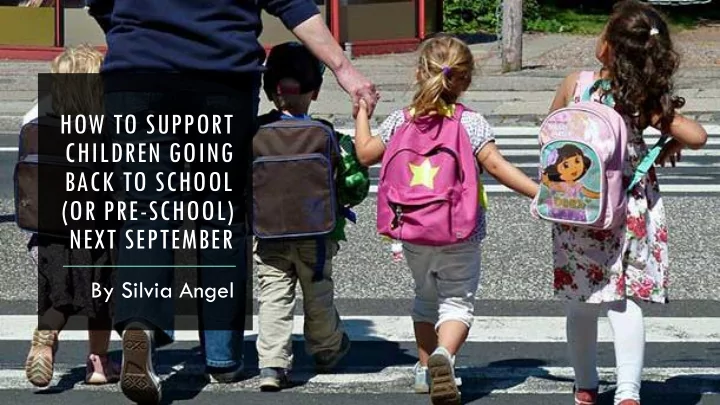
BACK TO SCHOOL (OR PRE-SCHOOL) NEXT SEPTEMBER By Silvia Angel BIG - - PowerPoint PPT Presentation
HOW TO SUPPORT CHILDREN GOING BACK TO SCHOOL (OR PRE-SCHOOL) NEXT SEPTEMBER By Silvia Angel BIG CHALLENGES AHEAD 1. Returning to school or pre-school with Covid-19. 2. Welcoming all students after 6 months. 3. Preparing for childen with
1. Returning to school or pre-school with Covid-19. 2. Welcoming all students after 6 months. 3. Preparing for childen with additional needs starting pre-school or school.
Returning to school after the summer break is always a big transition for many children with special needs. This September will be particularly challenging for children, having spent six months at home. Some children will be starting pre-school for the first time. Some children will be moving from pre-school to primary school. There is the need to plan for that transition, not something that can just be left to “roll with”. It is important that we give children a positive experience from day one. A good start will promote positive behaviour, and this will set them up for success.
Minimise transitions for children returning to school for the July programme. If possible, allow them to return to the same classrooms with the same staff. Or start them in the classrooms where they are going to be in September with some of the staff that will continue with them in September. You can use the strategies that we´ll learn today for students going back to school for the July Programme.
Create a photo album about the school or pre- school. Some ideas: photo of school building, reception area, classroom, teacher, SNA, principal, yard, play corners, toilets, uniform, and other fun things they’ll find in pre-school or school. Make it into a book and ask parents read it to the child regularly. You can create a social story by using Special Stories from Special iApps.
When I was little I used to go to my Montessori. I am 5 now, I am a big girl. I will be starting big school soon. I will wear a uniform to school. This is my new teacher Mrs. Byrne. This is Mary, Mary will help me in school. This is my new classroom. There are lots of toys in my class. etc…
Is a document that shares important information about the child so that other people can get to know him or her. It also has information about the little things that are very important and unique to the child. It’s written by parents, the teacher and SNA. Children can also be involved. The passport is written from the child’s point of view and it’s very easy to read. All children should have a passport. I have created a Basic Passport for you. Give it to the parents or the current’s child’s teachers for them to fill in.
Find out if the child is using a communication system: Lámh, PECS, Ipad, etc... Children who are verbal might still benefit from using a communication system. Learn basic information on how to use the communication system that the child is using. Parents can give you some information. The child’s speech therapist might support you too. Get visuals ready i.e. Visual schedule.
Book about school or social story. Communication passport. Learn to use the communication system the child is using.
Engage with the family as early as possible. Communicate with parents of children with special needs regularly at the beginning, to build a relationship of trust. Tell them how they can contact you and reassure them they can do so. Make an appointment for the child to visit the pre- school/school. Ask parents if they have any worries or anxieties in relation to the child starting school, and support them with those. Build a relationship of open communication and trust.
1. Talk to the child about school. 2. Walk by or drive by the school every so often. 3. Do activities at home that involve sitting and concentrating: jigsaws, painting, reading, colouring, etc. 4. Practice following verbal instructions. 5. Ask parents to encourage the child to do things as independently as possible. 6. Fill in the Communication Passport.
Get a uniform that it’s easy for the child to manage: elasticated trousers, shoes with Velcro. Find a school bag that is easy to open. Attach a keyring if the zip is too small. Find a lunch box and bottle that the child can easily open. If parents buy new things for the child (new coat, new bag...) suggest that they introduce these over the summer.
Have a communication book. Teachers and parents write on this book. To share information between school and home. Think of what the child would want to say if he/she could talk fluently.
available about the child and make a summary.
you can review all the reports for more detailed information.
child´s diagnosis, and how to support children with special needs in the classroom. I want to help you with this!
Is an online programme that I created for teachers, SNAs and preschool teachers. It's designed to give you all the information you need to make classrooms more inclusive for children with special needs. It includes everything you need to know, do, and understand to make adaptations in the classroom so that all children can participate. In this course, you will gain a deeper understanding of how children with special needs learn and experience their world. You will be able to organize classroom activities in a way that all children can take part by using the CIRCLE formula. You will feel prepared to provide adequate support to your SEN students.
A practical class where you will learn to use communication systems in the class, and specific activities that work well in an inclusive classroom. Expert advice from a guest speech and language therapist specialised in early intervention and school age services. Bonus class on dealing with difficult conversations with families and dealing with complaints. Access to my printables: symbols, choice boards and my session planning form. * All previous participants of the programme will get access to new content and new printables.
2 groups
You can attend live or watch the recorded sessions. You will have access until the 31st
For more information please visit
Certificate of attendance for today: Check your email. Fill in brief feed-back form. Download your certificate. The recording + slides + communication passport will be available on Saturday.